How AI Agents Run a Complete SEO Competitor Analysis in 30 Minutes
TL'DR: Traditional SEO platforms benchmark brands against the wrong sites using basic keyword overlap. Agentic AI tools like SaagaSolve fix this by analyzing true business context first. A 30-minute audit of Alo Yoga revealed massive structural gaps, including missing commercial category pages and uncaptured promo code traffic. SEO agencies can use this automated multi-tool workflow to find hidden revenue opportunities, handle tool failures honestly, and close high-ticket clients without manual spreadsheet work.
Are you tired of your SEO strategy feeling like a blind chess match? Do you spend hours crawling sheets of data that don't give you the direction that you are looking for?
Most competitor analysis reports generated by so-called 'Competitor Analysis Tools' are useless because they bury teams in meaningless keyword overlap charts. They lack the business context knowledge that really drives growth.
In this domain, the introduction of agentic SEO competitor analysis has been a game-changer. Rather than switching between tabs and dealing with spreadsheets, agentic systems rely on autonomous artificial intelligence to manage multiple data sources, resulting in quickly delivered competitive intelligence.
When SaagaSolve analyzed Alo Yoga, it uncovered critical vulnerabilities in under 30 minutes. This is the kind of insight that traditionally takes hours of manual research on Screaming Frog crawls and SERPs.
The Fatal Flaw in Traditional SEO Competitor Analysis
Marketers should be aware of why traditional tools can be ineffective for SEO teams before adopting AI workflows. The typical approach used by most SEO platforms is to simply identify competitors based on keywords.
At first, the logic appears good. If two domains rank for similar terms, they must be competitors. However, this strategy doesn't work when a site doesn't have organic traffic yet. If a brand hasn't implemented a good content strategy, the tool compares them to other websites that have the same low-value keywords.
With this logic, a company that sells high-quality activewear could be compared to a healthy fitness website rather than other business competitors.
Business Context Competitor Identification
Agentic SEO tools solve this by separating business analysis from keyword analysis. With SaagaSolve, the following prompt kick-started a thorough automated SEO audit: "we want to do competitor analysis for aloyoga.com. Topically speaking, what are three competitors you would benchmark them against?"
Instead of immediately pulling Semrush data, it used Firecrawl to scrape the site and understand the brand from a business lens. After understanding that Alo Yoga sells premium athleisure, the system identified true competitors, which include Lululemon, Vuori Clothing, and Fabletics.
SaagaSolve even provided the reasoning why some brands, such as Gymshark and Nike, were not included due to their market positioning. This business-first approach removes all the guesswork that is associated with standard tools.
What Makes an SEO Tool Agentic
Agentic AI refers to systems where autonomous agents plan multi-step workflows, select tools, handle failures, and adapt based on results.
In a traditional workflow, an SEO professional manually runs a Semrush report, exports to Excel, opens Ahrefs for backlinks, and then synthesizes the findings. Agentic marketing platforms do all of this in an automated manner.
When SaagaSolve looked for usable takeaways, it automatically:
- Inquired about organic keyword data for all brands.
- Attempted to pull Ahrefs metrics.
- Crawled competitor sites with Firecrawl to verify findings.
- Cross-referenced live SERP results.
- Combined all of this into a neat priority list.
Graceful Failure vs Hallucination
During the live analysis, the AI attempted to pull data from Ahrefs, and it failed. A less sophisticated system would just hallucinate or make up the data to create the illusion of perfection.
SaagaSolve recognized the tool failure transparently and carried on using the rest of its toolkit to gather the required data. When the SEO approach is built on correct competitive data, this sincere error handling can have a significant impact.
Three Findings That Changed the Strategy for The Alo Yoga Audit
The real test of any competitive analysis tool is whether the findings are accurate and practical. To extract these insights, the system was fed the prompt "find me three genuine takeaways to improve Alo Yoga's SEO from their competitors' playbook, Focus on things that make sense for Alo Yoga's brand". The case study delivered massive value across three main areas based on this exact prompt.
Finding 1: The Yoga Pants Keyword Gap
The most interesting find was the fact that a large brand missed a high-intent search term. Initially, SaagaSolve identified a keyword research targeting gap for Alo Yoga's yoga pants category. This led to a more in-depth manual investigation.
Using a simple Google site search operator, the findings were shocking. Alo Yoga was not ranking any commercial category pages for yoga pants. Instead, they only had informational blog posts ranking for this highly commercial term.
Instead of targeting the obvious commercial keyword, the brand decided to label all its inventory as leggings or joggers. Walking away from a high-intent term like yoga pants meant they were essentially giving ready-to-convert traffic away to rival brands.
Finding 2: Brand Dependency and Category Depth
Analysis of top organic keywords revealed massive brand dependency for Alo Yoga. Nearly all their highest traffic terms included their brand name.
Meanwhile, the competitors were also making efforts to grab generic queries. They were ranking highly for highly searched non-branded terms like women's logo leggings.
Alo's category pages were extremely thin and often contained just a single sentence of descriptive text. The solution in this case is simple. Brands need to expand their editorial content and add an FAQ section at the bottom of these category pages. This is because they are able to correctly target the correct non-branded keywords.
Finding 3: The First Purchase Discount Opportunity
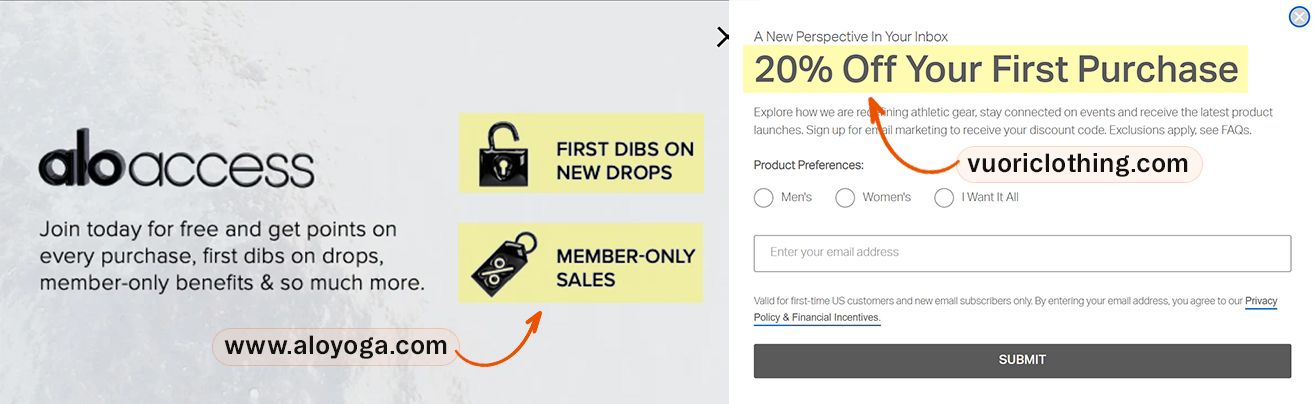
The third finding uncovered a well-advanced competitor tactic that Alo was missing. Other competitors, such as Vuori, created dedicated landing pages for new customer discount queries.
Alo Yoga already had a generic sales page, which was ranking for phrases such as Alo Yoga sale. But a regular sales page simply doesn't meet the niche search intent of consumers who are seeking a particular discount code.
Vuori successfully captured this high-intent traffic by targeting first purchase intent queries, like promo code or first order discount. Building a dedicated page for this intent prevents potential buyers from abandoning their carts to search the web for deals.
How to Do SEO Competitor Analysis With AI Agents
This case study demonstrates a repeatable workflow that agencies can apply to any project.
Step 1: Business Context Competitor Identification
Marketers must start by asking the AI to identify competitors based on business positioning. This prevents benchmarking against irrelevant sites just because they share long-tail keywords.
Step 2: Multi-Source Data Collection
Agencies can let the agentic system orchestrate data from Semrush, Ahrefs, and Firecrawl simultaneously. The system handles rate limits and data normalization automatically.
Step 3: Insight Prioritization and Verification
Raw data means nothing without interpretation. Agentic tools determine why rankings are important and give specific, applicable tips. SEO teams should always verify key findings manually using live SERP operators to ensure maximum accuracy.
Using Competitor Analysis in Agency Sales Processes
Automated SEO analysis creates a powerful sales tool for agencies. Traditional prospecting is based on a generic outreach that converts poorly.
Agentic competitor analysis enables teams to conduct an in-depth audit before the first conversation. Agencies can approach a brand with highly specific, verifiable vulnerabilities. This transforms a cold pitch into a high-value consultation instantly.
What to Look for in AI SEO Tools for Agencies
Not all AI website audit tools are built the same way. When evaluating platforms, digital marketing teams should ensure they have the following capabilities:
Multi Tool Integration
The platform should be able to natively orchestrate multiple data sources. Check for deep integrations with web scrapers from SEO data providers and analytics platforms.
Transparent Error Handling
Production-ready platforms log failures and flag when recommendations are based on partial information. They do not hallucinate data.
Customizable Workflows
Agencies need the ability to customize prompts for different client situations. Natural language prompting is a key aspect of adapting to different business settings.
Getting Started With Agentic SEO Competitor Analysis

For SEO professionals ready to move beyond fragmented dashboards, the path is clear. Start with a single high-value use case, like pre-sales competitive audits.
Remember that agentic tools accelerate expertise; they do not replace it. The combination of specialized SEO agents and human strategic judgment is what delivers measurably better results than ever before.
Conclusion
The Alo Yoga case study proves that the old way of doing competitive research is dead. Relying purely on shared keywords only benchmarks brands against the wrong domains and hides massive revenue opportunities. By leveraging SEO automation workflows, SEO agencies can uncover structural flaws like missing commercial category pages and uncaptured discount traffic in a fraction of the time.
However, these autonomous tools are meant to accelerate workflows, not replace strategic human brains. When tools like Ahrefs fail during an audit, SaagaSolve handles the error gracefully and keeps working, ensuring the data remains honest and reliable. Digital marketing teams can use agentic AI to gather and synthesize complex data accurately and then apply their own seasoned expertise to build a winning roadmap that clients cannot refuse.