
Check Your Site SEO Health in Minutes
Run a complete technical audit in minutes with SAAGA Solve's Site Health Checker. Uncover crawl issues, indexation errors, and other hidden problems holding back your rankings.
4.9(67 reviews)Trusted by leading innovators and industry shapers.






Why Your Website's Health Matters
Your website might look fine to visitors, but search engines see more than just the design and content. Behind the scenes, technical SEO issues can quietly drag down your rankings and visibility.
If Google can't crawl your site efficiently or if pages aren't being indexed, it doesn't matter how good your content is, as those pages won't show up in search results.
A site health check uncovers the issues that hold your site back, such as:
• Broken links and redirects
• Crawl errors that slow down Googlebot
• Sitemap mistakes
• Robots.txt rules blocking important pages
Fixing these problems ensures your site is easy to crawl, easy to index, and ready to rank.
Save Time With Automated Site Health Checks
Doing a full technical SEO audit manually can take days and often requires specialized knowledge. You'd need to check server logs, test each page, validate sitemaps, and comb through endless reports.
SAAGA Solve's Site Health Checker will take care of all that. In just a few minutes, you'll get:
• A complete report on your site's technical health
• Prioritized fixes so you know what matters most
• Accurate data pulled directly from Semrush
• Eliminate the chances of making a manual blunder
Instead of juggling between spreadsheets or combining insights from multiple tools, you'll get everything in one clear, ready-to-use report.
Your Complete Site Health Checker Solution
This isn't just another audit tool. It's a one-stop solution for keeping your site technically sound and SEO-ready.
With a single scan, you can:
• Validate your sitemap
• Check robots.txt for errors
• See which pages are indexed (and which aren't)
• Find crawl bottlenecks
Keep your website healthy with our Site Health Checker.

Why Choose SAAGA Solve's Site Health Checker?
There are plenty of SEO tools out there, but most of them either give you half the picture, overwhelm you with data, or require a sharp learning curve. SAAGA Solve's Site Health Checker is different as it's built to be fast, reliable, and beginner-friendly, without compromising on depth.
Here's why it stands out from the rest:
Identifies crawler issues
Checks how Google bots move through your website. With this functionality, you don't have to spend hours looking into log files or running complicated crawler tests.
Checks indexation of pages
Know exactly which pages are indexed and which ones are invisible to search engines. This helps you focus your efforts where they'll actually make a difference.
Validates sitemap
A sitemap tells search engines where to look. If it's broken or incomplete, your site's visibility suffers. Our checker reviews and validates your sitemap so you don't lose rankings to something so easily fixable.
Analyzes robots.txt
Many sites unknowingly block their most valuable pages with poorly configured robots.txt rules. Our tool flags these errors instantly, saving you from costly mistakes.
Reports with actionable insights
Forget vague "fix your SEO" reports. You'll get straightforward, prioritized recommendations you can act on right away, even if you're not technical.
Data-driven results
Unlike free crawlers or generic checkers, our tool runs on Semrush's industry-leading data. That means accurate, reliable results you can trust to guide real business decisions.
How to Use the Site Health Checker (Step by Step)
Apart from its enormous benefits, our site health checker's user-friendliness is another highly attractive feature. Getting started is as simple:
Who Should Use a Site Health Checker?
This tool is designed for anyone who cares about SEO performance. Whether you are a freelancer or part of a big setup, SAAGA Solve's site health checker offers an all-in-one solution to keep your website running smoothly.

SEO Professionals
Run fast, accurate audits for your own sites or clients and figure out the issues with just a few clicks.

Agencies
Scale audits effortlessly across multiple websites and focus your time on strategy, growth, and driving real business results.

Business Owners
Ensure your website is healthy before investing in marketing or advertising. Fix structural issues, strengthen SEO foundations, and make sure every campaign delivers maximum ROI.

Developers
Spot and fix technical issues that emerge during site builds, migrations, or redesigns. Ensure a smooth launch, stable performance, and zero loss in rankings or traffic.


Marketers
Design and optimize marketing campaigns after ensuring the website is in optimal shape.
SAAGA Solve vs Other Tools
Despite having so many site health checker tools in the market, why did SAAGA create another tool of similar nature and purpose? What's different about it? Let's find out!

| FEATURE / BENEFIT | SAAGA SOLVE SITE HEALTH CHECKER | OTHER TOOLS / MANUAL AUDITS |
|---|---|---|
Crawl Analysis | Automated, accurate, instant | Manual setup, often slow |
Indexation Reports | Clear insights powered by Semrush | Limited or incomplete |
Sitemap Validation | Full error check and validation | Requires manual review |
Robots.txt Review | Automatic detection of conflicts | Easy to miss errors |
Prioritized Fixes | Issues ranked by importance | Generic reports, no priorities |
Ease of Use | Beginner-friendly, one-click reports | Requires SEO expertise |
All-in-One Solution | Complete technical audit in one scan | Multiple tools needed |
Ready to Redefine Your Marketing?
It's time to stop juggling tasks and start dominating your market.
Experience the future of marketing, where AI handles the complexity, and you enjoy the rewards.

Insights & Innovation
Gain the edge you need by uncovering cutting edge insights, proven tactics and powerful walkthroughs in AI enhanced marketing. Our expert resource center is crafted to fuel your success delivering high value guidance that helps you lead in a rapidly shifting digital world.
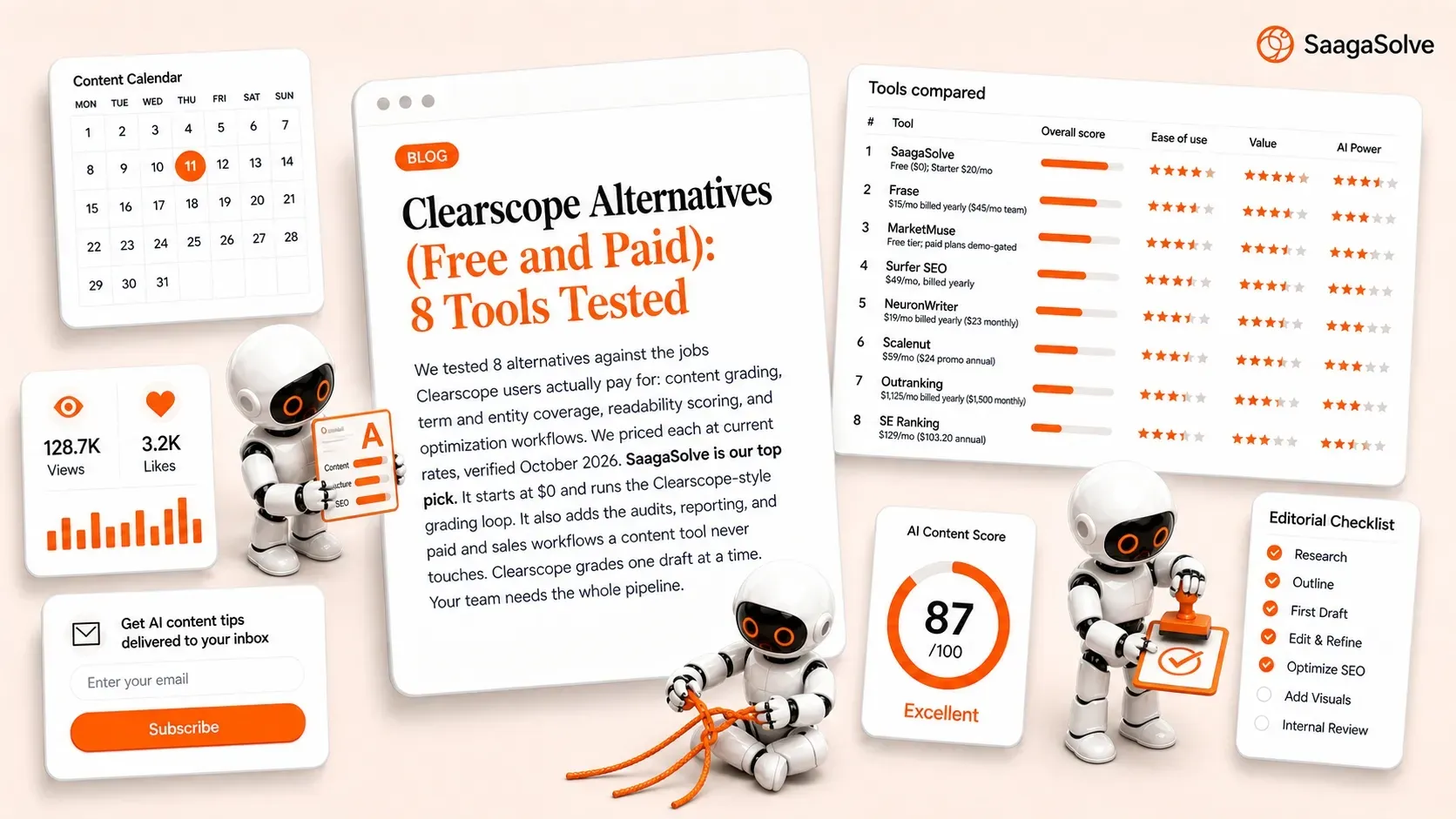
Clearscope Alternatives (Free and Paid): 8 Tools Tested
Looking for a Clearscope alternative? We compared 8 tools on grading, briefs, publishing and price, from $0 to $129+/mo, with ratings and who each fits.

MarketMuse Alternatives (Free and Paid): 8 Tools Priced
MarketMuse hides paid pricing behind a demo and caps briefs at 5–20 a month. We priced 8 alternatives, from a $0 plan to $399/mo, to find one that executes.
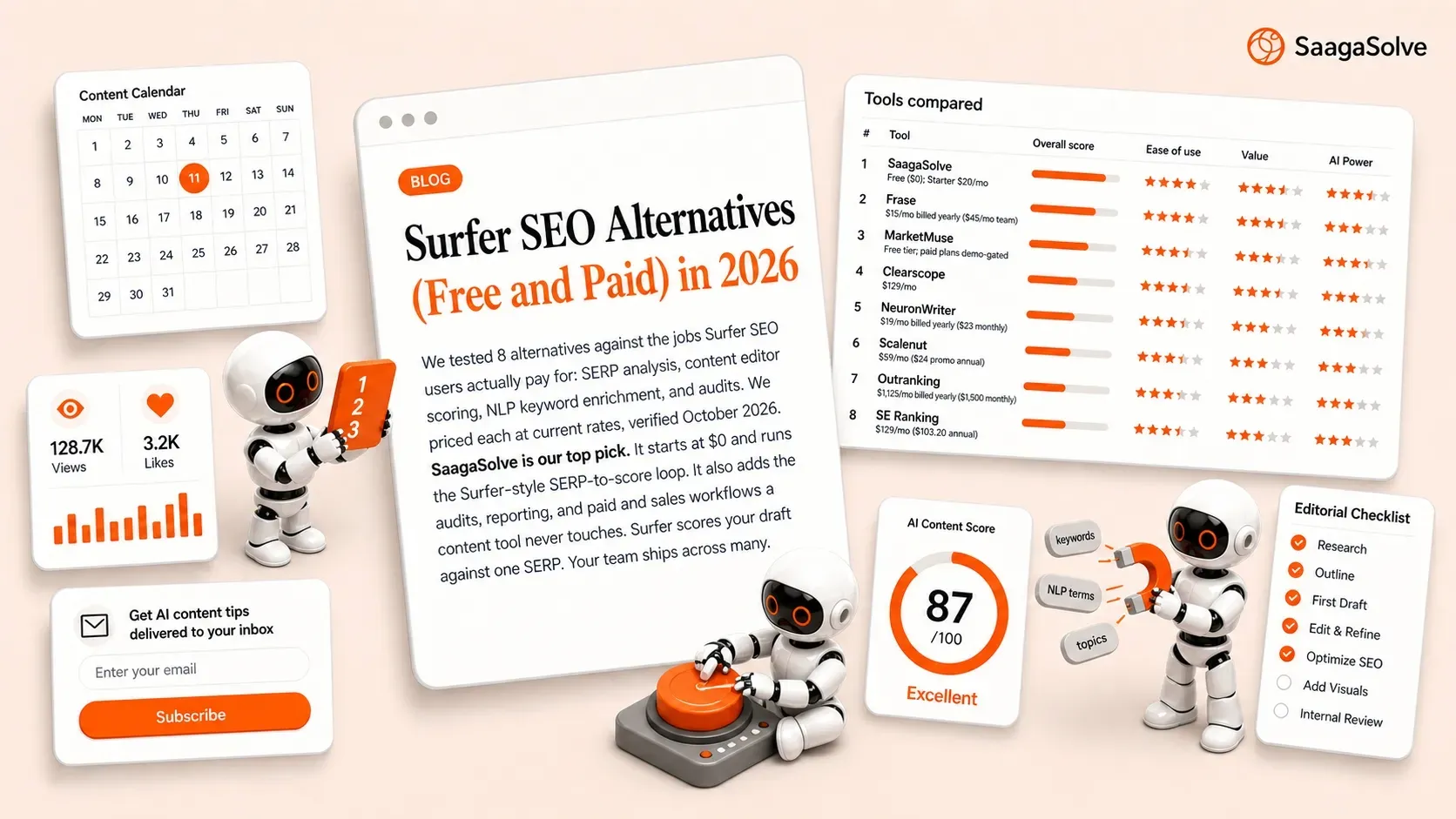
Surfer SEO Alternatives (Free and Paid) in 2026
Eight Surfer SEO alternatives compared on pricing, free plans, ratings and reviews. See which does the job Surfer stops short of. Prices verified Oct 2026.
Frequently Asked Questions
Our Site Health Checker runs a full technical audit of your website. It looks at crawl errors, indexation problems, sitemap issues, and robots.txt rules to make sure search engines can properly access your site. It also highlights broken links, duplicate content, and other technical SEO issues that often go unnoticed.
Think of it as a complete health report for your website.
A good rule of thumb is to run a health check at least once a month. That way, you'll catch new issues before they cause serious problems. If you're making big updates like adding a lot of new content, redesigning your site, or migrating to a new platform then you should run a check immediately after.
Regular audits ensure that your site stays clean, crawlable, and competitive in search results.
Yes. Google Search Console is an essential tool, but it has its limits. It only shows you what Google sees and doesn't give you a complete technical audit. Our Site Health Checker complements Search Console by providing a broader view of your site's health, powered by Semrush data.
Together, they give you a full picture: Google's direct feedback plus a deeper, independent analysis of technical issues.
Definitely. Whether you're running a small personal blog with 50 pages or a large e-commerce site with tens of thousands of URLs, our Site Health Checker will meet your needs.
It's designed to crawl through complex sites efficiently, providing you with a clear, prioritized list of issues, regardless of the site's size.
Our Site Health Checker is an essential part of our platform and is currently not available for free use. With AI powered insights and detailed analysis, the SAAGA Solve Site Health Checker ensures that you invest your money in the right places!