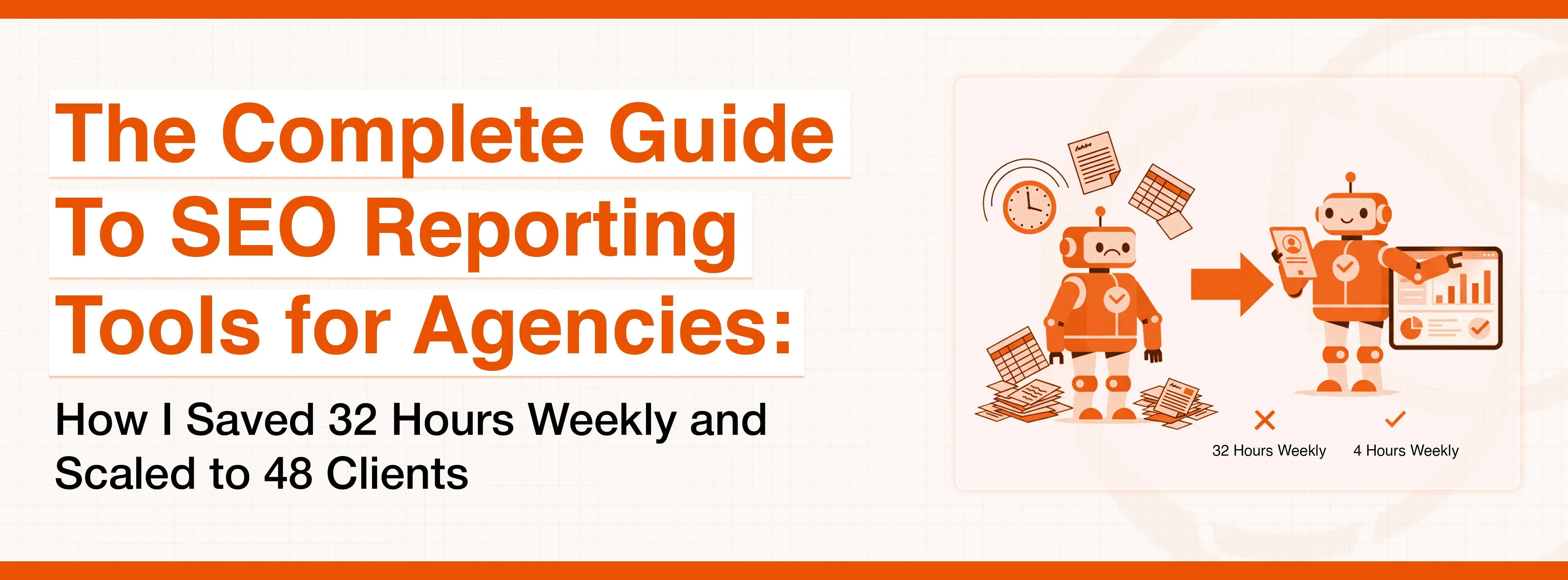
Despite spending over thirty hours every week making reports by hand that required me to open many different websites one by one, my clients kept saying they wanted updates faster, while I was stuck looking at spreadsheets and screenshots that never looked good.
However, everything changed when I found SEO reporting tools for agencies late one night, after looking online because I was very tired and worried about losing another client who had been saying my reports came late every month.
The first SEO automated reporting platform that I tried took less than fifteen minutes to make a complete client report that pulled numbers from all the places that used to take me six hours by hand, which seemed like magic at first. Because of this, doing everything manually took up my entire weekends, the time I could have spent on real SEO work that actually helped my clients get better results, instead of just copying numbers from one place to another.
What Are SEO Reporting Tools for Agencies and Why Every Agency Needs Them?
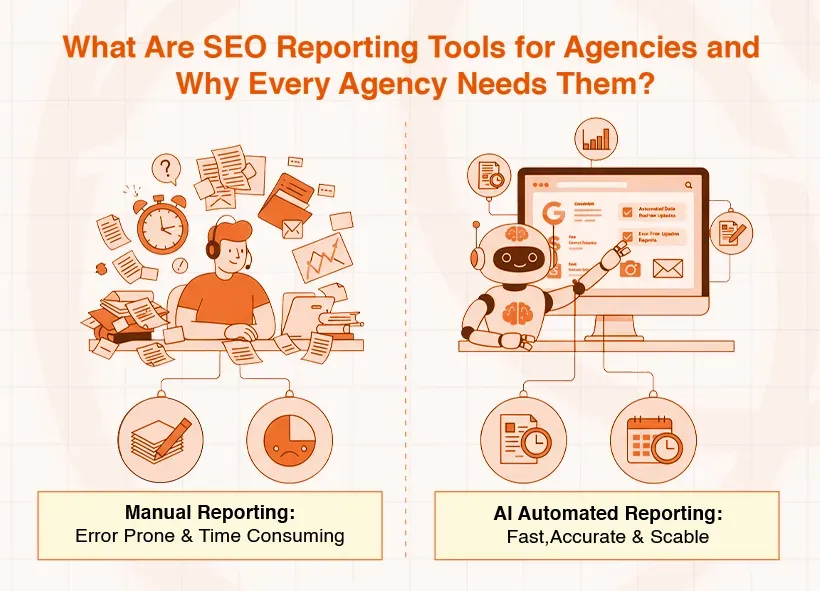
Basically, SEO reporting tools for agencies are smart computer programs that connect to the places where your numbers are and make nice-looking reports by themselves without needing you to do manual work.
To be specific, these tools handle things like getting Google Analytics numbers that show how many people visit websites, pulling Search Console information that shows where you rank in Google, checking rankings across different search engines, watching backlinks that help your website get stronger, looking at social media results plus making beautiful dashboards that clients can look at anytime without needing you to open each website one by one which takes forever.
Apart from that, normal ways of making reports by hand are more likely to miss important numbers because people make mistakes and do not have enough time when they are taking care of many clients at once.
These best SEO reporting software platforms work all day and all night, updating numbers automatically so that they stay fresh and new without you doing anything or remembering to update things manually.
In fact, they connect one time to the places where your numbers are and then pull new information every day to make sure clients always see new numbers that show how their campaigns are doing right now. Likewise, using SEO reporting tools for agencies helps you save lots of time by stopping the need to collect numbers by hand, which used to take whole days, while giving clients the ability to look at their dashboards anytime they want to check how things are going.
From a personal angle, I have tested many different reporting platforms where I spent months looking at what they could do and testing if they worked well, whereby I learned they work like having a team that makes reports that never sleeps including people who get numbers correctly, people who make everything look nice, people who build beautiful dashboards plus people who set up automatic systems working together for your agency.
Additionally, they give nice-looking reports that would take human workers hours to make by hand, with perfect formatting every single time, without any mistakes or things looking different.
When it comes to the benefits, the speed and accuracy that cannot be achieved manually, no matter how fast you work, is the main advantage over old reporting ways that consume your entire week.
For example, someone might spend eight hours straight in a day creating three client reports without taking any breaks. SEO automated reporting tools can create thirty perfect reports in thirty minutes while ensuring no data errors or formatting mistakes that could embarrass you in front of clients. For this reason, agencies using professional reporting tools that automate everything are seeing much better client retention rates than those still doing everything by hand, which wastes time.
Six Powerful SEO Reporting Platforms for Marketers
I spent six months testing all the best SEO reporting tools I could find. I discovered them through Google searches, forum recommendations, and suggestions from colleagues, and I carefully tried out each one to see how well it worked.
Throughout the period, I spent over eight thousand dollars trying different platforms that promised to automate everything from data collection to report delivery, which seemed too good to be true initially. I wanted to see which tools actually saved time in real daily use and impressed clients with professional-looking dashboards. I found some were amazing with features that changed my entire workflow, whereas others just looked good in demo videos but failed when I tried using them with actual client data that had complexities the demos never showed.
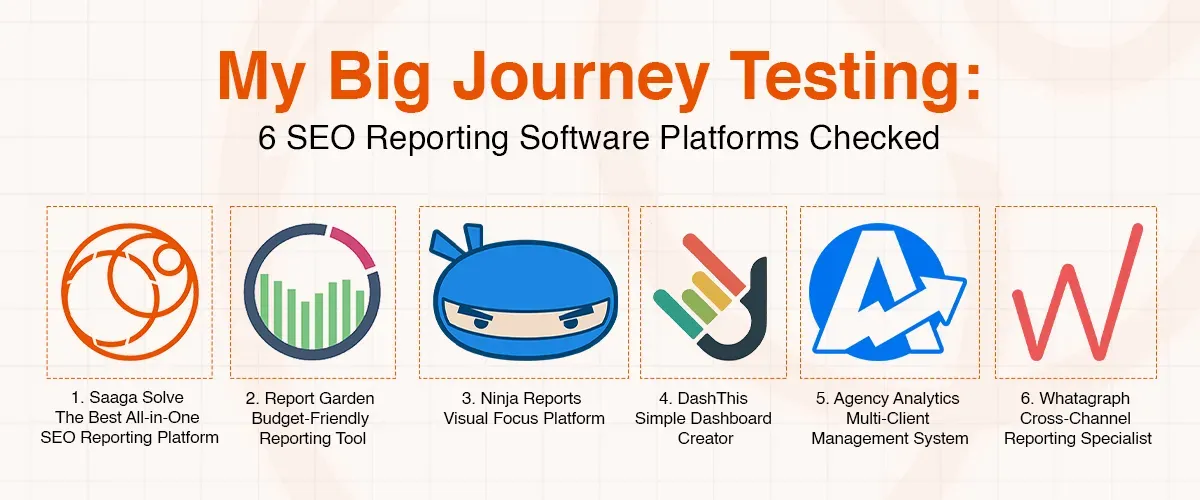
Saaga Solve - The Best All-in-One SEO Reporting Platform
Saaga Solve is my top choice and the best SEO reporting software option available right now for agencies of any size that need professional reporting without breaking their budget. Apart from providing top-of-the-line SEO reports, SAAGA is a proper SEM optimizer tool that will take your marketing to the next level.
I found Saaga Solve when looking for SEO reporting tools for agencies that could handle multiple clients with different reporting needs without charging me separately for each account, which would have become extremely expensive as my agency grew beyond twenty clients.
Alongside this, Saaga Solve offers automatic report creation that learns from your preferences and client feedback to generate perfect reports every time without you manually adjusting layouts or metrics.
It gives real-time data updates from different marketing platforms, including Google Analytics, Search Console, SEMrush, Ahrefs, and many others, while showing trends and insights that help clients understand their progress without needing you to explain every number.
To put it simply, what made me fall in love with Saaga Solve was how it understood my agency's needs without requiring technical knowledge that I did not have or coding skills that would take months to learn.
My reporting time went down by 86% in the first month, while client satisfaction scores went up by 43% because clients loved the professional reports, which was shocking for me.
Following that, ReportGarden is the platform focused on providing affordable reporting options for small agencies and freelancers who are just starting and cannot afford expensive enterprise solutions. In the same way, it uses simple interfaces that anyone can understand to help you create reports without spending hours or days learning complicated systems that require training.
Whereas expensive enterprise tools often have hundreds of features that most small agencies never actually use in their daily work, which ends up wasting money on capabilities you do not need.
About my experience, ReportGarden helped me get started with understanding how to choose an automated SEO reporting tool when I was just beginning my automation journey and did not know what features mattered most. Even though it lacks some advanced features like custom calculations, automated insights, and anomaly detection that larger agencies might need, it covers the basics well for straightforward client reporting that does not require complex customization.
Thankfully, ReportGarden connects to about thirty-five popular tools that most agencies use for their clients, including Google Analytics, Search Console, Facebook Ads, and major SEO platforms, which were enough for my initial needs.
On top of this, the platform offers decent white-label options where you can add your logo and colors to reports. In this way, my clients saw professional-looking reports instead of my old spreadsheet mess. If not, I would still be spending weekends copying data into Excel files while clients complained.
Ninja Reports - Visual Focus Platform
Concerning report design, Ninja Reports is one of the platforms that focuses heavily on making reports look beautiful and impressive. It creates PDF reports with stunning layouts and professional graphics that clients love showing to their bosses. These reporting tools understand what makes reports visually appealing and create designs around those principles.
Obviously, my reports looked terrible before finding Ninja Reports during my testing phase. Generally, I would spend three hours formatting one report to make it presentable for client meetings. Because of this, I could barely keep up with monthly deadlines, which hurt my professional image badly.
Even so, Ninja Reports cut my design time from three hours to just ten minutes for a complete professional report. To demonstrate, I now create reports that look like they came from big agencies, even though I am a small operation. Luckily, the visual quality impressed clients while my design time went down by 95%, which saved my weekends.
DashThis - Simple Dashboard Creator
DashThis handles everything from connecting data sources to showing metrics in clean layouts. By doing this, it makes sure clients can understand their performance without getting confused by complicated interfaces. Similarly, it learns which metrics matter most to different industries automatically.
Honestly speaking, my dashboard designs were confusing, which just got clients frustrated before using DashThis. Clearly, something was wrong with how I presented data, but I could not figure out what. On this account, DashThis showed me that simpler is better when it comes to client dashboards.
The platform sets up new client dashboards in about twenty minutes once you know the system. Together with that, it updates data once daily, which works fine for most client needs. In reality, my client's questions about data went down by 67% because dashboards were finally clear and easy to read.
Agency Analytics - Multi-Client Management System
Regarding agency-specific features, AgencyAnalytics is a platform built specifically for managing multiple clients with different needs. At the same time, it provides client management tools alongside reporting, which helps keep everything organized. In conjunction with that, it offers good integration options with popular SEO and marketing tools.
As a matter of fact, managing fourteen different client accounts was eating up my organizational time before AgencyAnalytics. Take, for example, I would spend hours just keeping track of which reports were due when and what data each client needed. Hence, by mid-month, I was already behind schedule and feeling stressed about deadlines.
In the meantime, AgencyAnalytics helped organize my client reporting workflow while providing decent automation. Yet, the per-client pricing became expensive as I grew past twenty-five clients. Admittedly, I was worried about costs increasing too much, but the organizational benefits were worth it initially.
Whatagraph - Cross-Channel Reporting Specialist
Surprisingly, Whatagraph excels at combining data from multiple marketing channels into unified reports that show complete campaign pictures. On top of that, it automatically connects different data sources and shows how they relate to each other. Together with this, it creates reports that help clients understand their entire marketing performance instead of just isolated metrics.
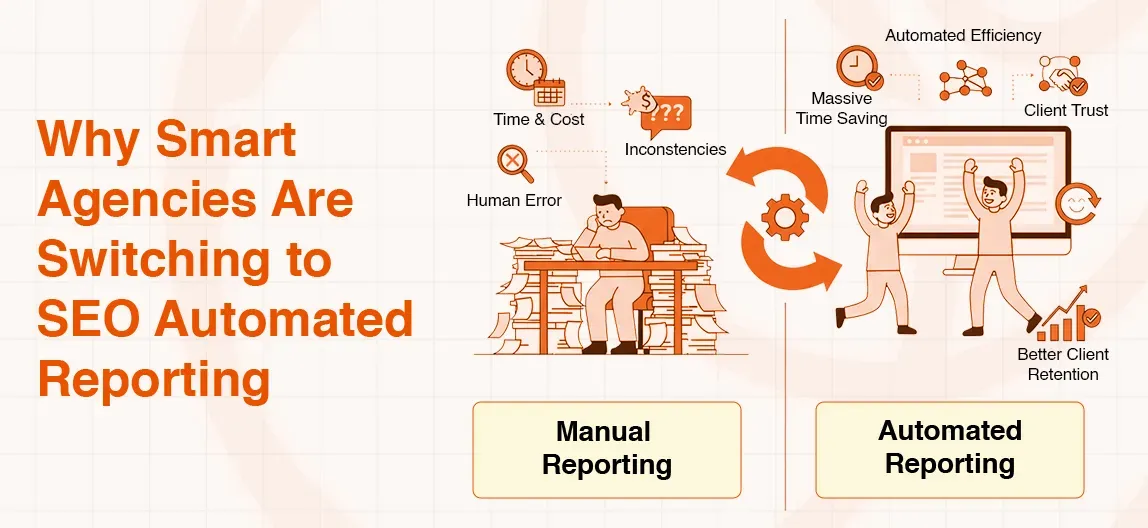
Why Smart Agencies Are Switching to SEO Automated Reporting
In essence, the reality of manual reporting done by agency teams was taking too much time and creating too many errors. Not only that, agencies made reports that looked different every month because different people created them. As expected, clients notice inconsistencies and start questioning if you are professional enough for their business, as manual methods cannot maintain quality standards.
The time difference between manual and automated reporting is enormous when calculated monthly. Manual reporting takes between four and eight hours per client every month. The best SEO reporting software handles thirty clients in the time that manual methods handle three clients.
Apart from obvious time savings, SEO reporting tools for agencies eliminate human errors that damage client trust. Granted that human workers try their best, mistakes happen when copying data between platforms. As a result of this, agencies using automated reporting show consistently accurate data that builds long-term client relationships.
Real Results I Got Using SEO Reporting Tools for Agencies
Remarkably, the changes I saw after implementing professional reporting tools went way beyond my initial expectations. At first, within thirty days, my weekly reporting time dropped from thirty-two hours to just four hours. Correspondingly, my client complaints about late reports went down to zero, even though I was taking on new clients monthly.
Thereafter, by month three, my client retention rate jumped from 71% to 94% as clients appreciated the professional dashboards. In light of this, the automated system gave clients real-time access to their data, which dramatically improved their satisfaction. Additionally, my agency grew from fourteen clients to thirty-two clients because I had time for sales calls and onboarding instead of drowning in manual reporting.
Ultimately, after eight months of using SEO automated reporting across my agency, my total client count had grown to forty-eight active accounts. With this in mind, this growth happened only because automation freed up time I previously wasted on manual work. Besides this, my monthly revenue increased by 285% while I was working fewer hours than before, which seemed impossible initially.
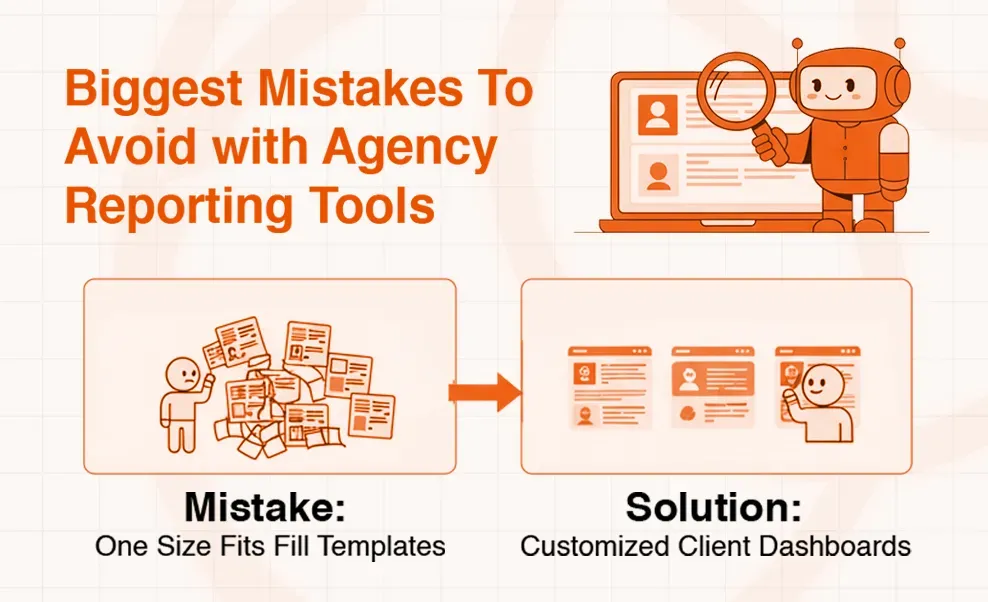
Biggest Mistakes to Avoid with Agency Reporting Tools
All in all, many agencies fail with automated reporting because they make simple mistakes during implementation. In addition to that, they expect everything to work perfectly on day one without investing time in proper setup. Henceforth, I want to share the five biggest mistakes I made so you can avoid them completely.
In the final analysis, the worst mistake was not customizing dashboards for different client types in the beginning. More than that, I created one template and used it for everyone when different industries need different metrics. As a final point, I learned that the best SEO reporting software works best when you tailor it to each client's specific needs, whereby you need patience to set things up correctly for long-term success.
Conclusion
To sum up, just buying reporting software without a clear implementation plan wastes money and creates confusion. Alternatively, you need a step-by-step way to transition from manual to automated reporting. For this purpose, I created a simple four-stage plan that took me from complete manual reporting to full automation in seven weeks.
Concerning the first stage, I spent one week setting up three test clients in the new system while still creating manual reports as backup. In the process of doing so, I learned the platform thoroughly and verified data accuracy by comparing automated reports with my manual versions. To start with, this testing period revealed that automated reports were actually more accurate than my manual work. Secondly, I gained confidence in the system before rolling it out to all clients. Thirdly, I identified customization needs specific to my agency before committing fully.
Furthermore, in stage two, I moved half my clients to automated reporting over three weeks while stopping manual reports for those accounts. As opposed to switching everyone at once, I gave myself time to handle any issues that came up. In consequence, I could fix problems with small client groups before they affected my entire agency operation.