The days of blind experimentation are long gone for market leaders. To achieve sustainable growth, companies should not rely on ad hoc use of tools but should develop a detailed, documented AI marketing plan. This change from tactical implementation to strategic integration distinguishes the market leaders from others. This guide sets the direction to build that plan, to become the architect of a future-proof marketing operation.
Why You Need a Documented AI Marketing Plan Now
The pace of technological change requires organisation. In the absence of an official AI marketing plan, teams will become inefficient, leading to fragmented customer experiences and wasted funds on unnecessary tools.
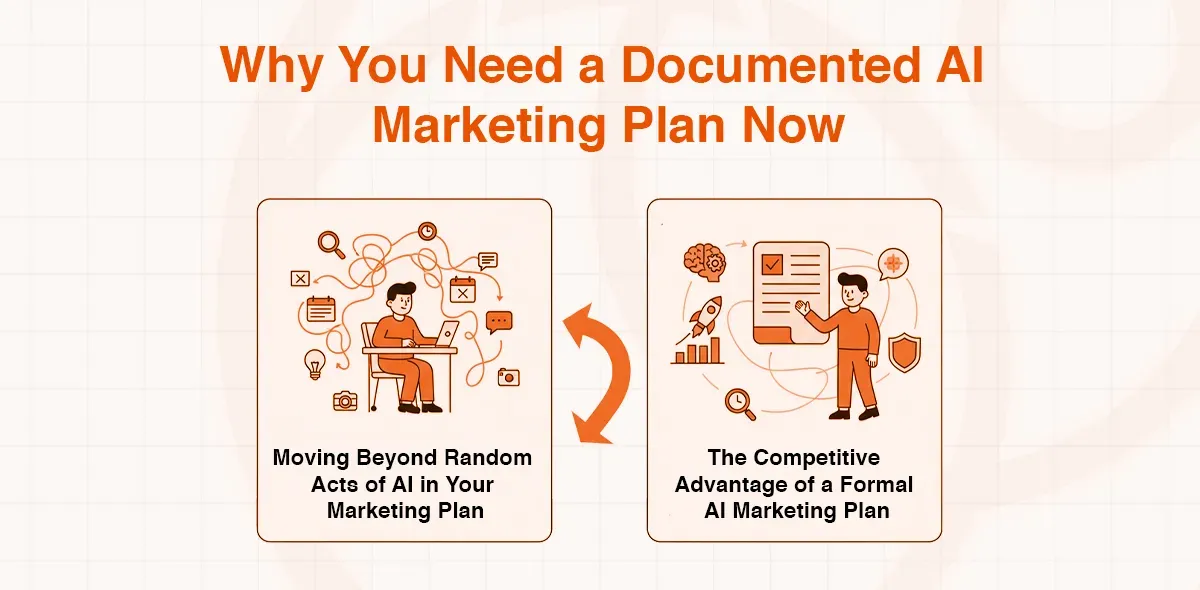
Moving Beyond Random Services of AI in Your Marketing Plan
Many organisations suffer from “Random Services of AI”, using ChatGPT for one email or Midjourney for one image without a cohesive strategy. In my consulting experience, the lack of a plan leads to fragmented brand voices and data silos. A documented plan coordinates all AI actions to a specific business purpose, ensuring that technology serves the strategy rather than vice versa.
The Competitive Advantage of a Formal AI Marketing Plan
An organised AI content marketing plan is not just a way of automating something, but it is a way to know what will happen in the future. With the use of predictive analytics, you are able to predict market trends and customer behaviours before their occurrence. This allows you to swing into action first, which provides you with a first-mover edge on competitors who continue to respond to last month's data.
The Role of a Modern AI Marketing Strategist
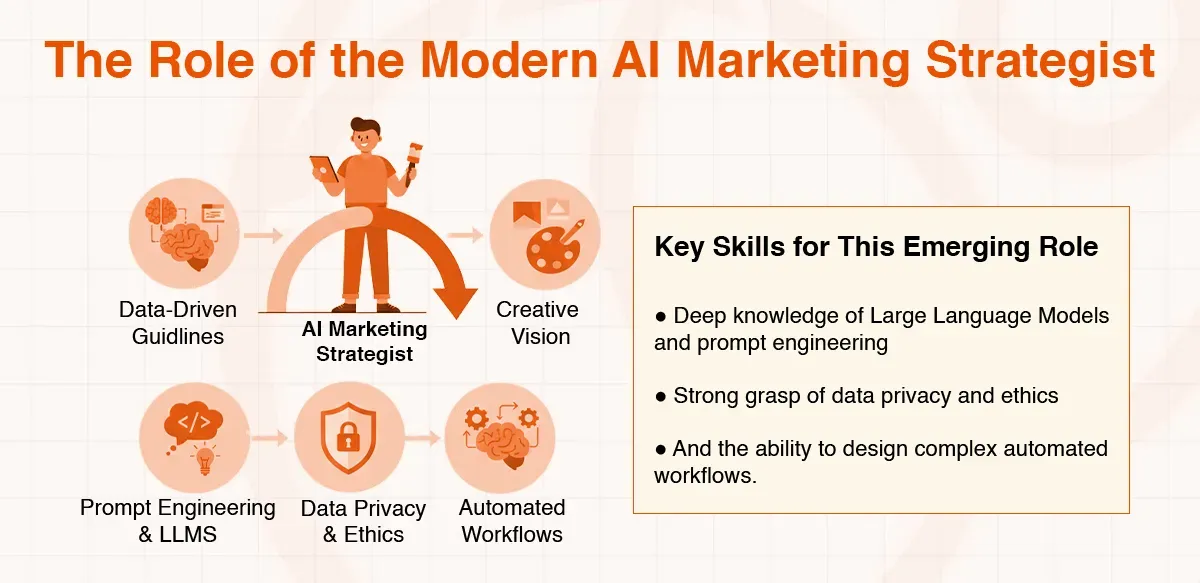
To implement this plan, new leadership is crucial. An AI marketing strategist bridges the gap between technical capability and creative vision.
Bridging Data and Creativity as an AI Marketing Strategist
An AI marketing strategist governs systems, not just people. They create guidelines based on hard data, determining which of the plans require automation to achieve efficiency and which must remain in human hands. They ensure that AI’s efficiency does not compromise brand authenticity.
Key Skills for This Emerging Role
To succeed, an AI marketing strategist must master a unique blend of skills:
- Deep knowledge of Large Language Models and prompt engineering
- Strong grasp of data privacy and ethics
- And the ability to design complex automated workflows.
These competencies are vital for a strong, functional, and adherent plan.
Creating Your Step‑by‑Step AI Marketing Plan
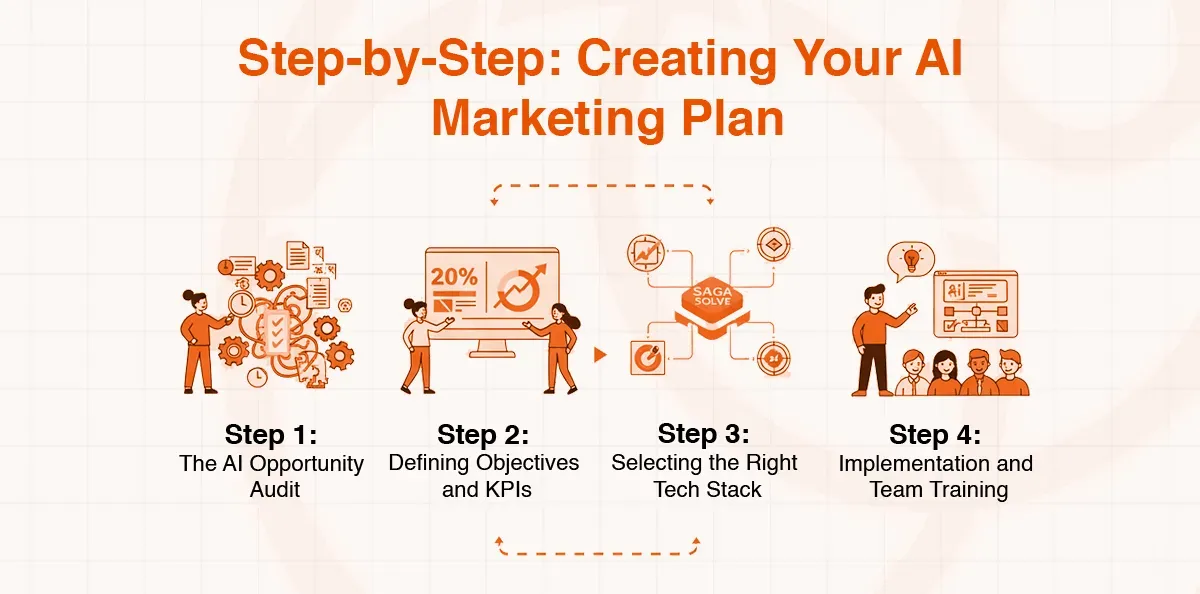
Development of a strategy is not a single event but a process. Use these four steps to craft a strong plan.
Step 1: The AI Opportunity Audit
Before choosing tools, understand your problems. Conduct an “AI Opportunity Audit” to identify bottlenecks. Do writers spend too much time on research? Is data analysis too slow? Identify where AI provides maximum impact.
Step 2: Defining Objectives and KPIs
Success must be measurable. Rather than general objectives such as “use more AI,” set targets such as “reduce content production time by 40%” or “increase personalization‑driven revenue by 15%.”KPIs benchmark plan success.
Step 3: Selecting the Right Tech Stack
The market is flooded with tools; the successful plan must have a selective stack that seamlessly fits together. A platform such as SAAGA SOLVE will be necessary in order to create content and optimise it. Select a specialised tool to analyse data. Create a system of data flow between applications.
Step 4: Implementation and Team Training
Without human buy-in, the best plan will not work. Implementation should have intensive training. Teach the team not only how to use the tools, but why they use them. Developing AI as a tool to reduce manual work, rather than replace jobs, promotes adoption and innovation.
Executing Your AI Marketing Plan
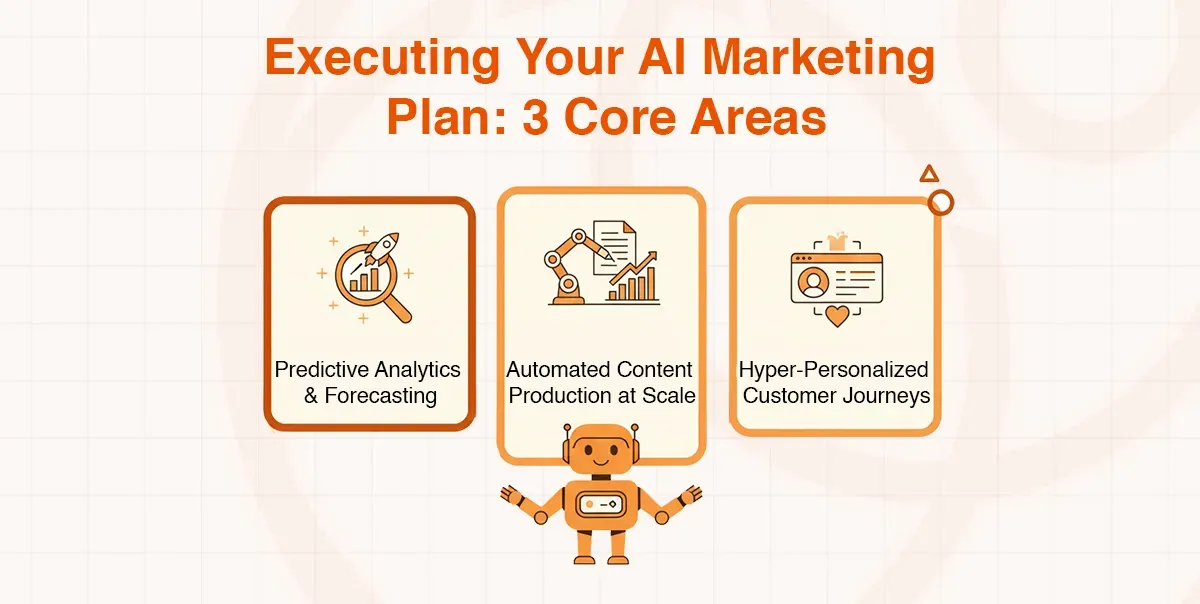
Once built, execution focuses on three strategic pillars where AI delivers the most value.
Predictive Analytics & Forecasting
Switch the reactive reporting to proactive forecasting. Examine past data and market indicators with AI and forecast the future with a high level of accuracy. Allocate budget and resources to the channels most likely to succeed.
Automated Content Production at Scale
Reduce scale without a reduction in quality. Automate the processes of drafting, editing, and SEO optimisation. Expand the frequency of publication, maintain the brand at the top of mind, and gain more search traffic without overwhelming the creative staff.
Hyper-Personalised Customer Journeys
The last pillar is personalisation. AI can provide a unique experience to every user, whether it is dynamic content on the website or an email sequence involving the specific user. Personalise every customer and increase the rate of engagement and conversion by a large margin.
Conclusion
The sphere of artificial intelligence is evolving daily. Your strategy must therefore stay flexible and adapt to new developments.
A documented AI marketing plan is essential for growth. It provides you with a blueprint to navigate the technological change, allows the AI marketing strategist to lead successfully, and keeps every tool in your arsenal having a purpose in business.
Businesses that emerge victorious in 2026 are the ones that begin to plan. By building a flexible, data‑driven AI marketing plan, you’re not just adopting new technology; you’re laying the foundation for the next decade of your company’s success.