

1
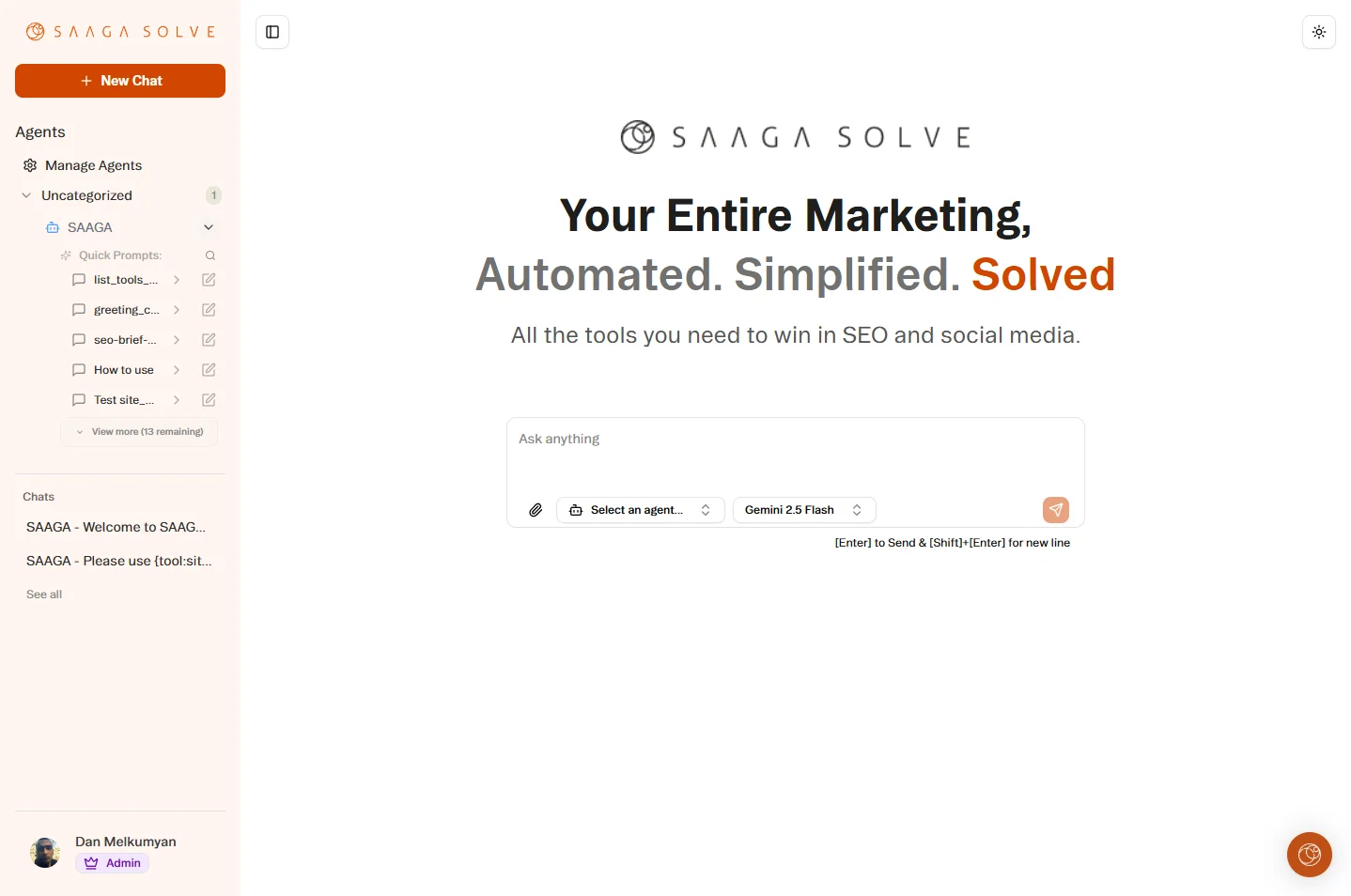
Open SAAGA Solve and log into the SEO Suite.

Optimize your website & outsmart your competitors - all with SAAGA Solve's top-of-the-line SEO Suite.
Trusted by leading innovators and industry shapers.






Our SEO Suite is an all-in-one content marketing automation platform that empowers you and takes your business to new heights. With SAAGA Solve's SEO Suite, you get everything you need under one roof - from research and strategy to implementation and analytics. One platform with limitless possibilities for search engine optimization.
Learn how to select the right AI model for your tasks by understanding cost-to-intelligence trade-offs and the Pareto frontier.
Model selection strategies
Cost vs Intelligence analysis
Benchmark comparison
Recommended model list
Watch the guide
Every model sits somewhere on two axes: what it costs, and how it scores. The ones worth using sit on the curve between them.
We rank that curve weekly and pick from it for you — so the model becomes the last thing you have to think about.
Watch the guideNow that you know all about SAAGA's top-notch SEO Suite, let's draw a comparison between our SEO automation platform and other generic AI LLMs.
| Features | SAAGA Solve SEO Suite | Generic AI LLMs |
|---|---|---|
| Purpose | Built specifically for SEO & content marketing automation | General-purpose text generation & conversation |
| Keyword Research & Clustering | Advanced keyword research, prioritization, and thematic clustering | Not designed for structured keyword analysis |
| SEO Strategy & Planning | End-to-end SEO workflows (research → strategy → implementation → analytics) | Limited to text suggestions, no structured SEO planning |
| Competitor Analysis | Detailed reports on competitor performance, keyword & backlink gaps | Cannot generate accurate competitor SEO data |
| Content Optimization | Built-in tools for on-page SEO, readability, and ranking potential | Can draft content, but lacks optimization features |
| Reporting & Analytics | Automated SEO dashboards with clear insights & opportunities | No reporting or analytics capabilities |
| Ease of Use | Unified dashboard, one platform for all SEO needs | Flexible, but requires manual prompts & external tools |
| Output Quality | Tailored for top-quality, SEO-ready content | Generic content, needs heavy editing for SEO compliance |
| Best For | Businesses, agencies, and marketers wanting an all-in-one SEO solution | General users needing AI writing, Q&A, or brainstorming |
Despite its powerful capabilities, SAAGA Solve's SEO Suite is one of the easiest content automation platforms to use. Our agents have been thoroughly trained to give the best possible solutions for all your problems.
Open SAAGA Solve and log into the SEO Suite.
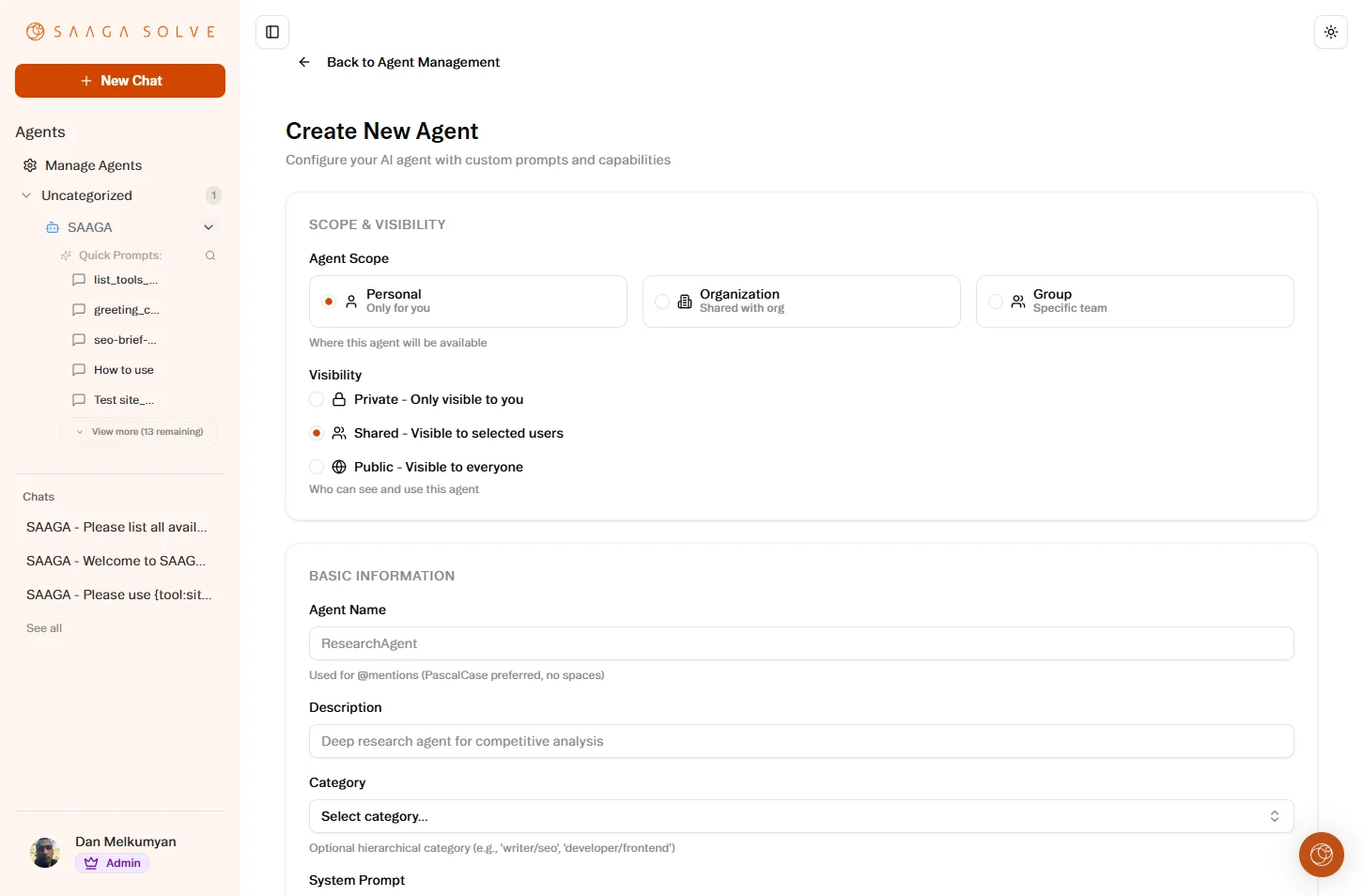
Create your own agent or choose a tool from our list of tools.
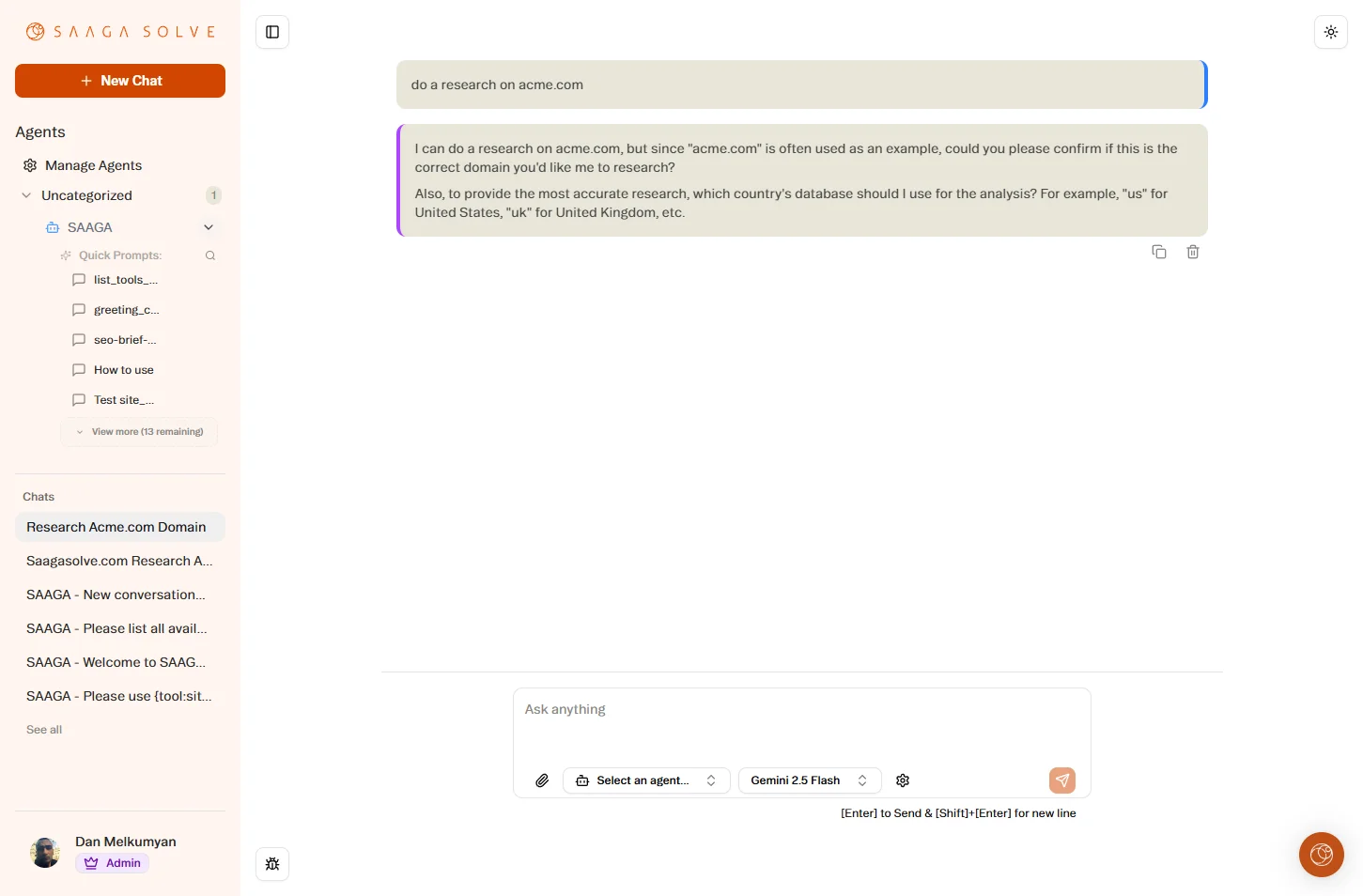
Give the tool/agent your prompt. For e.g, if you want to do keyword research for your website, give our agent the link to your website and instruct it to do keyword research for it. If possible, you may also give the agent links to your top competitors or a list of your top organic keywords to guide it better.
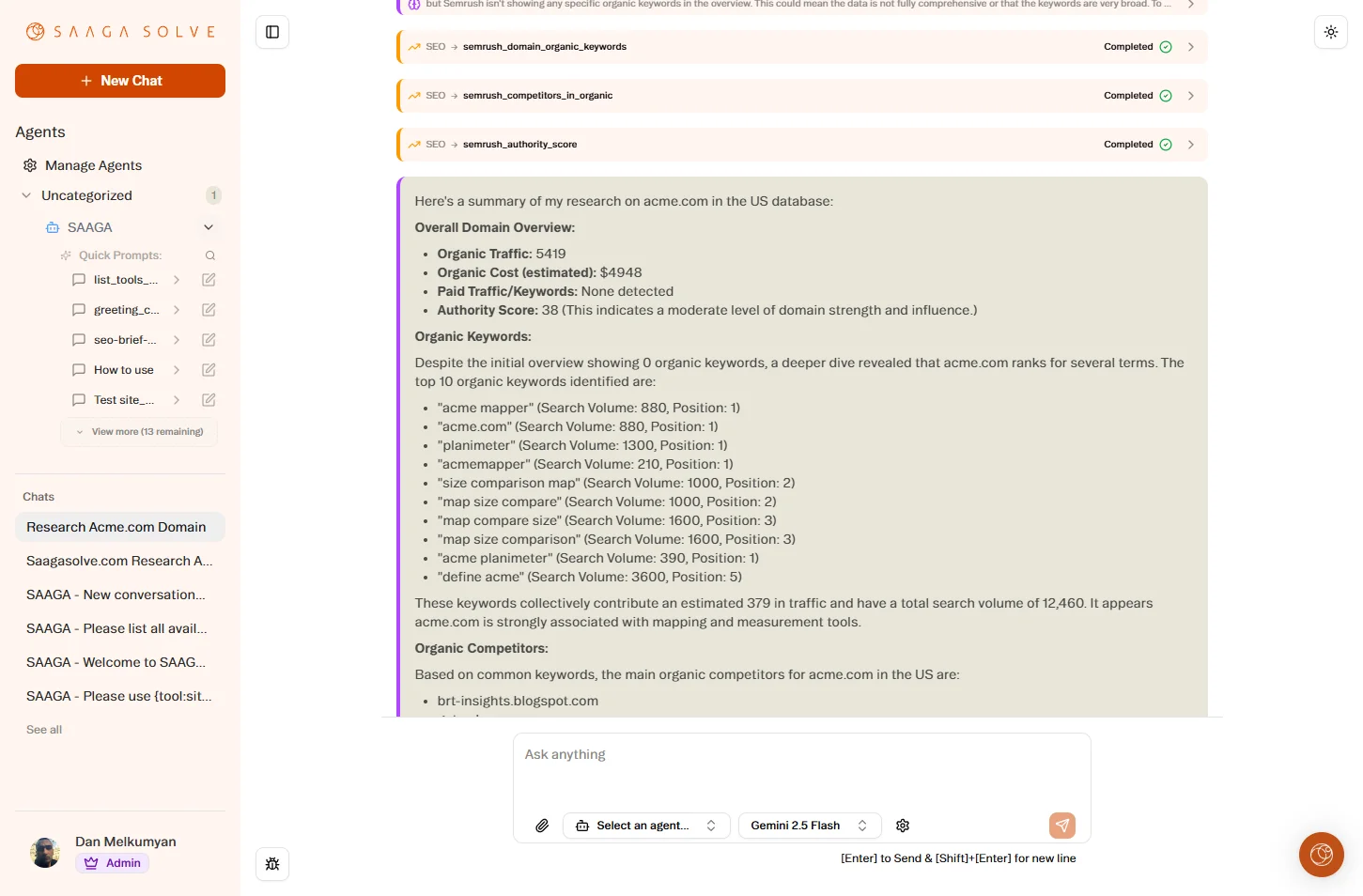
Analyze the result generated. Use it if it’s as per your requirements or ask the agent to repeat the process to get another result.
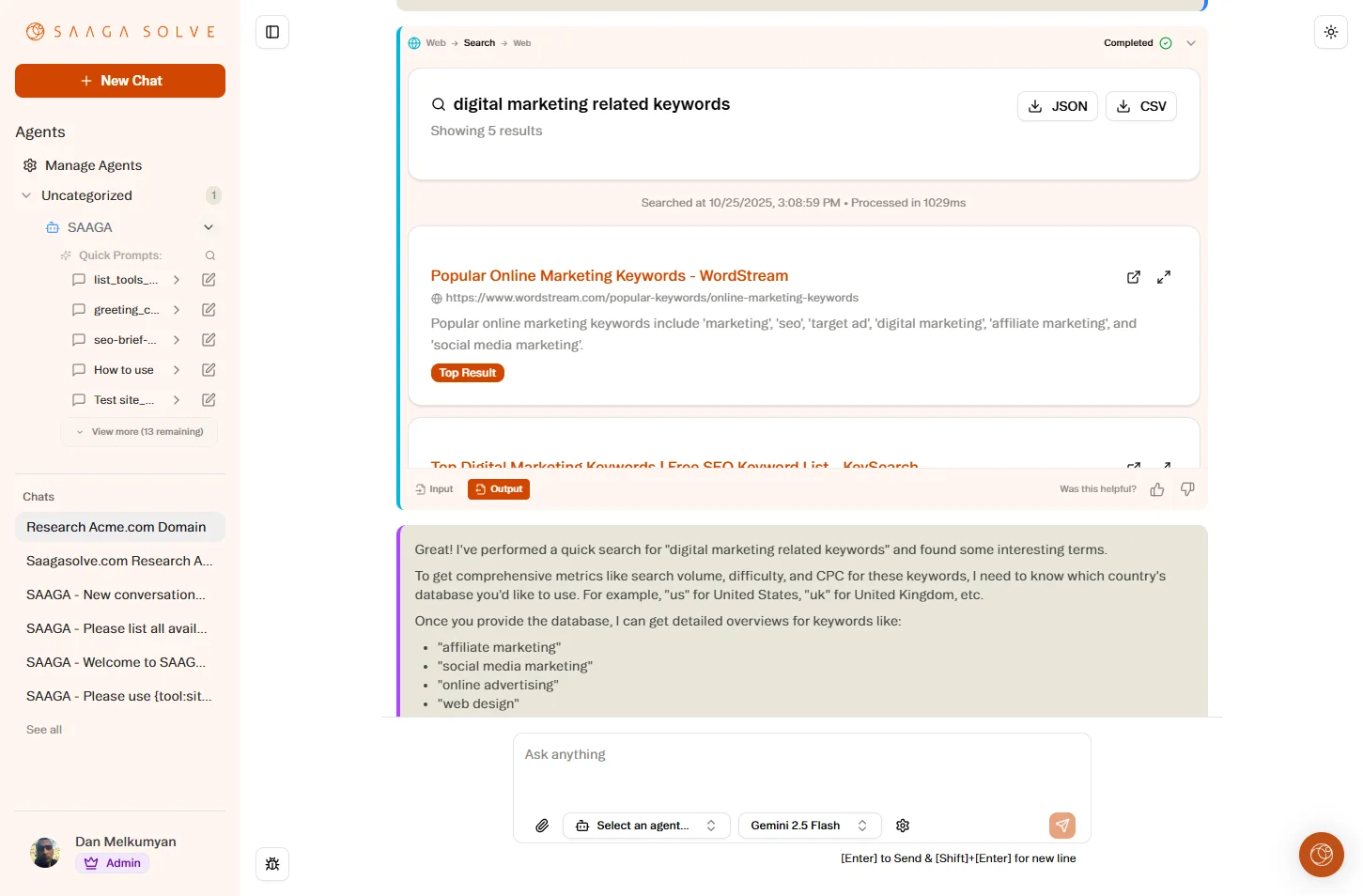
Move on to the next phase of our SEO Suite, i.e, from discovery to strategy and from there to implementation and analytics.
SAAGA Solve is a one-of-a-kind content automation platform that automates the entire process of content marketing - from keyword research and strategy to creation, optimization, and performance tracking.
Smart Content Organisation
The SAAGA SEO Suite features a pillar-and-cluster model that helps organize content to achieve maximum visibility. Scattered themes are transformed and organized into comprehensive pillar pages to improve website traffic and authority.
Turn SEO into Growth
SAAGA Solve is not just automation software, but is a growth engine. It helps companies rank better, attract qualified traffic, and convert visitors into customers. From strategy to implementation to reporting, Solve's AI-powered SEO suite is the best for your website.
Smooth Workflow Integration
This one-of-a-kind content automation platform integrates planning, optimization, and implementation into a single system, eliminating the need for over-reliance on multiple platforms. This integration lessens the inefficiencies, saves time, and ensures productivity.
Here are some solid use cases of our SEO Suite which highlight its versatility and usability

Build an online presence without juggling multiple SEO tools. Save time and cost with an all-in-one platform.

Manage multiple clients' SEO from a single dashboard. Generate automated reports with keyword and backlink insights.

Optimize product pages to rank higher in search results. Identify keyword gaps to capture more buying intent traffic.

Find trending keywords and thematic clusters for blog ideas. Ensure every article is SEO-optimized for maximum reach.

Streamline SEO workflows across large teams. Get advanced analytics and competitor analysis.

Deliver data-driven SEO strategies to clients. Save hours on research and reporting with automation.
An SEO Suite is a platform that uses artificial intelligence to improve SEO activities such as keyword research, content planning, on-site optimization, reporting, and internal linking more easily. Moreover, the SEO suite also works as an automated backlink analysis tool. It helps clients scale their search engine optimization efforts with accuracy and efficiency, eliminating the need to switch between multiple sites.
Where general AI models produce text based on the trained data, the SAAGA SEO Suite interacts with real-time SEO tools (e.g., Google search consoles, Google Analytics, SEMrush) to provide recommendations based on current market conditions and real-time metrics.
Yes, the SEO suite handles scalability very well, hence it is a perfect tool for SEO automation for agencies. Agencies can attend to multiple clients, automate reporting procedures, and develop data-driven strategies without having to use several tools at a time. It works particularly well with the teams that process high amounts of content and campaigns.
Not really. The seo automation platform is designed to have a user-friendly interface and automated processes, allowing users with minimal technical skills to plan, optimize, and track their campaigns efficiently.
The SAAGA SEO Suite, one of the best AI SEO automation tools, is a comprehensive strategy, planning, content organization, and linking optimization solution, unlike generic tools that only perform one function at a time. Our software turns that data into actionable insights that drive long-term growth.
The digital world evolves quickly and your competitors are already using AI to stay ahead.
Don't fall behind. This is your opportunity to upgrade your marketing, automate your workflows and position your brand as a leader in your space.