Search engine optimization (SEO) seems like a closed door to many bootstrapped entrepreneurs who find the process to be costly and difficult to understand. The fact is that DIY SEO is not only possible, but in many cases, it is the most intelligent place to start when dealing with a new business.
You can learn the fundamentals of search and be able to establish a strong basis of organic growth without breaking the bank. This guide is an effective roadmap that will initiate you on how to do SEO yourself and make your site a traffic-generating asset.
Why Do It Yourself SEO Optimization is the Smart Move for Startups
Get the strategic value of taking control in advance. DIY SEO is a long-term investment in your business in digital real estate.
Saving Budget While Building Long-Term Assets via Do It Yourself SEO Optimization
Agencies may cost thousands of dollars per month to hire. In the case of a startup, it is more resourceful to redistribute that budget towards product development and conduct the SEO in-house. The founders who learn the fundamentals of DIY SEO get a better insight into their market and customer intent, which pays dividends much higher than rankings.
The Myth of "Technical Magic"
SEO is not a black art; it is a rational way of structuring information. Learning how to do Search engine optimization yourself is less about coding and more about clarity. If you can write clearly and organize a spreadsheet, you already have the skills needed to execute a successful do it yourself SEO optimization strategy.
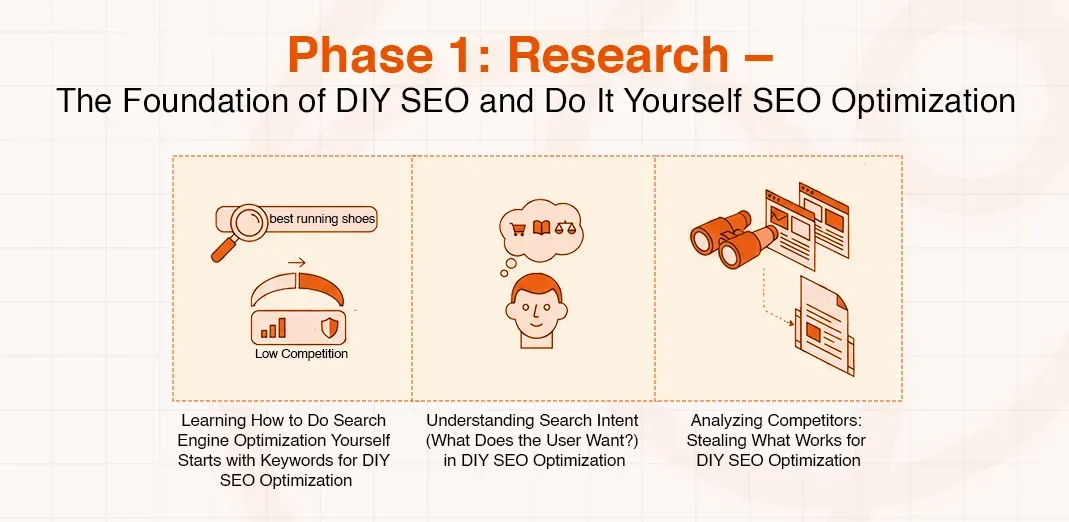
Phase 1: Research – The Foundation of Do It Yourself SEO Optimization
You will not be able to optimize something you do not know. Any successful do it yourself SEO optimization campaign is based on research.
Learning How to Do Search Engine Optimization Yourself Starts with Keywords for DIY SEO Optimization
The keywords are the mediator between your customer and your business. The initial DIY SEO technique involves determining the exact words your audience is typing in Google. Search with free tools such as Google Keyword Planner and identify terms with a fair amount of volume with no competition. The key to quick wins is to target these low-hanging fruit keywords.
Understanding Search Intent (What Does the User Want?) in DIY SEO Optimization
Ranking is not merely a matter of matching words; it is a matter of matching the intent. When a user types “best running shoes,” do they want to buy, read a review, or find comparisons? Effective DIY SEO involves examining the most successful results and matching your content with that purpose. You will not rank with all the keywords if you miss this.
Analyzing Competitors: Stealing What Works for DIY SEO Optimization
The hard work has already been done by your competitors. Break down their highest-performing pages. What are they discussing? How long is their content? A key part of learning how to do search engine optimization yourself is reverse-engineering the success of others to build a better version for your own do it yourself seo optimization plan.
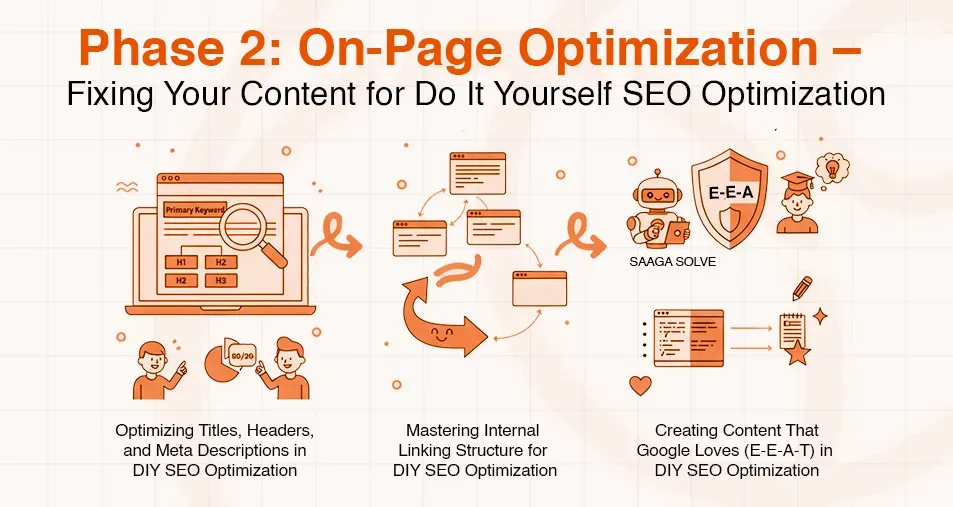
Phase 2: On-Page Optimization – Fixing Your Content for Do It Yourself SEO Optimization
After you have your keywords, you will need to place them where Google can find them. On-page SEO work is the core of do it yourself seo optimization.
Optimizing Titles, Headers, and Meta Descriptions in DIY SEO Optimization
The most important on-page factor is your title tag. Make sure that your primary keyword comes out naturally. Similarly, your headings (H1, H2, H3) are organized both in order to please the reader and to please the bots. Learning these aspects is the 80/20 rule of DIY SEO small adjustments that can have a huge impact.
Mastering Internal Linking Structure for DIY SEO Optimization
Internal links connect your content and spread authority across your site. Internal links also tie your content and the dispersal of authority on your site. In my experience, this is the least considered part of DIY SEO. When connecting your high-traffic pages with the new articles, you assist Google in indexing them more quickly. It is a simple, zero‑cost tactic essential for effective SEO.
Creating Content That Google Loves (E-E-A-T) in DIY SEO Optimization
Google values Experience, Expertise, Authoritativeness, and Trustworthiness (E-E-A-T). There is no compromise in quality, even in do it yourself seo optimization strategy. Write with the help of such tools as SAAGA SOLVE and create full-fledged, properly formatted content, but do not forget to carry out your own experience and fill it with your individual knowledge to meet these quality indicators.
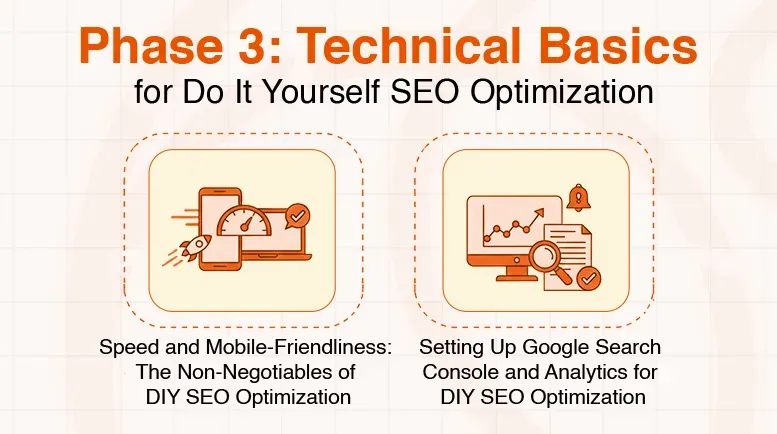
Phase 3: Technical Basics for Do It Yourself SEO Optimization
You are not required to be a developer, but your site should be healthy. Technical SEO will make sure that you are not spending time and money on a site that is not functioning properly.
Speed and Mobile-Friendliness: The Non-Negotiables of DIY SEO Optimization
Users leave slow sites. Page Performance can be checked using Google PageSpeed Insights. Also, make sure your site looks perfect on mobile. These are foundational requirements for how to do search engine optimization yourself. If your technical base is weak, your content will struggle to rank regardless of your do it yourself seo optimization efforts.
Setting Up Google Search Console and Analytics for DIY SEO Optimization
You cannot improve what you do not measure. It is obligatory to set up the Google Search Console. It gives you the actual picture of how Google views your site and warns you of mistakes. It is the place of command for those who take DIY SEO seriously.
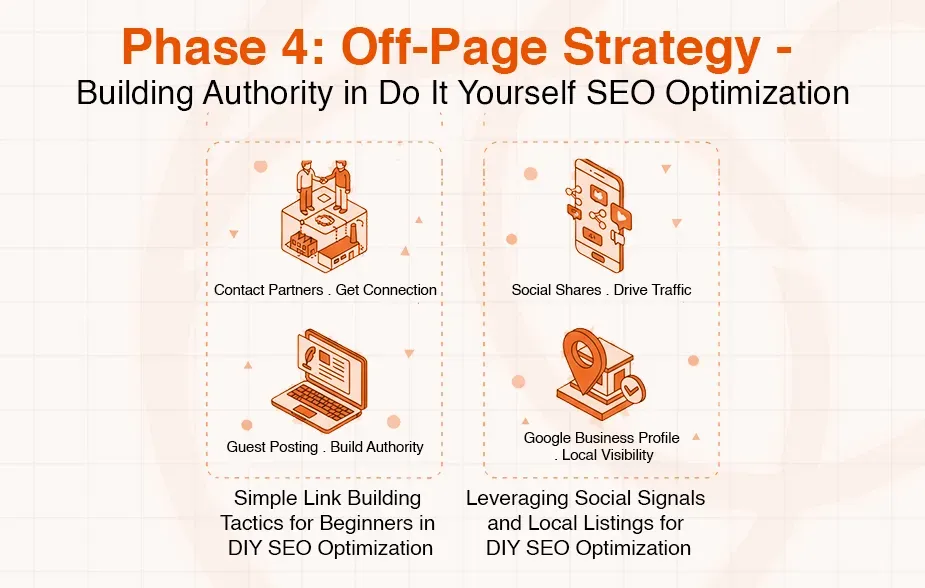
Phase 4: Off-Page Strategy - Building Authority in Do It Yourself SEO Optimization
Off-page SEO demonstrates to Google that you are trusted by others. It is the reputation-management aspect of do it yourself seo optimization.
Simple Link Building Tactics for Beginners in DIY SEO Optimization
Backlinks are votes of confidence. Start small: contact partners, suppliers or local organizations to get a connection. Another simple method that is available to anyone learning DIY SEO is the practice of guest posting on industry blogs. Consistency develops the authority that success requires.
Leveraging Social Signals and Local Listings for DIY SEO Optimization
Social media shares don’t rank directly, but they drive traffic. It is essential to claim your Google Business Profile and ensure local visibility. These signals confirm your business’s legitimacy, supporting broader DIY SEO goals.
The Essential Toolkit for How to Do Search Engine Optimization Yourself and Do It Yourself SEO Optimization
You do not require costly software to begin with. Effective DIY SEO just requires knowledge regarding how to use AI for SEO and a lean toolkit.
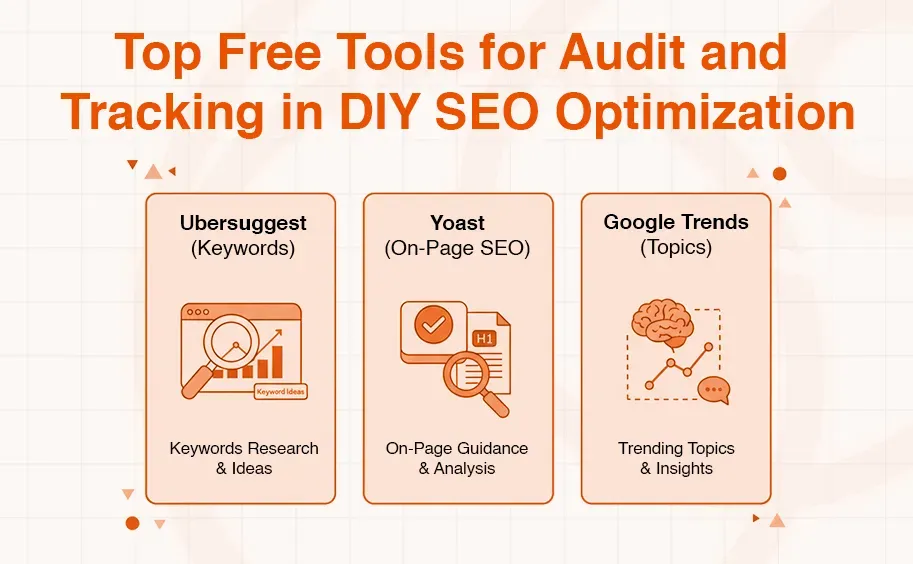
Top Free Tools for Audit and Tracking in DIY SEO Optimization
Tools such as Ubersuggest (for keywords), Yoast (for on-page guidance), and Google Trends (for topics) are invaluable. They provide the information required to implement a professional strategy with a bootstrap budget. Mastering these free tools is a rite of passage in do it yourself seo optimization.
Conclusion
SEO is a discipline of persistence. The results of do it yourself seo optimization are gained over time.
We have discussed the four stages: Research, On-Page, Technical, and Off-Page. By tackling every aspect systematically, you develop a strong growth engine. DIY SEO is not an easy task, yet it is possible.
Do not try to fix everything at once. Pick one page, optimize it, and watch the results. That initial victory gives you the confidence to learn SEO on your own.