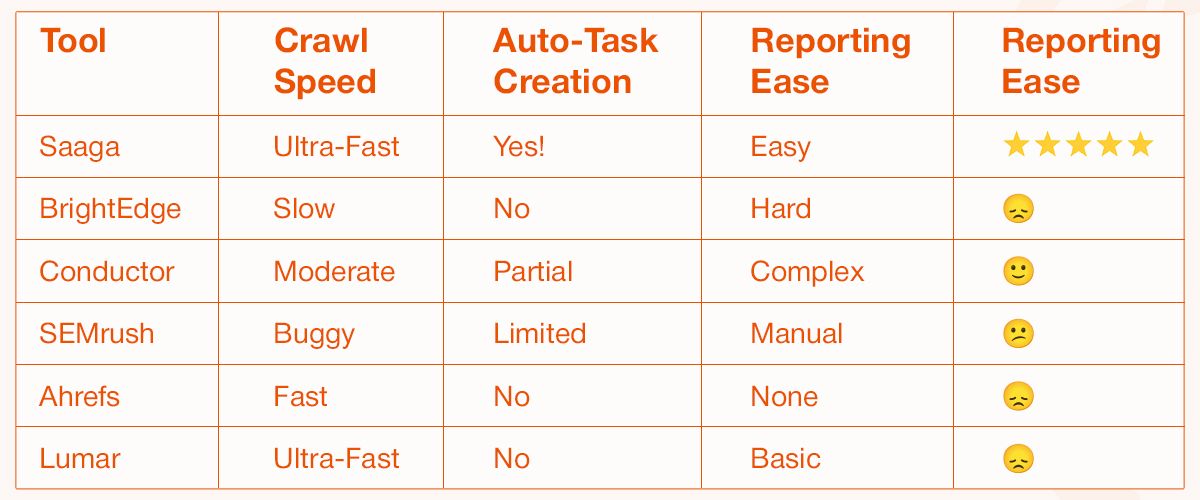
Years of my life were wasted on being duped by so-called enterprise SEO tools that have made empty promises and brought me a headache. BrightEdge? Similar to molasses, it requires professional services to customize a report. Conductor? Cuts off half of the technical difficulties. SEMrush? Fails upon you when you lastly try to climb it. Ahrefs? Great data, zero workflow.
When I first received BrightEdge in my hands, and I believed I had finally figured out the solution. No more spreadsheets. No more manual audits. Everything in one place. It sounded too good to be true. What I received was a system that:
- Took hours to crawl even medium-sized sites
- Required professional services just to customize a report
- Forced me to manually assign every single fix to the dev team
- Made me spend more time managing the tool than managing SEO
After years of updates:
- BrightEdge still moves at a glacial pace
- Conductor still misses half the technical issues
- SEMrush still crashes when you try to track more than a couple of regions
- Ahrefs still gives you incredible data, but zero workflow
- Lumar still crawls like a dream but leaves you hanging on what to do next
Neither are they broken nor merely stuck, but they were created in a time when SEO was less complex, teams were smaller, and the definition of marketing automation was to establish a weekly email.
This Is What Really Happened When I Used SOLVE
I'll admit that I was skeptical. Another platform that is promising end-to-end SEO and seamless automation. I heard it all before. I tried it, therefore, in the only way that counts, in a real project, under real pressure, and on a site to which half-baked tools were not acceptable.
The client was an online brand consisting of 47,00 pages, three languages, and a frontend heavy with JavaScript that had been massive and broken all the crawlers I had ever hurled at it. We had to detect and resolve any thin content, fix up any hreflang problems, and report to leadership within a two-week time period.
Here’s what went down:
- I started the crawl at 10:07 in the morning. By 10:25, it was done. Eighteen minutes.
- Not only did it finish without timing out, but it also automatically grouped the 3,200 thin pages it found by product category, so the content team could prioritize without me having to sort spreadsheets
- For the Q1 report, I didn’t spend hours building dashboards or reformatting charts; rather, I clicked “Executive Summary,” filtered by region and date range, and hit export
- What came out was a clean, branded PDF that my director sent straight to the CEO without editing a single thing
- When I gave the content team access, they didn’t need training or explanations; they saw plain-English recommendations, keyword gaps compared to competitors, and a simple page score telling them whether a page was ready to publish or needed work
- They shipped 40 optimized product pages in two weeks and didn’t slack.
That’s the difference. It’s not about having more features. It’s about removing friction. I spent at least three weeks working on active projects, each using every tool, and with real teams and real deadlines.
BrightEdge
- Took five hours to crawl a 30,000-page site
- Missed nearly 2,000 thin content pages because it doesn’t handle faceted navigation well
- To add a custom metric to a report? “You’ll need to engage professional services,” which meant more money and more delays
Conductor
- Content briefs were genuinely useful; the writing team loved them
- Crawler completely missed JavaScript rendering issues
- Had to run Lumar alongside it just to get a complete picture
- Two tools, two invoices, twice the headache
SEMrush
- The data was solid, but the platform buckled under pressure
- When I tried to track rankings across five countries and multiple devices, the dashboard crashed twice
- “Collaboration” basically meant exporting data and emailing it around
- not exactly enterprise-ready
Ahrefs
- Still has the best backlink database out there
- Finding 5,00 broken links is only half the battle
- No built-in workflow to assign fixes or track progress
- You’re still copying and pasting into spreadsheets and chasing people down in Slack
Lumar
- Handled our most complex technical audits without breaking a sweat
- That’s where its usefulness ended
- No content optimization. No rank tracking. No reporting
- You still need at least two other tools to turn its findings into action
Which Enterprise SEO Tools should you use?
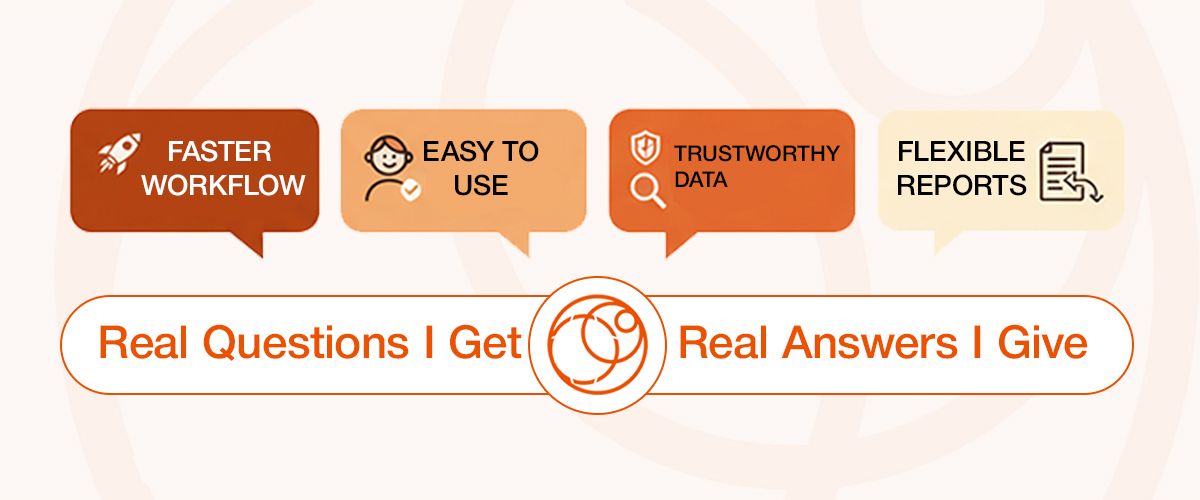
- If you’re managing multiple brands, regions, or business units, Saaga’s workspace feature lets you segment everything without creating separate accounts or messy filters. I used it for a client with eight sub-brands and cut reporting time by more than 10 hours a week
- If you’re part of a small team wearing multiple hats → SOLVE eliminates the need for additional tools. One SEO, one developer, two content writers, and we launched 400 optimized pages in six weeks without bringing in extra software or personnel
- If you’re running an agency, the white-label reporting and client-specific dashboards saved me from hours of manual formatting. I went from spending 20 hours a month on reports to under four, and clients stopped asking where their updates were
- If backlink analysis is your only priority, Ahrefs is still the gold standard, but you’ll need to pair it with something else to act on what you find
- If you’re dealing with an extremely complex site architecture → Lumar’s crawler is unmatched, but again, you’ll need another platform to handle content, rankings, and reporting
Conclusion
After ten years of wrestling with every major AI SEO tool on the market, I start every new project with SAAGA. Not because it’s perfect, but because it’s the only tool that doesn’t force me to work around it.
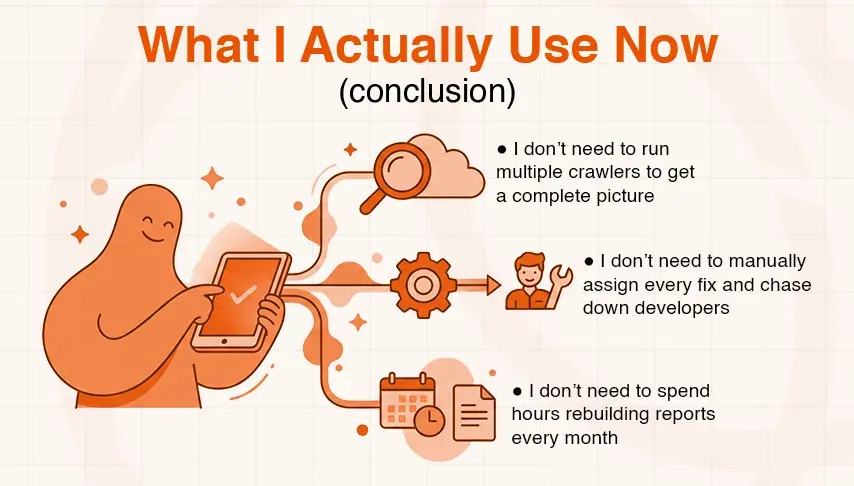
- I don’t need to run multiple crawlers to get a complete picture
- I don’t need to manually assign every fix and chase down developers
- I don’t need to spend hours rebuilding reports every month
The others? They still have their place. Ahrefs for deep link research. Lumar for complex technical audits. But none of them replace the need for multiple tools, multiple logins, and multiple exports. If you’re tired of that, just give Saaga Solve a real test. Not a canned demo. A live pilot. On your most chaotic site. With your most impatient stakeholder, and then you’ll see what I saw.