Get Faster Results With AI-Powered Keyword Research
Find the keywords your audience is searching for and start making smarter SEO decisions today.
4.9(67 reviews)Trusted by leading innovators and industry shapers.






Simplify SEO With Our Keyword Research Tool
With SAAGA Solve's keyword research tool, you won't have to spend hours doing keyword hunting. Without the right keyword, no matter how good your content is, it has the least possible chances of ranking on SERP. Proper keyword research and targeting is a crucial aspect of on-page optimization.
SAAGA Solve's keyword research tool:
• Automatically extracts all relevant organic keywords
• Gets detailed insights, including search volume, keyword difficulty, search intent, and more
• Provides a complete list of long-tail and semantically related keywords
• Builds a strong, data-backed foundation for your content strategy with comprehensive keyword coverage
Proper keyword research can unlock opportunities and results that wouldn't be possible otherwise.
Do More with Intelligent SEO Keyword Research Tool
The basis of a well-optimized website lies with proper keyword research. Without investing proper time and attention to this step, search engine optimization can become quite difficult, thereby impacting the rankings on SERP.
Here's how our keyword research tool helps you:
• It filters results based on your preferred parameters - including search volume, keyword difficulty, and competition level.
• Generates ready-to-use keyword lists, saving you hours of manual research.
• Provides a collection of question-based keywords to help you create content that directly answers user queries.
• Analyzes user intent, uncovering common search questions that can be turned into high-performing content topics.
With SAAGA Solve, don't waste time on performing tedious tasks like keyword hunting.
Your Complete SEO Keyword Research Solution
Solve's SEO keyword research tool is the best for you if you are tired of juggling between multiple platforms. With integrations from top-of-the-line AI tools and automation platforms, SAAGA Solve's keyword research tool is your one-stop solution for all your keyword hunting needs.
What can this keyword research tool do for you:
• Handles everything from keyword research to filtering and thematic clustering - all in one place.
• Allows you to focus on strategy and results instead of tedious research.
• Helps you find high-impact keywords faster, boosting efficiency and performance.
• Designed to help your content rank higher and attract the right audience.
From research to filtering to thematic clustering, this tool is here to streamline your entire keyword discovery process. With this tool, spend less time researching and more time achieving results.
Why SAAGA Solve's Keyword Research Tool Stands Apart?
Unlike other keyword tools available in the market, this tool serves a variety of purposes and is designed to play a crucial role in your marketing campaigns.
Let's take a look at some standout features of our SEO keyword research tool:
Saves time and effort
With our keyword research tool, you don't have to switch between multiple platforms as you get all the required data from one tool. Furthermore, our agent is trained to fulfill your requirements with minimal input from you.
Results backed by proper data
All the results given by Solve's keyword research tool are backed by accurate data, so you don't ever have to spend time analyzing those results. Access accurate search volume, keyword difficulty, keyword intent, and competition metrics to make smarter SEO strategies.
Discover keywords that your competitors miss
Stay ahead of the competition by discovering untapped, long-tail, and niche keywords. These keywords will not only help you optimize your content better, but they will also give you an edge over your direct competitors.
Simplify keyword research and organization
Keyword research is not just about finding the right keywords; it's about targeting those keywords with proper intent and content style. SAAGA's keyword research tool makes this easier by incorporating keyword intent and its preferred content style with the results.
Enhance Content strategy
Build content around thematically clustered keywords for better relevance and engagement. Just like our other tools, our keyword research tool is also designed to improve the overall optimization of your website.
Improved SEO performance
Higher search engine rankings rely on effective SEO strategies, and at the core of these strategies lies proper keyword research. By leveraging SAAGA's keyword research tool, your content will be designed to achieve higher rankings.
How to Use SAAGA Solve's Keyword Research Tool
To get the utmost benefit from our keyword research tool, it's crucial to know how it works. Here's a brief guide on how this tool functions:
Who Should Use The Keyword Research Tool?
SAAGA Solve is more than a content marketing automation platform; it's a complete toolkit for enhancing your online presence. Our keyword research tool is a big part of this platform, and here's how you can benefit from it:

Discover High-Value Keywords
Identify keywords with strong search volume and low competition to give a boost to your rankings.

Competitor Keyword Analysis
See which keywords your competitors rank for and find out opportunities to perform better than them.

Content Strategy Planning
Build content around thematically clustered keywords for better topical authority.

PPC Campaign Optimization
Find profitable keywords with high click-through-rate and manageable cost-per-click to maximize ad return on investment.

Local SEO
Identify location-specific keywords to capture nearby audiences.

Trend Tracking
Spot seasonal or emerging keyword trends to stay ahead of your competitors.
SAAGA Solve vs Other Tools
With endless keyword research tools available in the market, why should you choose SAAGA Solve's keyword researcher? Here's a list of all the reasons why SAAGA is better than other tools.

| FEATURE / BENEFIT | SAAGA SOLVE KEYWORD RESEARCH TOOL | OTHER AI RESEARCH TOOLS |
|---|---|---|
Keyword Accuracy | Provides precise search volume, difficulty, and competition data | Often limited to generic suggestions |
Thematic Clustering | Automatically groups keywords into topic clusters | Rarely available or requires manual work |
Competitor Insights | In-depth competitor keyword tracking & gap analysis | Limited or no competitor data |
All-in-One Workflow | Research, filter, cluster, and optimize in one platform | Requires multiple tools for the full process |
AI + Automation Integration | Integrates with top AI/automation platforms for seamless workflows | Basic AI assistance without integrations |
Ease of Use | Minimal input needed; agent prepares actionable keyword lists | Users must manually refine and filter results |
SEO-Focused | Built specifically for content optimization and ranking | General AI tools not tailored for SEO |
Long-Tail Keyword Discovery | Identifies niche, low-competition keywords that drive targeted traffic | Limited long-tail visibility |
Trend Analysis | Tracks seasonal and emerging keyword trends | Often lacks real-time trend tracking |
Content Strategy Support | Aligns keyword clusters with content planning for better topical authority | No built-in support for strategy alignment |
Ready to Redefine Your Marketing?
It's time to stop juggling tasks and start dominating your market.
Experience the future of marketing, where AI handles the complexity, and you enjoy the rewards.

Insights & Innovation
Gain the edge you need by uncovering cutting edge insights, proven tactics and powerful walkthroughs in AI enhanced marketing. Our expert resource center is crafted to fuel your success delivering high value guidance that helps you lead in a rapidly shifting digital world.
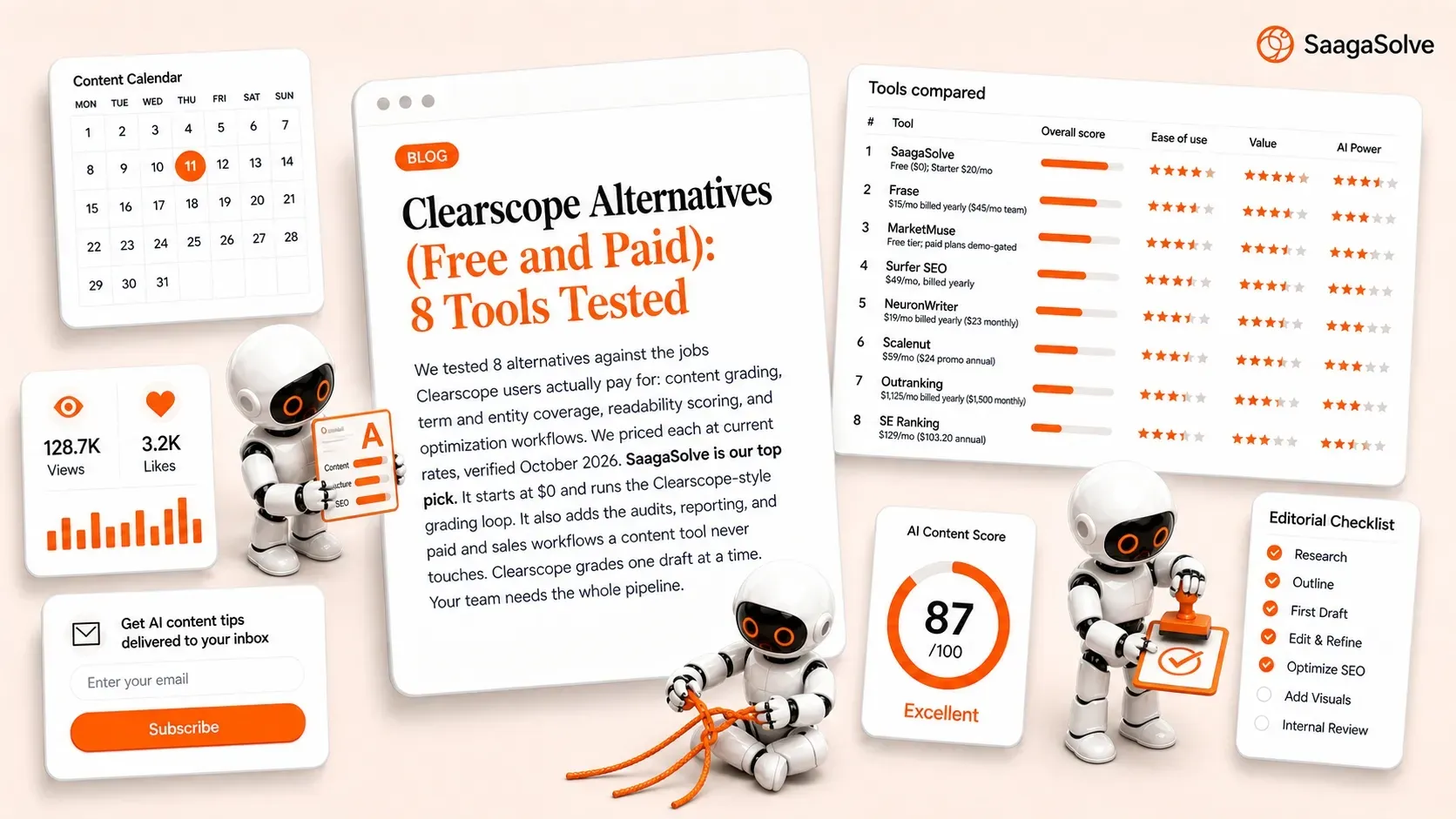
Clearscope Alternatives (Free and Paid): 8 Tools Tested
Looking for a Clearscope alternative? We compared 8 tools on grading, briefs, publishing and price, from $0 to $129+/mo, with ratings and who each fits.
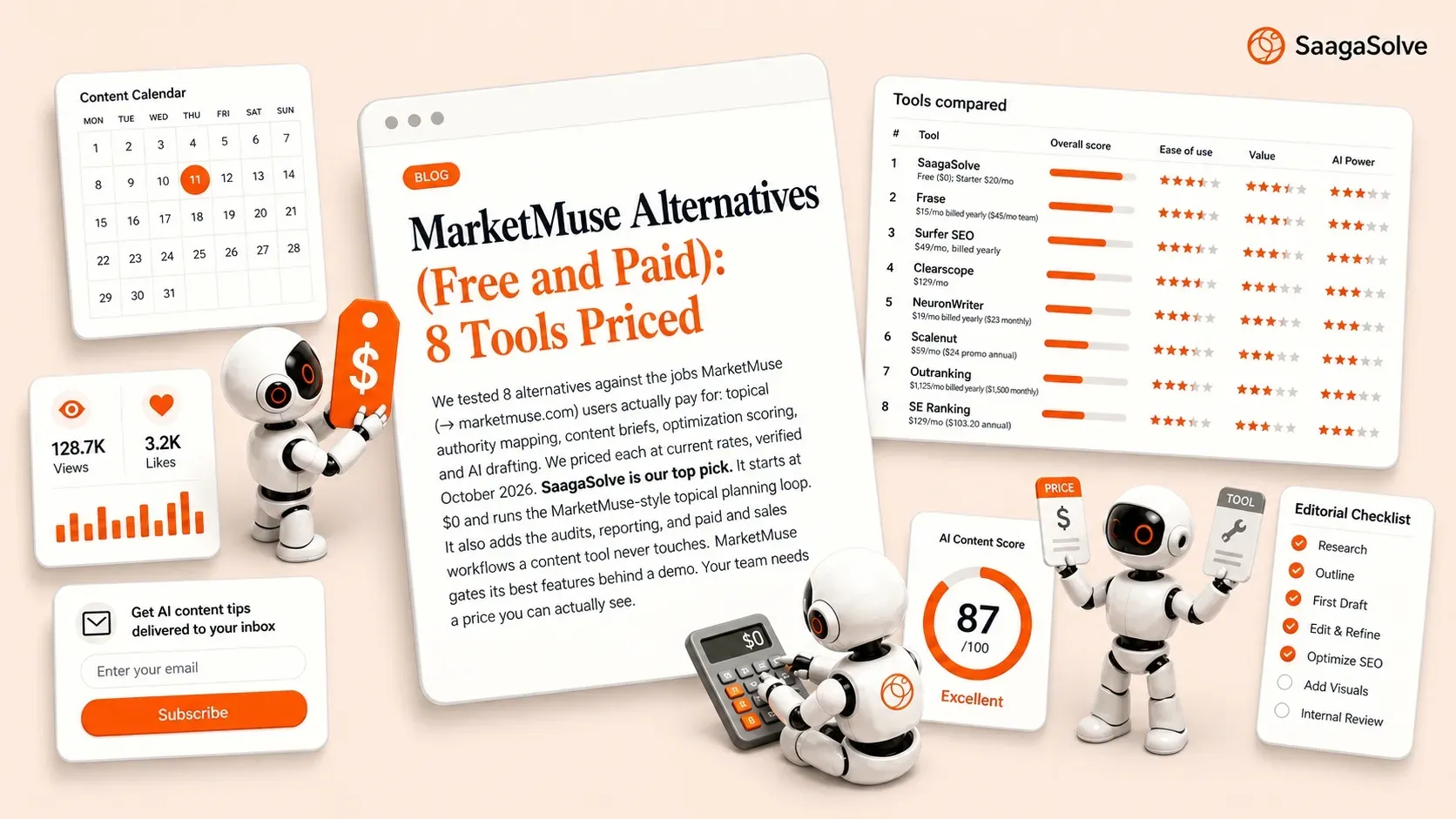
MarketMuse Alternatives (Free and Paid): 8 Tools Priced
MarketMuse hides paid pricing behind a demo and caps briefs at 5–20 a month. We priced 8 alternatives, from a $0 plan to $399/mo, to find one that executes.
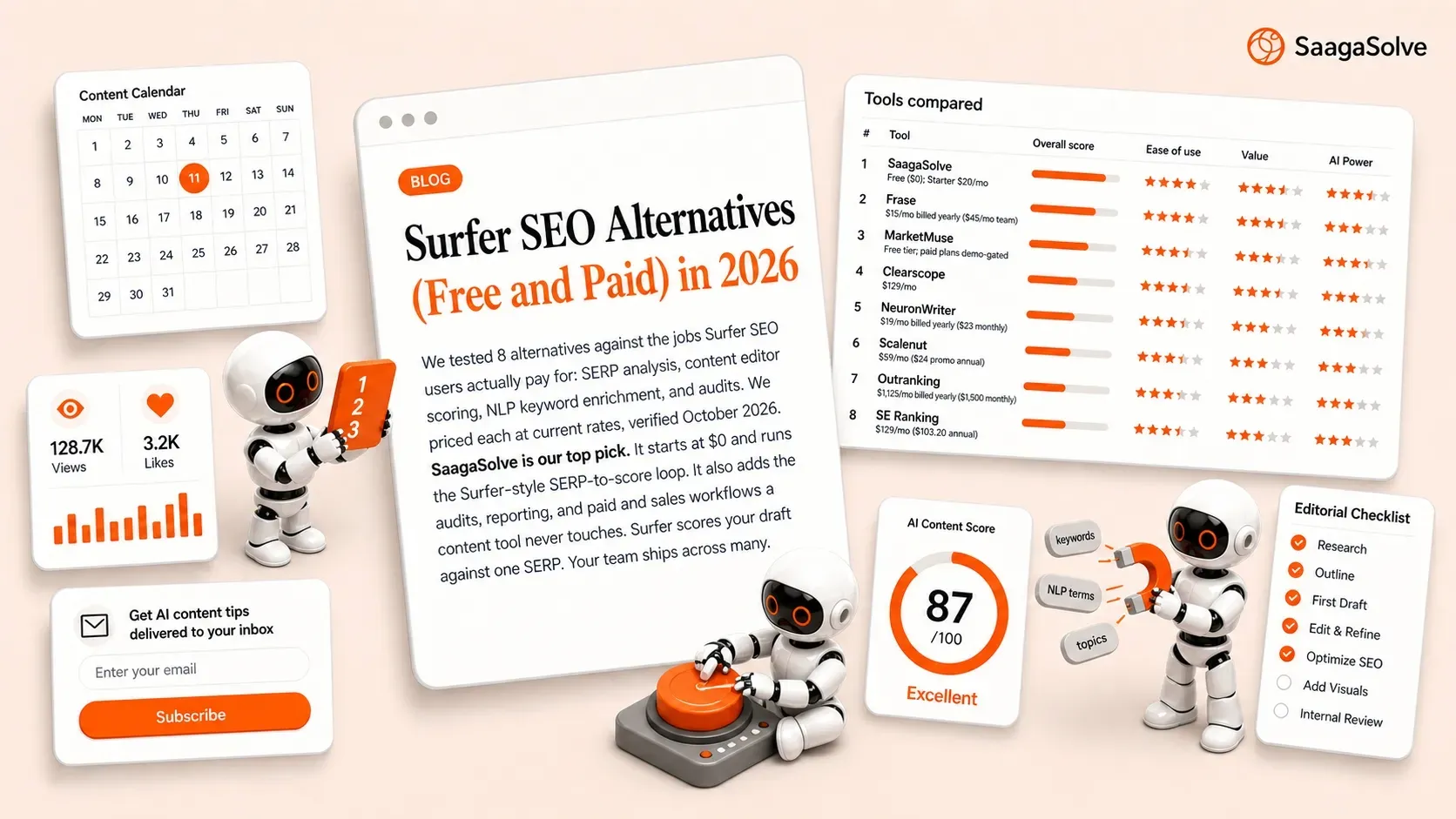
Surfer SEO Alternatives (Free and Paid) in 2026
Eight Surfer SEO alternatives compared on pricing, free plans, ratings and reviews. See which does the job Surfer stops short of. Prices verified Oct 2026.
Frequently Asked Questions
A keyword research tool helps you discover and analyze the best keywords to target for SEO and content marketing. It's essential for improving search engine rankings, driving organic traffic, and creating content that matches what your audience is searching for.
Unlike generic AI research tools, SAAGA Solve provides accurate keyword metrics (search volume, difficulty, competition), automated clustering, competitor insights, and seamless AI + automation integrations.
Yes. SAAGA Solve SEO keyword research tool specializes in uncovering long-tail and niche keywords that have lower competition but high potential for targeted traffic.
It's built for both. Beginners can get actionable keyword lists with minimal input, while SEO professionals can dive deeper into metrics, clustering, and trend analysis.
Yes! AI can do better keyword research due to its capability of going through multiple platforms and sources all at once. By leveraging other tools, AI can generate a comprehensive list of keywords and discover better keyword opportunities.