Are you still finding it hard to get clicks when your content appears on the first page? A single line of text is often to blame: your title tag. To correct the situation, the first thing to do is to know “what is an SEO title”.It is the most essential on-page SEO factor in attracting search engine users. This guide defines the term, explains its difference from your on-page headline, and presents a specific set of SEO title best practices that will transform visibility into actual traffic.
What Is an SEO Title?
To master search optimization, you need to master the terms. The question of what is an seo title refers to is a specific HTML element that lives in your webpage’s source code.
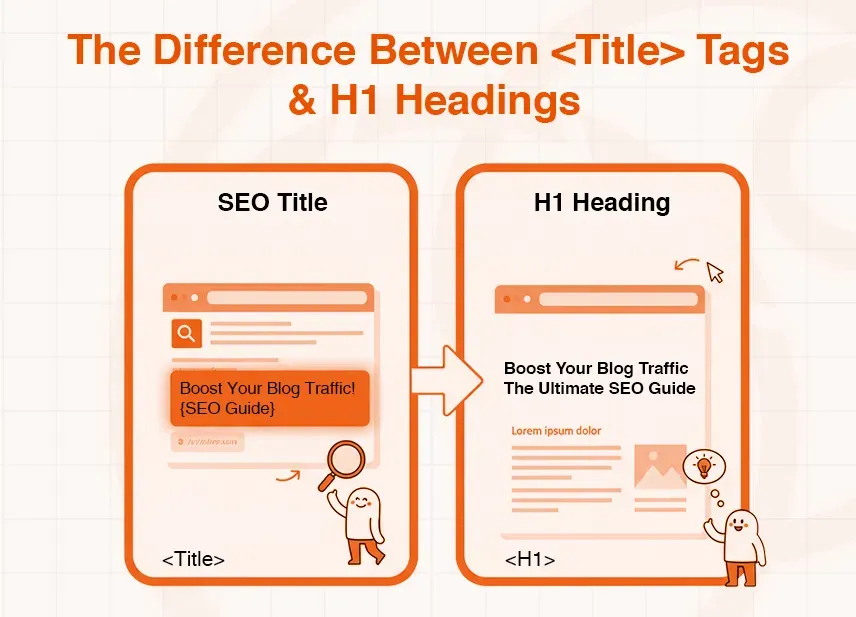
The Difference Between Title Tags and H1 Headings
One of the most frequently asked questions is the difference between the title and H1. The H1 refers to the headline a user reads after accessing your page. Their first impression is the SEO title, or the headline shown before clicking, directly in the search results.
Where Does the SEO Title Appear? (SERPs, Browser Tabs, Socials)
This tag appears in three key locations:
- on the Search Engine Results Page (SERP) as the blue link you can click,
- as the browser tab at the top of your screen
- and frequently as the default headline when your link is shared on social media.
It is your content's universal label across the web.
Why Your SEO Title Is Critical for Rankings
Why do experts obsess over what is an seo title? Because it holds disproportionate weight in the ranking algorithm.
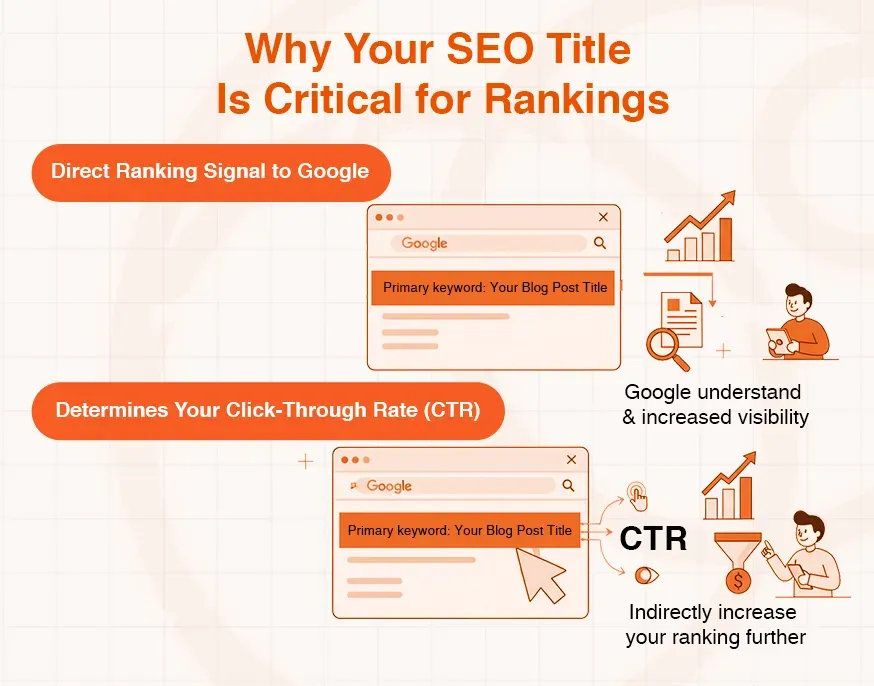
It's a Direct Ranking Signal to Google
Google uses your title tag to understand a page’s core topic. Including your primary keyword here is essential, not optional. This is the most powerful on-page signal you provide to search engines about how relevant your content is to a user’s query.
It Determines Your Click‑Through Rate (CTR)
In addition to rankings, the title is an advertisement. An attractive title will generate a better click-through rate (CTR). Having a high CTR tells Google that your listing is valuable, and this will indirectly increase your ranking further. It is the owner of your traffic.
5 Essential SEO Title Best Practices for 2026
Knowing what an seo title is only half the battle. You must know how to write one. Adhering to seo title best practices ensures your hard work gets seen.
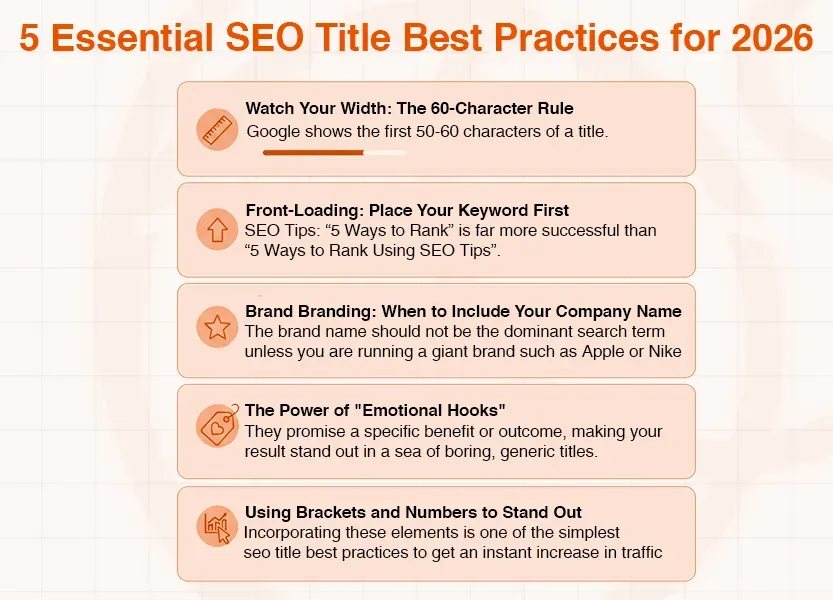
Watch Your Width - The 60‑Character Rule
One of the most inflexible SEO title best practices is length. Google shows the first 50-60 characters of a title. If yours is longer, it gets truncated with an ellipsis (...). In my professional work, I aim for 55 characters to ensure that the complete message is visible on both desktop and mobile.
Front‑Loading - Place Your Keyword First
When writing your tag, place the target keyword as close to the start as possible. This is a core tenet of seo title best practices. Users scan fast; relevance is immediately established by seeing the keyword. “SEO Tips: 5 Ways to Rank” is far more successful than “5 Ways to Rank Using SEO Tips.”
Brand Branding - When to Include Your Company Name
Standard seo title best practices suggest placing your brand name at the end of the title, separated by a pipe (|) or dash (-). The brand name should not be the dominant search term unless you are running a giant brand such as Apple or Nike, which is why it should not take valuable front-loaded space.
The Power of "Emotional Hooks"
To truly leverage what an seo title is, use emotional triggers. Adjectives like "Proven," "Fast," "Ultimate," or "Easy" act as emotional hooks. They promise a specific benefit or outcome, making your result stand out in a sea of boring, generic titles.
Using Brackets and Numbers to Stand Out
It has been discovered that titles that contain numbers (e.g., 7 Steps) or brackets (e.g., [Case Study]) have much higher CTRs. This strategy interludes visual tediousness in the SERP. Incorporating these elements is one of the simplest seo title best practicesto get an instant increase in traffic.
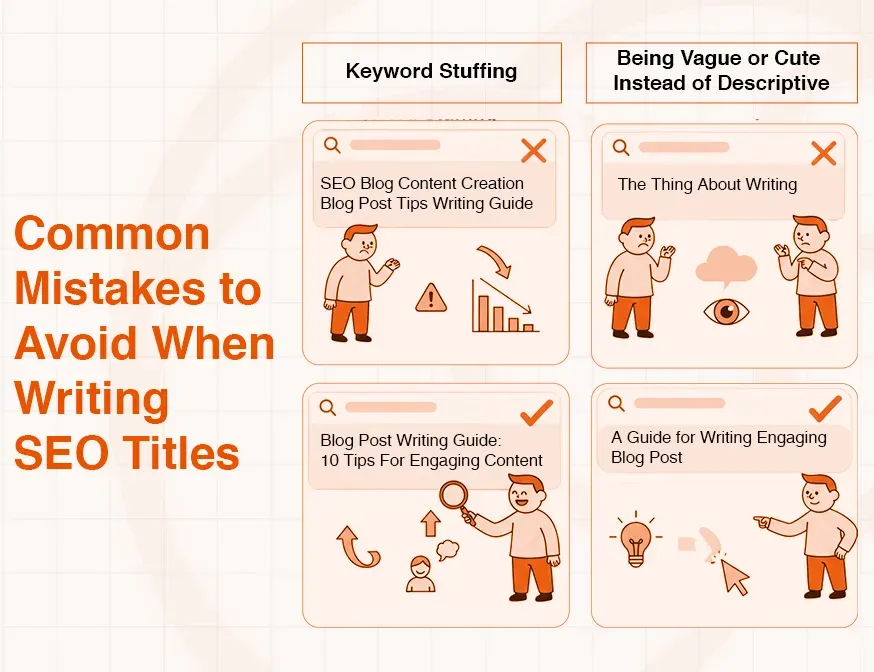
Common Mistakes to Avoid When Writing SEO Titles
Even experienced marketers make mistakes when they misunderstand what is an seo title. Avoid these pitfalls.
Keyword Stuffing
The days of “SEO Pizza, Pizza SEO, Best Pizza” are ended. Keyword stuffing looks spammy to users and may result in penalties from Google. Effective SEO ensures the title is written for humans without compromising on the target phrase.
Being Vague or "Cute" Instead of Descriptive
Clarity beats cleverness. A title like "A Thought for Tuesday" tells the user nothing. Titles such as “5 Productivity Tips on Tuesday Mornings" are actionable and descriptive. Always emphasise a clear description rather than abstract creativity.
Conclusion
The first handshake with a potential customer is your title. Make it count.
We have defined what is an seo title and explored the critical seo title best practices. From character limits to front‑loading keywords, these little things add up to have a massive impact on your traffic.
In my experience, the best SEOs are testers. When a page is not getting clicks, rewrite the title. Use tools like SAAGA SOLVE to generate variations and test new emotional hooks. Optimization is an ongoing process of improvement.