See how a single prompt creates your SEO workflow.
How to Run a Holistic SEO Audit in Under 4 Minutes (Using Agentic AI)
TL;DR
Running a comprehensive, manual SEO audit usually takes hours of tedious data collection across multiple browser tabs and software platforms. This article features marketing expert Laura Cardona testing SaagaSolve, an agentic AI marketing tool, to automate the entire process. By entering a single prompt ("Audit SaagaSolve.com across the four pillars of SEO"), the autonomous AI utilized tools like Firecrawl, Semrush, Ahrefs, and Lighthouse simultaneously. In just 3 minutes and 47 seconds, it delivered a prioritized, highly specific action plan covering all four core SEO pillars: Technical, Content, Off-Page, and User Experience (UX). Rather than replacing the SEO expert, this type of automation removes the "busywork" of data gathering, giving marketers hours back to focus entirely on high-impact strategy and implementation.
If you've ever run a full SEO audit manually, you know how time-consuming and effort-intensive this actually is. Open 12 browser tabs. Export data from Semrush, Ahrefs, Google Search Console, and Screaming Frog. Cross-reference crawl errors with analytics. Check page speed in Lighthouse. Hunt for broken backlinks. Audit metadata. Flag thin content. Three hours later, you're still building your spreadsheet, and you haven't even started analyzing the data yet.
What if you could skip all that and get straight to the strategy?
That's exactly what an AI SEO audit makes possible. Not the kind where AI spits out generic recommendations you could've Googled. This is about agentic AI that actually understands what tools to use, pulls live data from multiple sources, and delivers a complete audit report while you grab coffee.
SEO expert Laura Cardona recently tested this with SaagaSolve, an agentic marketing platform that runs holistic SEO audits in minutes. In the time it took her to make coffee (3 minutes and 47 seconds, to be exact), the AI had crawled 47 pages, analyzed over 1,200 backlinks, and flagged 12 issues she could fix today.
What happened next surprised her.
The 4 Pillars of a Holistic SEO Audit
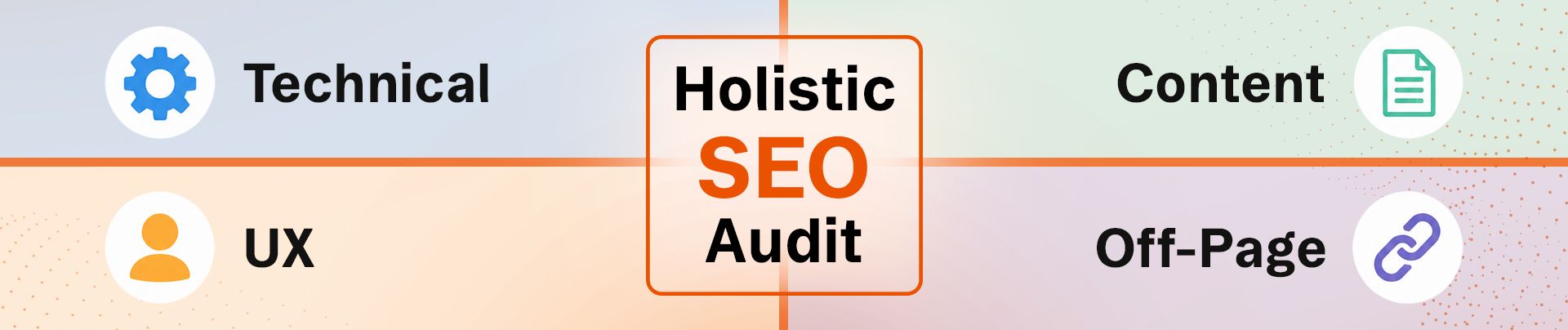
A proper SEO audit isn't just checking if your meta descriptions are filled in. It needs to cover four core areas, including;
1. Technical SEO
This is basically your foundation. Can Google (and other search engines) actually crawl and index your site? Are you throwing up roadblocks with broken redirects, slow server response times, or janky JavaScript rendering? These are the real questions, not something to overlook at all. This is what technical SEO mainly includes:
- Crawlability and indexability
- Site speed and Core Web Vitals
- Mobile responsiveness
- Structured data and schema markup
- XML sitemaps and robots.txt configuration
If your technical SEO is broken, think of everything else as faded. You could have the best content in the world, but if Google can't read it, there is absolutely no point in having it; you remain invisible.
2. Content SEO
This is where most people spend their time, and there's a good reason why. Content SEO is about making sure your pages answer the questions people are actually searching for. That means:
- Keyword targeting and search intent alignment
- On-page optimization (title tags, headers, meta descriptions)
- Content quality, depth, and freshness
- Internal linking structure
- Topical authority and content gaps
Good content SEO means users land on your page, find what they need, and stick around.
3. Off-Page SEO
Your backlink profile is still one of Google's top ranking signals. Off-page SEO is about building authority through:
- Quality and quantity of backlinks
- Topical relevance of linking domains
- Anchor text diversity
- Brand mentions and citations
Think of backlinks as votes of confidence. The more credible sites linking to you, the more Google trusts you.
4. User Experience (UX)
Google cares about how people interact with your site. Are they bouncing after two seconds? Getting frustrated by intrusive pop-ups? Struggling to navigate on mobile? UX factors can include:
- Page load speed and interactivity
- Mobile usability
- Navigation and site architecture
- Engagement metrics (bounce rate, time on page, scroll depth)
A site that's technically perfect but painful to use won't rank well, and won't convert even if it does.
Most SEO audits focus on one or two of these pillars. A holistic SEO audit covers all four. And that's exactly what Laura wanted to test with SaagaSolve.
Running the Holistic SEO Audit: One Prompt, Multiple Tools
Laura kept the prompt simple:
"Audit SaagaSolve.com across the four pillars of SEO."
That's it. No manual tool selection. No exporting CSVs. She hit enter and watched the platform go to work.
Within seconds, SaagaSolve spun up multiple tools in parallel:
- Firecrawl to understand the site structure and content
- Semrush to pull organic keyword rankings and traffic data
- Ahrefs to analyze the backlink profile
- Lighthouse to audit Core Web Vitals and page performance
This is where agentic AI shines. Traditional AI tools wait for you to tell them what to do. Agentic AI figures out the plan, picks the right tools, and executes autonomously. It's like having a junior analyst who actually knows what they're doing.
The full report landed in 3 minutes and 47 seconds after she hit enter. No babysitting. No manual data wrangling. Just a complete report covering all four pillars.
What the Audit Actually Found
The report came back structured, prioritized, and immediately ready to act on. But what really stood out was how specific the recommendations were. Not vague "improve your content" advice, but concrete fixes with data to back them up.
Traffic Leakage at the Top of the Funnel
The audit identified that the highest-traffic page on the site was pulling 2,400 monthly visits. It was a blog post comparing SaagaSolve to competitors. Great for awareness, terrible for conversions. Why? Zero internal links pointing to the product or pricing pages. The AI didn't just flag this as a problem. It suggested adding 2-3 contextual links with specific anchor text that would guide readers down the funnel without feeling pushy.
These are the kinds of obvious patterns that are easy to miss when you're deep in day-to-day execution.
Keyword Targeting Issues Costing Rankings
One of the core service pages had a meta title and H1 that completely missed the primary keyword people were actually searching for. The page was ranking on page two for a high-volume term, but the title was too clever, too branded. The fix was straightforward.
Rewrite both to include the keyword naturally. But without the audit, weeks could've been spent wondering why that page wasn't converting search traffic.
At this point, Laura was starting to feel called out. But the audit wasn't done yet.
Content Strategy Built on Proven Patterns
Since that competitor comparison blog post was driving so much traffic, the AI recommended creating three more comparison pages targeting related keywords.
This wasn't just "write more content" advice. It identified a working pattern and told her exactly how to replicate it. That's the kind of insight that usually comes from a strategy session, not an automated audit.
Core Web Vitals Performance Issues
The Largest Contentful Paint (LCP) was sitting at 3.2 seconds, well above Google's 2.5-second threshold. The culprit? Hero section images are loading too late in the render process.
The fix was so simple but invisible at the same time: add preload tags to prioritize those images. Lighthouse caught it, the AI packaged it into a clear recommendation, and Laura had it fixed in 10 minutes.
Thin Content Diluting Site Authority
The audit also highlighted a handful of pages with very little useful content. Although they were already indexed, they weren't contributing much to the site's overall authority.
Instead of recommending more content for the sake of it, the AI suggested adding a noindex tag to those pages. It's a small change, but one that helps search engines focus on the pages that actually strengthen the site's topical authority.
Why AI Doesn't Replace the SEO Expert
Laura gets this question every time she talks about AI SEO tools: "Isn't this just replacing your job?"
The answer is definitely no. Think of it like a personal shopper who gathers your groceries. You still have to cook the meal.
The AI handles the tedious data collection and surfaces the patterns you need to see. But the SEO expert is still the one deciding which recommendations to prioritize, how to implement them, and what the overall strategy should be.
The audit gave Laura a roadmap in under four minutes. She could've spent three hours gathering that same data manually. Or she could spend those three hours actually fixing the issues and building a smarter content strategy.
That's the real value of AI SEO automation. It doesn't dumb down the work. It clears the path so you can do the work that actually matters.
Why This Matters for SEO Teams and Agencies
If you're managing SEO for multiple clients or running an in-house team, you know that audits are a bottleneck. They take forever, they're repetitive, and they pull your best people away from strategic work.
Agentic AI changes that equation. You can run audits faster, more consistently, and at scale. That means:
- Faster onboarding for new clients. Get a full audit done in the first call.
- More frequent audits. Monthly or even weekly check-ins instead of quarterly deep dives.
- Better prioritization. Spend your time on high-impact fixes, not data gathering.
- Scalability without burnout. Handle more clients without hiring more analysts.
And because the AI pulls live data from tools like Semrush, Ahrefs, and Lighthouse, you're not sacrificing quality for speed. You're getting both.
What Laura Would Do Differently Next Time
The audit was solid, but it's not perfect. The AI can't replace human judgment when it comes to brand voice, competitive positioning, or long-term content strategy. It also can't tell you why your bounce rate spiked last month or whether a drop in rankings is algorithmic or competitive.
What it can do is give you a head start. It surfaces the data you need to make those judgment calls faster and with more confidence.
Next time, Laura would run the audit monthly instead of waiting for a problem to surface. At this speed, there's no reason not to.
The Bottom Line
Running a full SEO audit report used to mean blocking off half a day, juggling multiple tools, and building reports by hand. With agentic AI, you can get the same depth of analysis in minutes and spend your time where it actually counts.
Laura tested this with SaagaSolve using one simple prompt. The platform handled the rest: crawling the site, pulling competitive data, running performance tests, and surfacing prioritized recommendations across all four pillars of SEO.
The result? A complete audit in 3 minutes and 47 seconds. Real insights. Real quick wins. Zero busywork.
If you're still running SEO audits the old way, you're working too hard.
Ready to try it yourself? Run your own AI SEO audit with SaagaSolve and see how much time you get back. Start with one prompt: "Audit [your domain] across the four pillars of SEO." You'll have a full report before your coffee gets cold.