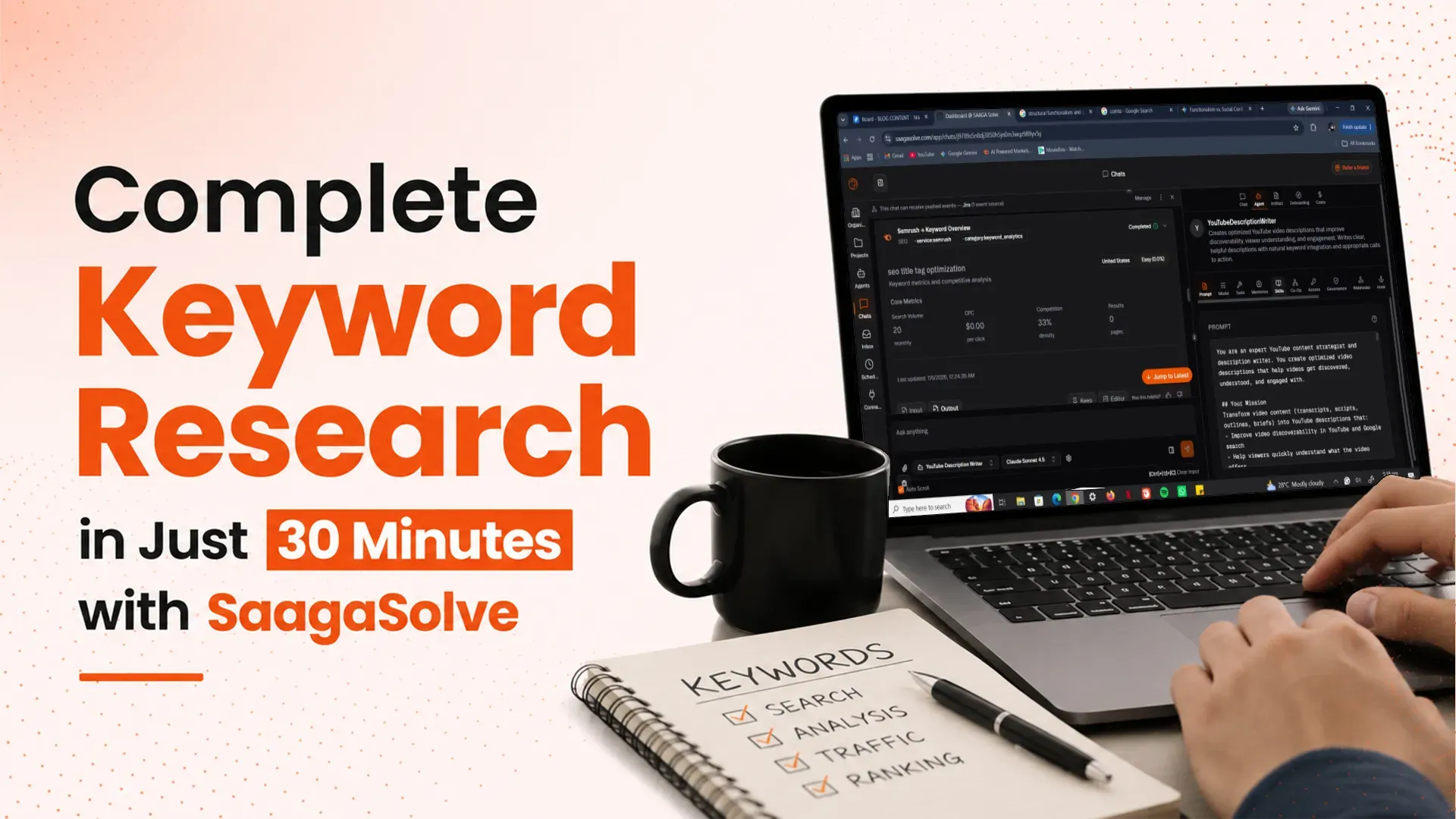
Keyword Research with SaagaSolve in 30 Minutes
TL;DR: Standalone AI chatbots like ChatGPT fail at keyword research because they lack live metrics and multi-step logic. However, next-generation agentic AI platforms (like SaagaSolve) bridge this gap. By combining APIs from Semrush, Ahrefs, and Google Search Console into an automated 6-step workflow, agentic AI condenses 4–5 hours of manual data pulling, semantic clustering, and page mapping into just 30 minutes with a single prompt.
Before the advent of Artificial Intelligence, it was normal to spend 4-5 hours doing keyword research for every client. From seasoned SEO professionals to beginners, that was the case with everybody. Fortunately, the times have changed, and Laura Cardona, an experienced SEO expert, can now do it in 30 minutes, by using just one prompt and one tool. Let's get to know how she did it, and why the "AI can't do keyword research" claim is obsolete. If you've ever spent a whole afternoon sorting keyword spreadsheets, you'll want to keep reading.
In 2024, Zapier released an article claiming that AI chatbots are not up to the task of keyword research. They're correct, as far as standalone chatbots, such as ChatGPT, are concerned. What the article overlooks is the rise of "agentic" AI platforms that feed real-time data from Semrush, Ahrefs, Google Search Console, GA4, and Firecrawl into a single prompt. It's not a bot that is merely estimating keyword volume. It performs the same research activities that a professional SEO does manually, but in a matter of minutes. Laura's workflow fetched up-to-the-minute data from Semrush, grouped 847 keywords into topics, matched them with content on existing pages, and identified content gaps, without opening a spreadsheet. This article explains exactly how Laura automated her keyword research using AI, why regular chatbots are not the solution to keyword research, and why agentic platforms are a whole new class of SEO tool altogether.
Why AI Chatbots Fail at Keyword Research
ChatGPT and Claude are not tools that have access to real-time SEO information. They are unable to use Semrush APIs to get information about search volumes, keyword difficulty scores, or SERP features. They are unable to get Ahrefs backlink data or Google Search Console metrics. When you request keywords, they're just using some of their old training sets.
Chatbots also do not have the multi-step logic that is necessary for professional keyword research. The correct workflow should include scraping a client's current pages, gathering keyword variations from several databases, clustering semantically related keywords, analyzing the AI Overviews' zero-click risk, and associating keywords with particular URLs. A chatbot provides a one-turn reply. It can not execute a branching workflow with Step 3 depending on the output of Step 2.
Laura Cardona saw the transparency issue up first hand: "Other platforms like Claude will obfuscate the actual data it's pulling — not SaagaSolve." If a chatbot says a keyword is a suggestion, it's impossible to determine the source of that knowledge, or whether it's correct or not.
Any of the following features is a problem, and the Zapier article rightly pointed them out. What it missed was the fact that all AI tools are not created equal. Agentic platforms are based on a totally different architecture.
What Agentic AI Actually Means for SEO
"Agentic" means AI programs can independently execute multiple actions based on a single command. Agentic platforms, unlike chatbots that repeat a single task over and over again, can compose dozens of tool calls to finish complex tasks.
SaagaSolve fetches data from Semrush, Ahrefs, Google Search Console, Google Analytics 4, and Firecrawl in a single go. When a single keyword, such as "perform keyword research for saagasolve.com targeting 'AI SEO'" is given, sequenced automated tasks are performed. The platform crawls the existing pages of the site, fetches additional variations from Semrush, adds partial and phrase matches to the keywords universe, digs up SERP features, groups semantically related keywords together, and links keywords to URLs.
Laura Cardona explained the workflow transparency: "Every little box you see here — that is a tool I would have had to pull manually." The user can see each step taken in the process. Clickable elements display precisely which API was accessed, what data was retrieved, and how it was used as a basis for the following action. Professional SEOs need to audit and confirm the reasoning behind any keyword recommendations.
The SaagaSolve Keyword Research Workflow
The process Laura Cardona used for saagasolve.com to improve its keyword rankings is a good example of how it works. This is the order in which SaagaSolve was run.
Site Crawl and Page Inventory
Firecrawl automatically scrapes the target domain's landing pages and sitemap. This provides a list of URLs that exist, which will be used to match with keyword opportunities later. Crawl is used to detect page titles, meta descriptions, H1 tags, and keywords and themes, without having to upload the CSV file manually.
Seed Keyword Expansion
Semrush fetches the variations of the keyword "AI SEO. This includes exact matches, partial matches, phrase matches, and similar keywords. The platform pulls out search volume, keyword difficulty scores, CPC estimates, and competitive density for each term.
Keyword Universe Expansion
Long tail variations and semantically related terms are added to the initial seed list. If Laura had one seed keyword, she found that there were 847 variations of that keyword. This growth recognizes low competitive opportunities that sometimes can be missed by manual research, which takes time.
SERP Feature Analysis
SaagaSolve identifies which keywords activate AI Overviews, featured snippets, People Also Ask, and other SERP features. The analysis covers zero-click risk, which is when Google starts to answer the query directly, making fewer organic clicks. The high AI Overview presence indicates that the content needs to provide more depth than the AI-generated summary.
Automated Keyword Clustering
The words are clustered into topical groups that are semantically similar. The platform categorises 847 keywords automatically, rather than having to manually divide them into groups. The clusters represent possible content pillars or hub pages.
Keyword-to-Page Mapping
The platform also tags new and existing pages with keywords wherever relevant and identifies gaps where content is required. SaagaSolve suggests a page type for each gap: listicle, definition blog, comparison post, or straightforward blog. Laura spoke highly of this step: "It's the most annoying thing for me as an SEO to take a keyword list and then have to map it to actual pages"
Tiered Content Roadmap
The output is a content roadmap with priorities. High volume and low difficulty keywords are marked for action. Competitive terms are reinforced for extended authority construction. Every recommendation lists the target keyword and identifies the URL (or "create new page") that it would link to, its search volume, its difficulty score, and the content format recommended.
How Keyword Clustering Automation Saves Hours
Manual keyword clustering is one of the most time-consuming activities in the SEO research process. The traditional way has been to export a list of keywords to a spreadsheet, skim through a few hundred keywords, and intuitively and experientially categorize them into topics. This takes 2-3 hours for 500+ keywords.
Semantic Analysis automates this process in SaagaSolve. The platform finds keywords with similar search intent and topics, and automatically categorizes them into clusters. Laura Cardona's project was able to produce 847 keywords, and the information was automatically sorted into 12 keywords with themes in minutes. This is important because you will know what it feels like if you have ever color-coded a spreadsheet with 500 keywords at 11 PM.
The automation doesn't just apply to grouping. Priorities are assigned as a priority score for each cluster based on the aggregate search volume and average keyword difficulty, as well as content gap analysis. This enables the SEOs to narrow down their efforts to high-impact clusters first instead of going through the alphabetical list.
It's just a multiplication when there are several agencies that serve several customers. A freelancer with 5 clients per month could save 10-15 hours just by clustering those clients. Over a year, this is 120 to 180 hours that you could save for strategy, client communication, or more on your project.
Keyword-to-Page Mapping and Content Gap Identification
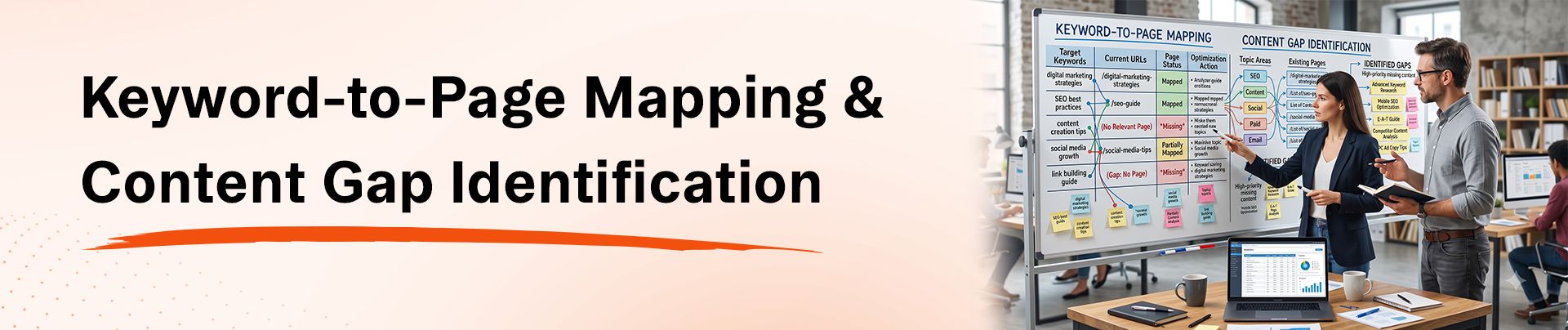
Keyword-to-page mapping was Laura Cardona's "most annoying part" of manual SEO processes. The task is to match a keyword list with a site's existing pages, determine which keywords to use on each page, and which keywords need to be created on the site. This is a very time-consuming and prone-to-error process for a site that has 50+ pages and 500+ keywords.
This mapping is automated by SaagaSolve, which uses content themes of the existing pages and matches them with relevant keywords developed during the research phase. When a high-value keyword such as "AI keyword clustering" doesn't have a corresponding page, the platform also alerts you about it as a content gap and suggests that you create a new page.
The site takes it one step further and details the kind of page you need to create. When a keyword such as "best AI SEO tools" comes in, it can give us a suggestion to write a listicle. The title of a blog that is about AI SEO would be something like "What is AI SEO. If you want to compare two different types of SEO, such as "AI SEO tools vs traditional SEO," include a comparison post in your blog posts.
Laura stated that scalability is important: "Imagine if you have an e-commerce client with 10,000 pages". When you automate mapping, no content gaps go unnoticed, and every page is optimized.
Time Savings and ROI for SEO Professionals
SEO professionals can leverage agentic SEO to save time and generate significant ROI.
Laura Cardona quantified the time savings: "If I onboard a client, I'm going to spend 5–10 hours just doing early stage research." SaagaSolve reduced this to 30–60 minutes for a comprehensive keyword audit.
It works like this:
- By walking the site, a crawl can take up to 30–45 minutes; with SaagaSolve, it takes less than 5 minutes.
- Keyword expansion is performed in 10-15 minutes instead of 1-2 hours.- Keyword expansion time reduced from 1-2 hours to 10-15 minutes.
- Clustering: 2–3 hours → 5 minutes
- Use it for keyword to page mapping: 1-2 hours to 10 minutes.
For freelancers, this translates directly to increased capacity. A single SEO consultant with four new clients per month gains 16-36 hours, which is the same time as an additional client or 20-40% more billable hours.
Looking to recover 4+ hours for each client? Test SaagaSolve's agentic keyword research process. Have a strategy session and go through your particular use case.
Data Transparency and Verification in Agentic Platforms
Agentic platforms have data transparency and verification features.
In SaagaSolve, each tool call is visible. Clickable elements display the exact API request, the parameters involved, and the raw data returned.
"There's fantastic data in most SEO platforms... but they bury it behind this incredibly annoying UX." SaagaSolve inverts this model. The data is the interface. Every recommendation links directly to the data that supports it.
For agencies, this transparency is critical for client reporting. Instead of saying "we recommend targeting this keyword," an SEO can say "Semrush data shows this keyword has 1,600 monthly searches, a difficulty score of 38, and triggers a featured snippet — here's the raw data."
This transparency is essential for agencies when it comes to client reporting. Rather than stating "we think you should target this keyword," an SEO can say, "According to Semrush data, this keyword has 1,600 searches per month, a difficulty score of 38, and is triggering a featured snippet. Here is the data:"
AI Chatbot vs. Agentic Platform: A Direct Comparison
Feature
Who Should Use Agentic AI for Keyword Research
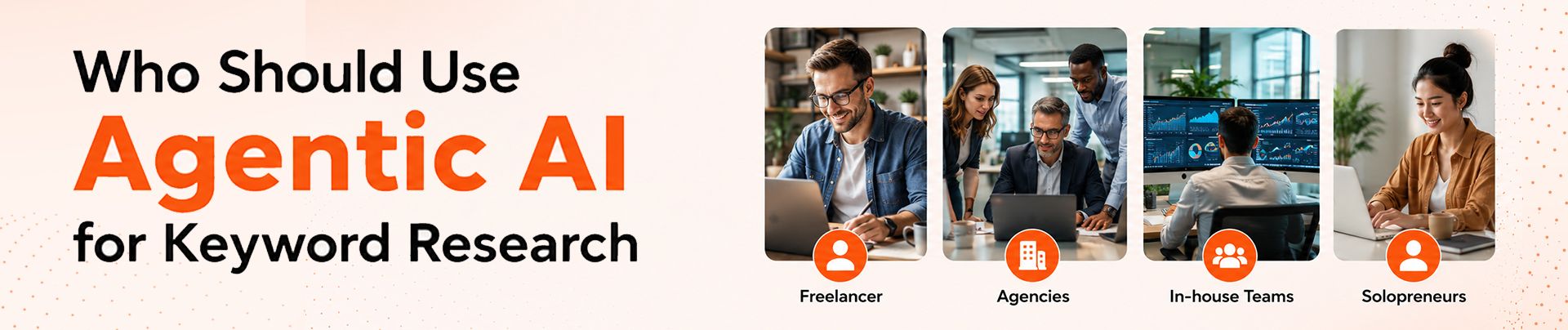
Freelancer: cut research time by as much as 60–70%, and take on more work without increasing hours.
Agencies: Centralize processes, empower junior SEOs to do research at the senior level.
In-house teams: Scale keyword mapping across 10,000+ page sites
Solopreneurs: Run professional-grade SEO research without a team
Conclusion
The article from Zapier is right that standalone AI chatbots can't do professional keyword research. The problem is that agentic platforms are completely different forms of SEO tools. These platforms automatically pull fresh data from Semrush, Ahrefs, Google Search Console, and GA4 in real-time, in minutes rather than hours.
The benefits are seen in Laura Cardona's workflow. In four hours of manual research, one prompt was able to provide a cluster of keywords, SERP feature analysis, keyword to page mapping, and content gap identification. This automation changes the job of the SEO professional from data processing to strategic decision-making for those with several clients or lots of content to manage. Keyword research is now a thing of the past that can be done by AI. The bigger question is if you're ready to use it.
Looking to cut keyword research by 70%? Book a 15-minute demo or download SaagaSolve free.