After starting to blog two years ago, I explored all available methods, including manual keyword research that consumed entire weekends and holidays, and backlink hunting that was tiresome and time-consuming beyond measure. Writing the content drained my mind and caused mental exhaustion after each week of continuous work. Next, I learned about AI-powered SEO agents that have entirely changed my attitude towards search engine optimization and content strategy in ways I never imagined possible.
Today, in this detailed post, I will demonstrate how I came to know about these novel tools that have transformed digital marketing completely. Why I personally enjoy collaborating with AI SEO companies whose technologies take care of routine work automatically, and how you can get the same outcome and increase your organic traffic by a considerable margin within a reasonable timeframe.
What Are AI-Powered SEO Agents?
These advanced systems are digital assistants that never need sleep or a break as they continuously analyze the available stack of search data throughout the day and night.
Proposing relevant groups of keywords that your competitors might have missed during their research, automatically making complex on-page optimization decisions that will otherwise take hours to complete manually. And even anticipating the trends of ranking before they become apparent to other marketers in your field.
I have personally tried a number of the tools that feel remarkably similar to employing an experienced SEO professional whose skills are based on years of good practice and an adept data scientist whose analytical abilities help you to make sense of complicated patterns quickly. So that you can focus on producing compelling stories that will appeal directly to your target audience and their specific needs.
The first time I used one of these ai-powered seo agents was at a very frustrating stage of my blogging work when nothing seemed to be working despite my best efforts. When I typed in a few search terms and set the seo ai agent to perform a website audit and generate a content plan for the upcoming month.
I was genuinely shocked to find that the entire process took less than an hour to generate a complete content plan for my particular niche. My prior manual process of planning would have typically required an entire weekend of research and brainstorming sessions.
Furthermore, the keyword recommendations achieved by the system were much more reliable and practical compared to what I was achieving using the manual research techniques that involved much dependence on simple keyword tools that provided limited insights.
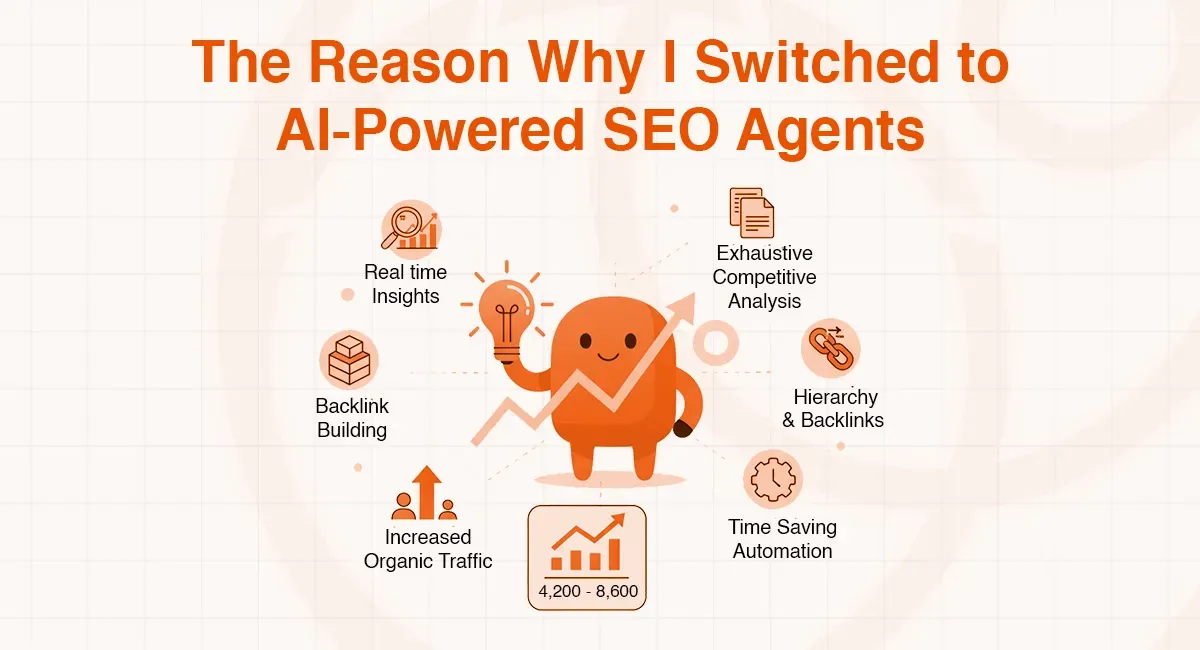
The Reason Why I Switched to AI-Powered SEO Agents
I would spend weeks composing content outlines of elaborated content that would need a lot of research and planning effort from my side, only to find out later that a rival had already written a better article on the same subject matter that attracted the search traffic that I had been aiming at for months. Nevertheless, the transfer to work in an AI SEO company gave me some specific benefits that entirely changed the way I look at content marketing and search engine optimization in my daily workflow.
The central advantage was firstly real-time keyword insights, which removed the guesswork of what people seek actively in my niche at any given moment.
Rather than waiting to receive monthly updates on the use of the traditional keyword tools, which often provide outdated information. The AI system tracked the search trends as they occurred daily throughout each week and instantly notified me of a sudden spike in search interest on topics that the blog was directly related to in subject matter, which enabled me to seize new trends before they were flooded with competing content from larger publishers.
The second important benefit was an exhaustive competitive analysis that revealed to me the exact pages that are ranked according to the individual terms that I was most interested in targeting for my blog. Besides introducing me to the bare bones of the ranking information that I could see in search results, the system also revealed the precise content hierarchy that my competitors had employed in their most popular articles that dominated page one.
How to Select the Right AI-Powered SEO Agents
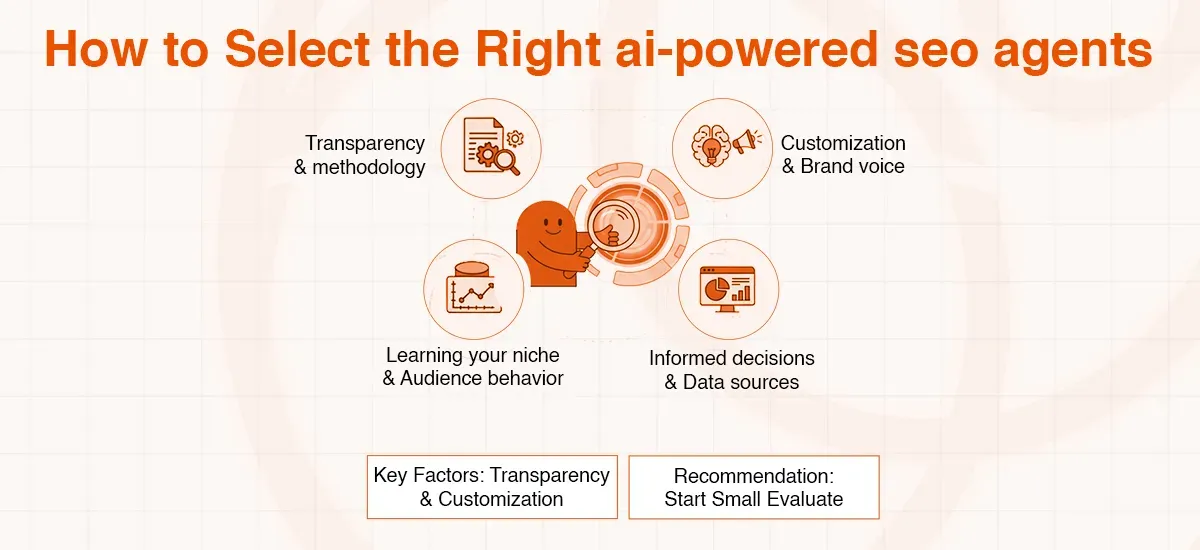
I have personally worked with several different providers over the past two years of experimentation, but here are the specific factors that mattered most to me when evaluating which platform would receive my ongoing investment and continued trust in the long term that I was planning to maintain.
The first essential criterion was transparency in how the SEO AI agent made its recommendations and decisions about what I should optimize on my website. Thus, I deliberately avoided platforms that operated like mysterious systems without explaining their methodology clearly to users.
I chose a system that clearly showed me the underlying data sources, ranking factors being analyzed in detail, and analytical processes behind every recommendation it generated for my content strategy. It allowed me to understand the reasoning properly and make informed decisions rather than blindly following automated suggestions without proper comprehension of the logic behind them.
The second important factor was customization, which allowed the AI SEO agency to adapt to my specific brand voice and audience preferences accurately, rather than simply plugging in generic suggestions that could apply to any website in my industry, regardless of the unique differentiation factors that made my blog stand out.
Furthermore, I discovered that the best platforms invested considerable time in learning the unique characteristics of my niche by thoroughly analyzing my existing content library from previous years of publishing, studying my audience behavior patterns through analytics integration with Google Analytics and other tracking systems, and identifying what topics and formats resonated most strongly with my particular readers based on detailed engagement metrics that showed time on page and comment frequency.
If you are currently skeptical about investing in AI-powered SEO agents, which is a completely reasonable position given the number of overhyped marketing tools that fail to deliver on their promises consistently in the digital marketing space, I strongly recommend that you try a tool on a relatively small project first before committing your entire content operation to one platform that might not suit your needs.
Building an SEO Strategy Using AI-Powered SEO Agents
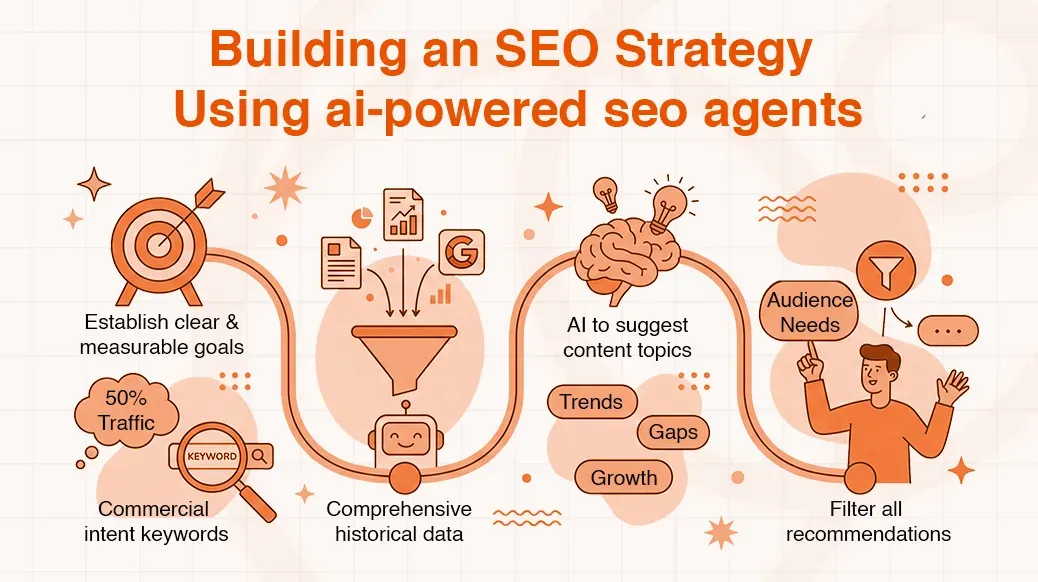
Here is the detailed step-by-step approach that has proven effective for me over the past year of consistent implementation, with measurable results that I could track in my analytics dashboards.
First, you must establish clear and measurable goals that will guide the SEO AI agent in providing relevant recommendations tailored to your specific objectives and desired outcomes in the short and long term. The AI system needs this specific strategic direction to filter opportunities effectively and prioritize recommendations that align with what you actually want to achieve in the next quarter or year of operation.
For instance, when I began working with my current platform last year during a particularly challenging period, I wanted to increase organic traffic by 50 percent within six months while specifically focusing on commercial intent keywords that would drive email signups from visitors. Those who were actively researching solutions rather than just browsing casually without any real purchase intent or commitment to taking action.
Next, you should feed the SEO AI agent with comprehensive historical data that will help it understand what has worked well for your website in the past months and years of operation. Upload your complete archive of past content, including both successful articles that performed exceptionally well and unsuccessful ones that failed to gain traction.
This provides valuable learning opportunities for pattern recognition, connecting all your analytics profiles, such as Google Analytics and Search Console, that contain valuable behavioral data about user interactions and search performance. These share any keyword lists that you have previously compiled through extensive research or tracked over time in spreadsheet documents that contain historical ranking data.
Then, you should allow the AI to suggest content topics based on its sophisticated analysis of current search trends and competitive gaps in your niche that present realistic growth opportunities. However, I strongly advise that you should not blindly follow every suggestion that appears in your dashboard without applying critical evaluation and judgment.
Filter all recommendations through your deep understanding of what your audience actually needs based on direct interactions. And what aligns with your broader content strategy and brand positioning in the marketplace that distinguishes you from competitors?
The Human Touch Still Matters
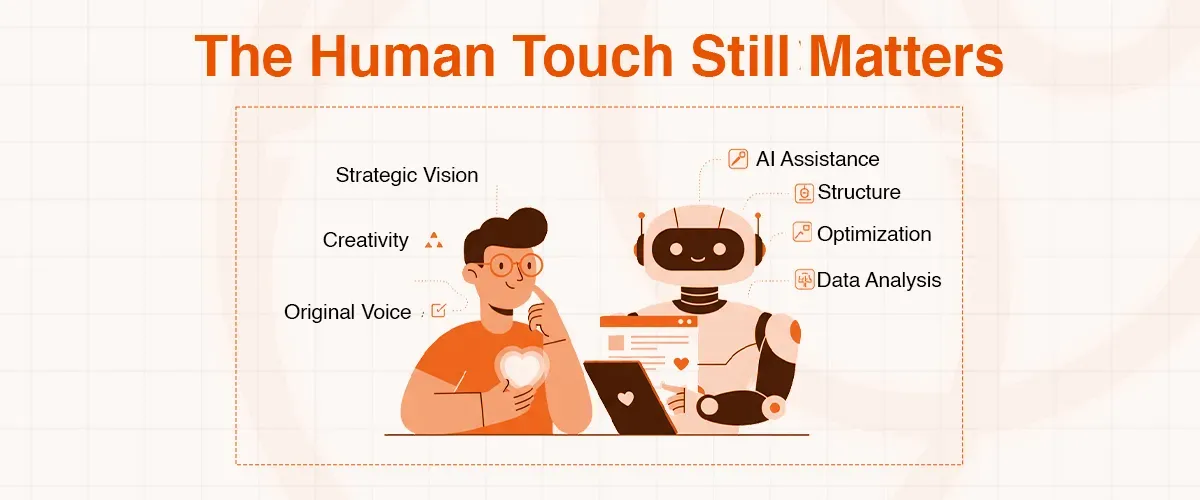
Even when working with the most sophisticated AI tools that exist in the current market at this time, I firmly believe in not handing my writing responsibilities over completely to automated systems that lack genuine human understanding and creative insight into emotional connections.
I consistently add my authentic voice and personality to every piece of content that gets published on my blog for readers who follow my work. The AI provides the underlying structural framework and optimization guidelines that help content rank in search results competitively against other sites, but I deliberately add personal anecdotes from my own experiences in digital marketing over the past several years.
Unique perspectives that reflect my individual viewpoint on industry trends and changes, and distinctive personality elements that make the content memorable and engaging for human readers. Those who are seeking genuine connection rather than robotic recitation of facts that could be found anywhere else online.
For example, when the AI recently suggested that I should write an article about productivity tools that were ranking well for competitors in search results for relevant keywords, I followed the keyword targeting and structural recommendations that the system provided based on competitive analysis.
But I included a detailed story about how my previously chaotic workflow nearly destroyed an important client relationship that I had worked hard to establish over several months of careful nurturing. And specifically, which tool feature ultimately saved that difficult situation and transformed my ability to manage multiple projects simultaneously?
Final Thoughts
I began this journey with the relatively modest goal of finding more readers for my blog content that I was publishing regularly on topics related to my niche. However, the outcome exceeded my expectations significantly as I ended up building a thriving community of engaged readers who regularly share my content on social platforms and leave thoughtful comments on each post that demonstrate real engagement and interest.
If you are still relying exclusively on manual methods that consume enormous amounts of time without delivering proportional results in terms of traffic and rankings, it is genuinely time to consider implementing an AI-powered solution that can dramatically improve your efficiency across workflows and free up time for more creative work.