How AI Solutions for Business Drive Efficiency and ROI
TLDR
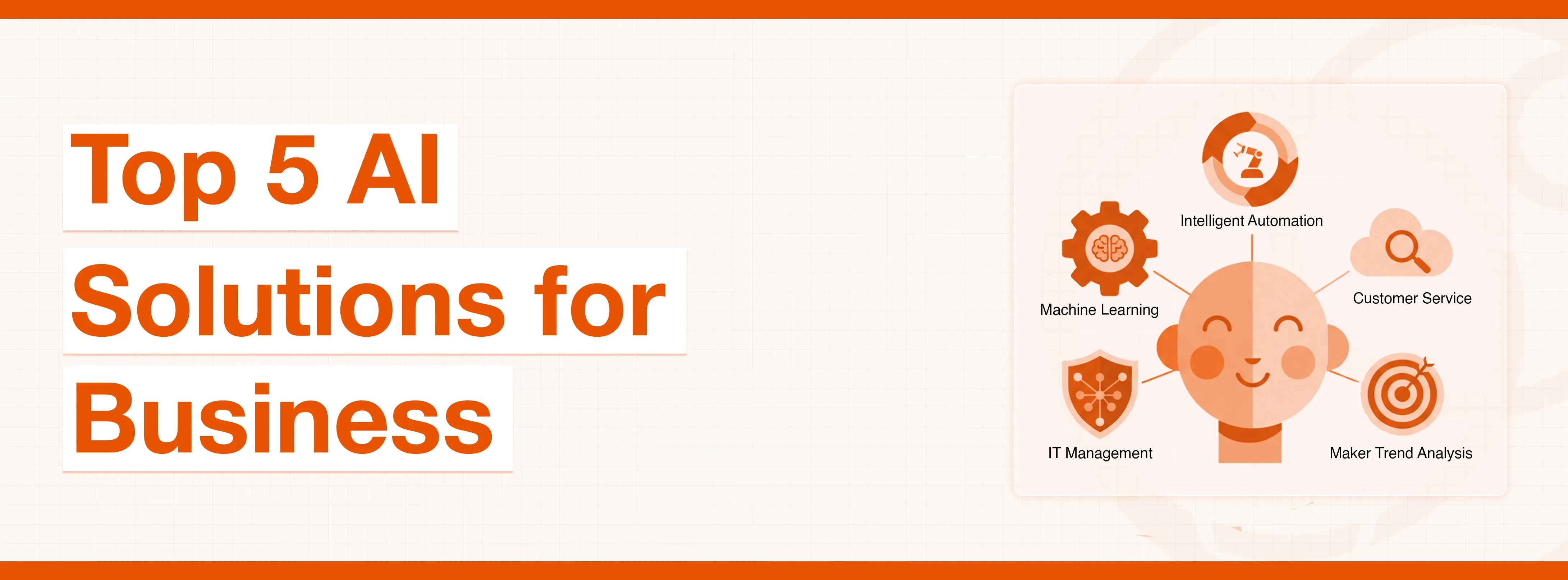
The 5 most popular categories are Generative AI, Advanced Analytics, Conversational AI, AIOps, and Hyper-Automation. They offer essential business solutions in artificial intelligence. They allow the rapid innovation process, intelligent decisions, and 24/7 personalized customer service in IT services, and enormous cost savings in operations. The implementation of such AI business services can change basic operations and guarantee strategic benefit in the long run.
Machine learning and intelligent automation have taken the digital revolution to its most transformative phase since its emergence. Today, successful organizations are realizing the importance of embracing powerful AI solutions for business. These advanced applications, which are also referred to as artificial intelligence business solutions, are essentially reorganizing the operations, from customer service to IT management. The strategic implementation of AI solutions for businesses of a specialized nature is to provide an unprecedented ROI, enable businesses to expand their operations, anticipate market changes, and engage customers in a personalized fashion at a granular scale.
This article discusses the most significant AI solutions for business that are being executed presently by IT strategists to future-proof their organizations as well as to maximize the actual potential of artificial intelligence in IT services and others.
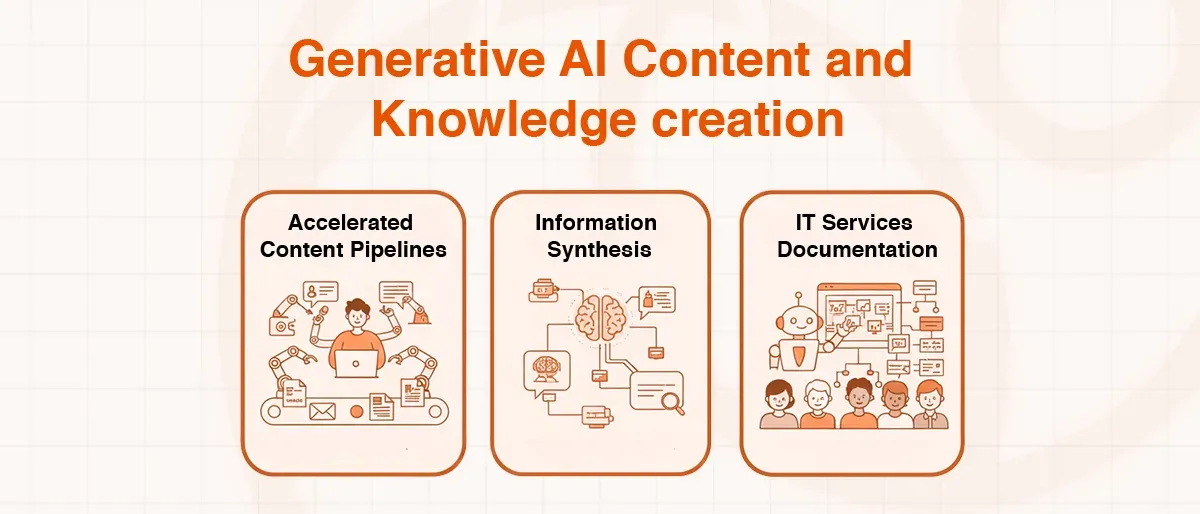
Generative AI Content and Knowledge Creation
GenAI is, perhaps, the best AI solution of all for business in the modern world. These models do not just pass through analysis and automation but also produce new content, which is relevant within the context. This is a huge increase in the consumption of internal knowledge and the production of external content in the case of a business.
Accelerated Content Pipelines:
GenAI generates primary marketing copy, in-house documentation, code snippets, and personalized sales emails at scale, and reduces the time-to-market of campaigns and products drastically.
Information Synthesis:
These business AI solutions have the deployment of vast, different knowledge bases to serve as an answer to complex questions in a single instance and in the form of summaries, which enables employees and improves training effectiveness.
IT Services Documentation:
In the context of artificial intelligence in IT services, GenAI is applied to obtain automated system documentation and troubleshooting instructions, as well as make complex technical terminology more approachable to the non-technical stakeholders. This specific category of artificial intelligence business solutions will provide uniformity and availability throughout the enterprise.
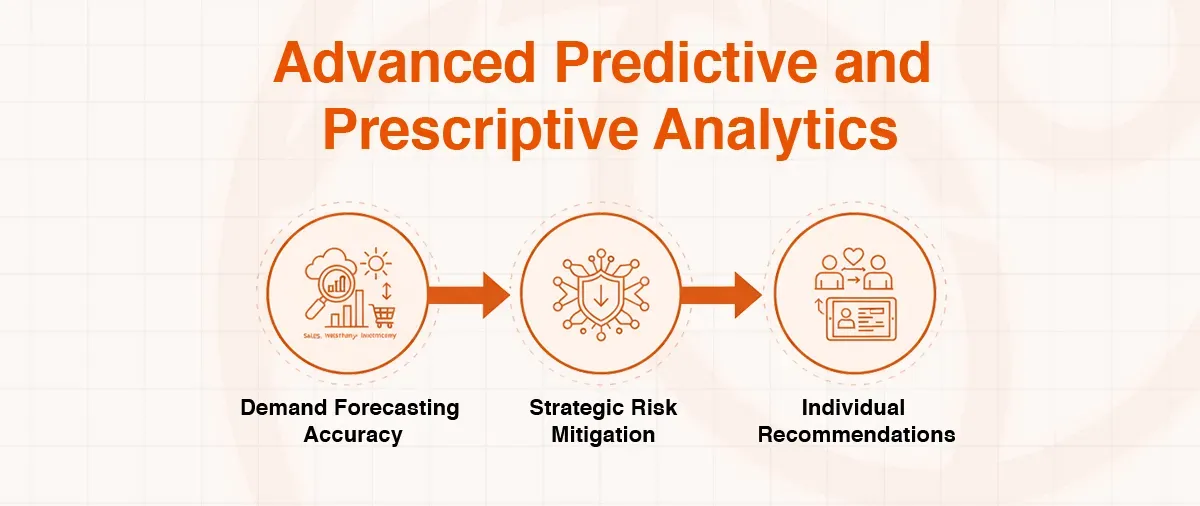
Advanced Predictive and Prescriptive Analytics
Predictive analytics, which today is supplemented with prescriptive abilities, is one of the oldest, yet continuously changing, AI solutions for business. It means that, with machine learning, one can predict the future and, at the same time, suggest the best course of action.
Demand Forecasting Accuracy:
Retailers use these AI tools in business to examine the historical sales and market trends, as well as weather forecasting, to determine future demand and accuracy by 20 to 50 percent more than conventional methods. This will maintain optimum inventory levels and lessen holding costs.
Strategic Risk Mitigation:
The artificial intelligence business solutions used by financial firms are used to detect a pattern in loan applications or investment portfolios that indicate increased risk to enable them to take preemptive measures to modify exposure or pricing.
Individual Recommendations:
In addition to basic product suggestions, these artificial intelligence business applications power more complicated recommendation engines for personalized offers, which improve customer loyalty and optimize the average value of transactions. This is an important depth of understanding required of all competitive business solution AI.
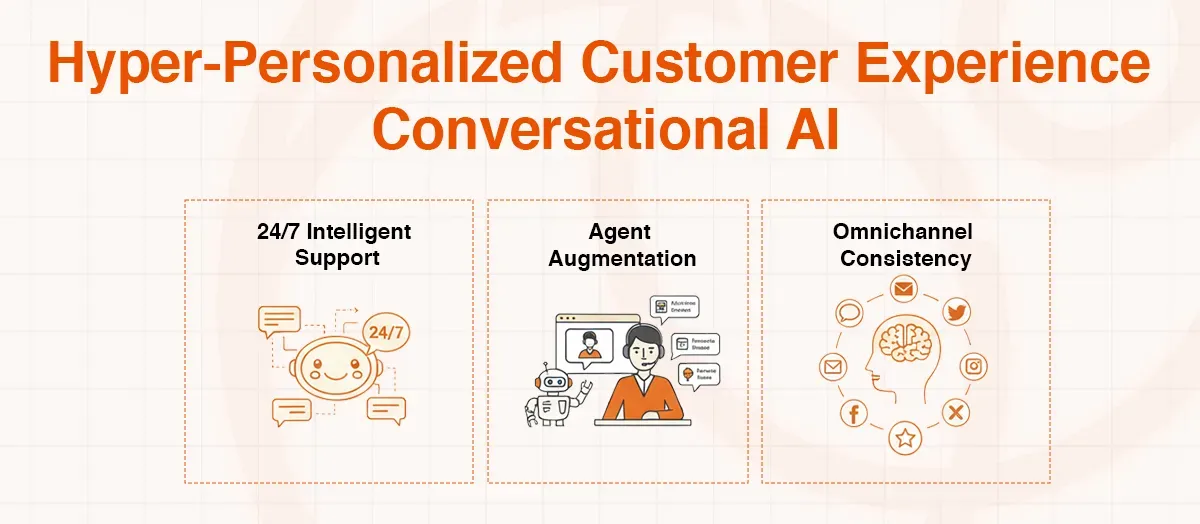
Hyper-Personalized Customer Experience Conversational AI
AI solutions for business that involve dealing with customers are critical to service delivery and brand image. Newer chatbots are based on a highly developed natural language understanding (NLU) to provide human-like and smooth communication channels across all online platforms.
24/7 Intelligent Support:
The use of artificial intelligence will allow virtual assistants to process most of the non-complicated questions so that human teams can address more complicated ones. These business AI solutions aim to interpret customer intent, sentiment, and context and deliver resolutions, not just simply answering the frequently asked questions.
Agent Augmentation:
In the case of human agents, AI will serve as a copilot, suggesting real-time information, summarizing notes, and retrieving pertinent information in the knowledge base, which will save a lot of time on call handling (AHT). Such a blend of artificial intelligence business solutions makes all customer contact areas efficient and very knowledgeable.
Omnichannel Consistency:
These AI business services deliver the same brand voice, service quality in chat, voice, email, and social media, which provide a unified customer experience and achieve high scores in satisfaction.
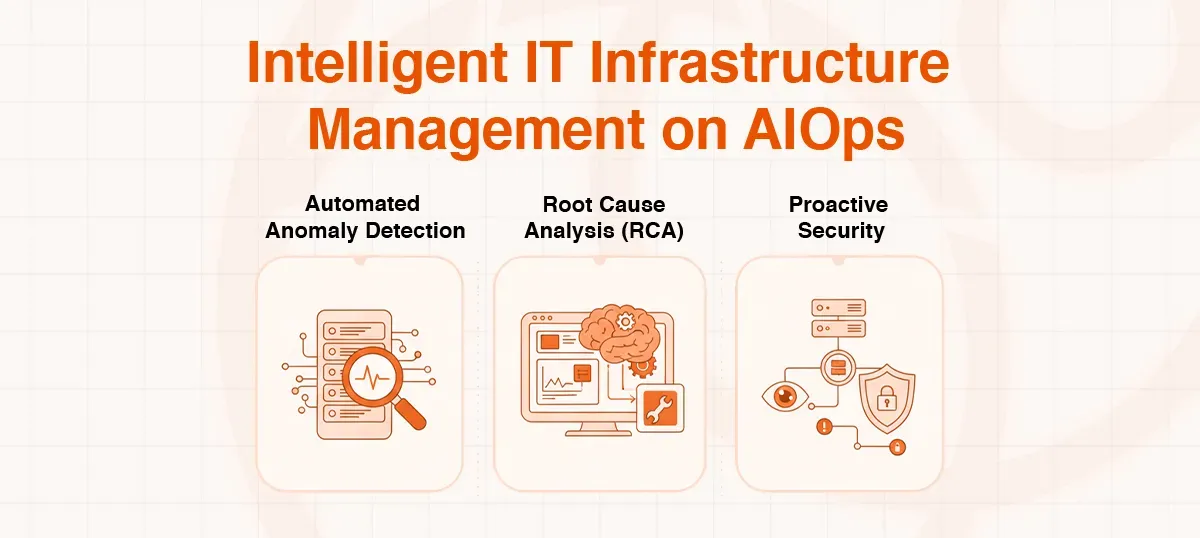
Intelligent IT Infrastructure Management on AIOps
The modern IT environment is so complex that cloud or hybrid and multi-cloud environments require smart management. The IT services specifically offer artificial intelligence as AIOps (AI to IT Operations), one of the most essential AI solutions to business in terms of stability.
Automated Anomaly Detection:
AIOps systems apply machine learning to consume and process large volumes of incoming log, metric, and event data to immediately identify nuanced anomalies that indicate impending system failures. It is important to prevent downtime through this proactive detection.
Root Cause Analysis (RCA):
These AI businesses correlate information across systems instead of IT teams manually sifting through thousands of alerts in search of a problem, which leads to the automatic identification of the precise cause of an issue in minutes, not hours, which massively reduces mean time to resolve (MTTR).
Proactive Security:
Proactive AIOps is an essential part of artificial intelligence in IT services, and it can be combined with security tools to report suspicious user/network activity that can be an indication of a breach or threat, and AIOps is used to contain it and reduce security risks throughout the enterprise. These are all-inclusive artificial intelligence business solutions that form the foundation of trustworthy technology.
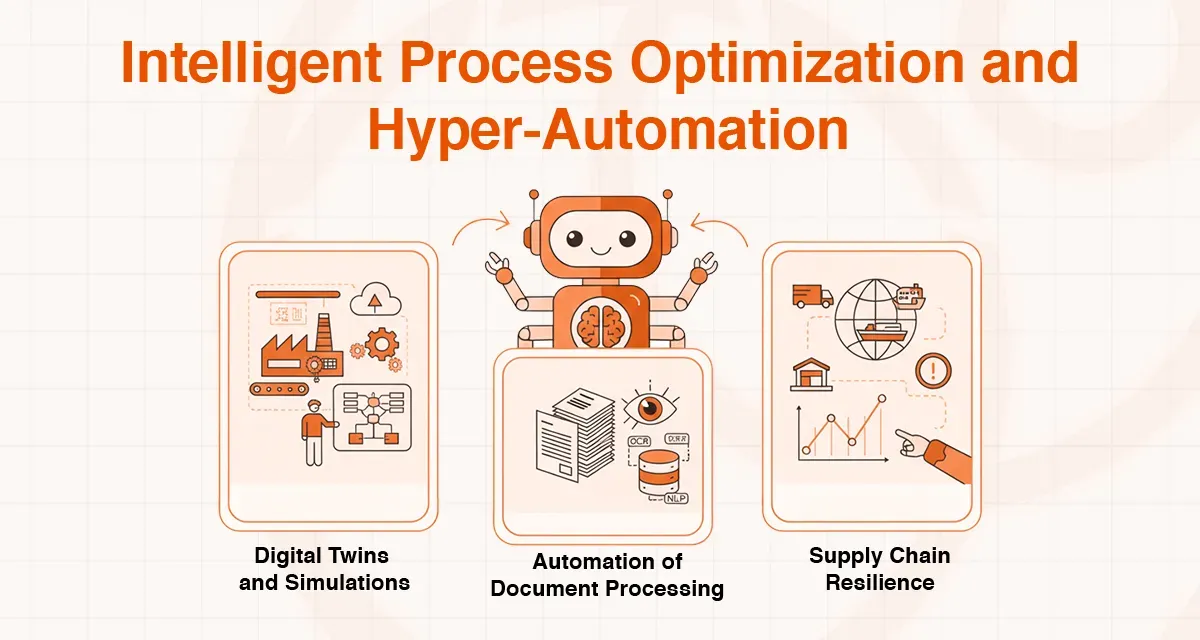
Intelligent Process Optimization and Hyper-Automation
Hyper-automation is the next advance in workflow optimization, which integrates Robotic Process Automation (RPA) with AI technology, such as computer vision and decision intelligence. This AI solution for business is not only focused on single tasks, but also on end-to-end business processes.
Digital Twins and Simulations: Companies develop AI-based digital twins of their operational systems (e.g., a factory floor or a supply chain network) to run hundreds of simulations and find the best configuration before making any changes. It is a strong AI business service application.
Automation of Document Processing: With computer vision and neural network language processing (NLP), AI can read, categorize, and extract particular data points in unstructured documents (such as invoices, shipping manifests, and medical records) with high accuracy and automatically push that data into the core systems, and fully automate manual processes.
Supply Chain Resilience: These business logistics AI applications can analyze logistics data, world events, and supplier behavior and automatically propose alternative routes or suppliers, and can predict setbacks, e.g., delays in shipping or shortages of materials, and provide resilience amidst uncertainty. The implementation of these artificial intelligence business solutions brings a concrete and definite competitive advantage.
Conclusion
All the best organizations are currently adopting AI solutions as part of their businesses. They facilitate cost savings in operations, open up new sources of revenue, and offer an excellent platform on which to base strategic data planning.
Using these advanced AI commercial services will not only keep companies up to date with the future, but they will also be taking a part in creating it. Using a unified approach to these artificial intelligence business solutions will guarantee agility, innovation, and long-lasting leadership in a continuously evolving global economy.