Digital marketing may seem alien to most business owners who have been accustomed to the traditional business environment. Nowadays, the concept of internet marketing for businesses is no longer an option, but the primary driving force of commerce. Your customers are online searching for whether you have a local hardware store or a B2B consultancy. This guide will unravel the mystery behind the shift and will provide a simple and strategic map of the tools and channels that you must leverage to modernize and make your future safe.
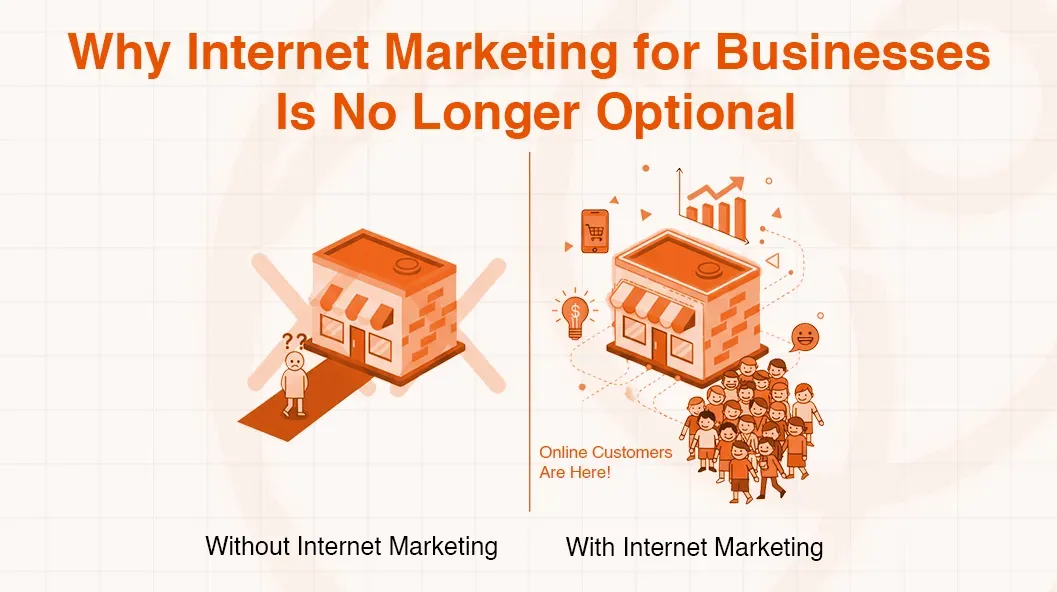
Why Internet Marketing for Businesses Is No Longer Optional
The barrier to going digital is usually the opinion that my customers are not digital. Data shows that this is false. Leaving out internet marketing for businesses is literally like disappearing your company for the contemporary customer.
The Shift in Consumer Behavior Driving Internet Marketing for Businesses
The customer journey begins online, even for local transactions. 80-90% of individuals look up reviews, hours, and inventory of a store on Google before visiting it. Without an online strategy, these customers will have to seek your competitors. In my experience, the most effective way to retain local market share is by having a strong digital presence.
Business Online Marketing vs. Traditional Advertising
Conventional advertisements, such as billboards and flyers, are expensive and difficult to locate. Business online marketing offers precision. You reach out to certain demographics, follow each click, and quantify the precise ROI. In the case of small companies, internet marketing is highly efficient and accountable in ways that traditional media cannot rival.
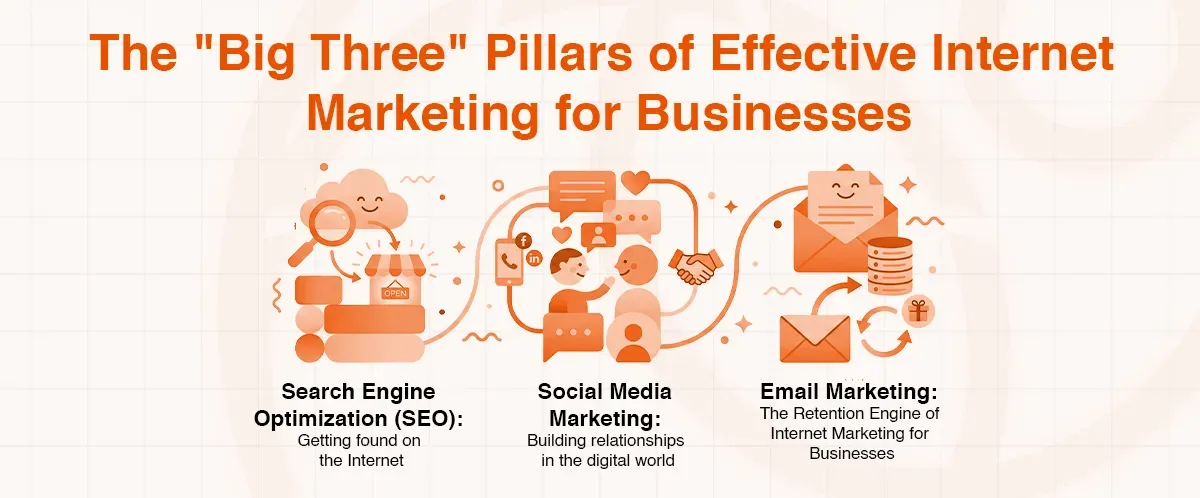
The "Big Three" Pillars of Effective Internet Marketing for Businesses
There is no need to master all platforms. An effective strategy is based on three pillars:
Search Engine Optimization (SEO)
SEO is all about showing up exactly when customers are searching for what you offer. In the case of business online marketing, this involves optimizing your website by using keywords that your customers use to look for the services you provide. Consider SEO as a high-traffic storefront location. Without SEO, your internet marketing will be like a store in a dark alley.
Social Media Marketing
Social media is not only a place of entertainment; it is the place where customers hang out. In the case of internet marketing for businesses, social networking sites such as Facebook and LinkedIn are the community centres. They allow humanizing your brand, responding to questions, and gaining trust to make sales. It is an important aspect of online marketing today.
Email Marketing
Social media buys an audience; email owns. Collecting customer emails will enable you to approach customers directly without algorithms interfering. Email is the most effective retention tool in business online marketing because it generates repeat sales by way of newsletters and special offers.
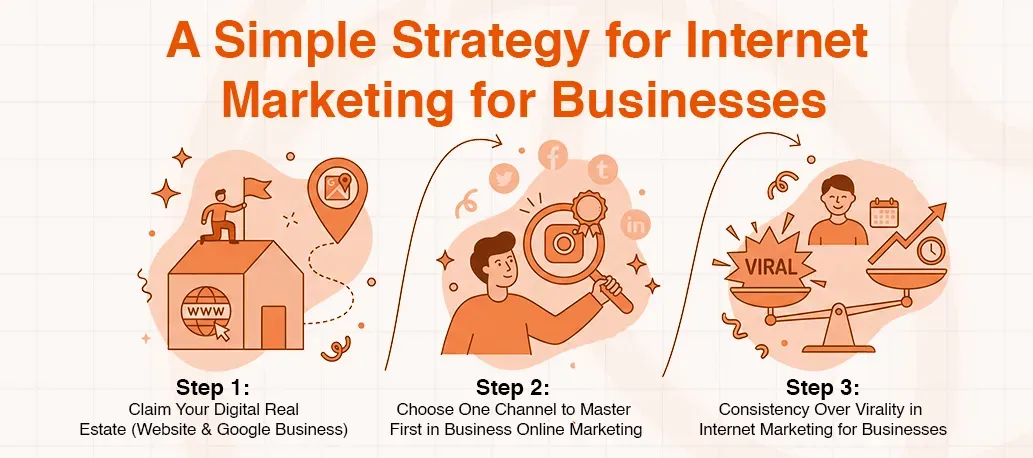
A Simple Strategy for Internet Marketing for Businesses
Going online does not need such a big budget. It involves a rational chain of actions. The simplified roadmap is provided below.
Claim Your Digital Real Estate (Website & Google Business)
Your website is your headquarters. Before spending money on ads, ensure you have a professional, mobile-friendly site. Claim your Google Business Profile as well. For local internet marketing for businesses, this free listing is often the primary source of leads, driving directions, and calls directly from Google Maps.
Choose One Channel to Master First in Business Online Marketing
The desire to be everywhere at the same time is a usual pitfall. Focus on one channel first. When you are a visual brand, master Instagram. If you’re B2B, focus on LinkedIn. Being a master in a single channel is more effective than being average in five.
Consistency Over Virality in Internet Marketing for Businesses
Success rarely comes from a viral moment. It comes from consistency. Sharing useful content frequently will bring trust over time. In my experience, the businesses that succeed are those that treat business online marketing as a daily habit, not a lottery ticket. Tools like SAAGA SOLVE can help maintain this consistency by automating content creation.
Common Pitfalls in Internet Marketing for Businesses
Understanding what not to do is as important as knowing what to do. Avoid these common traps in internet marketing for businesses.
Ignoring Mobile Users in Your Internet Marketing for Businesses Strategy
Smartphones are now the largest source of online traffic. An unfriendly site on a phone will lose customers immediately. Focus on a mobile-first experience to cater to the new, on-the-go customer.
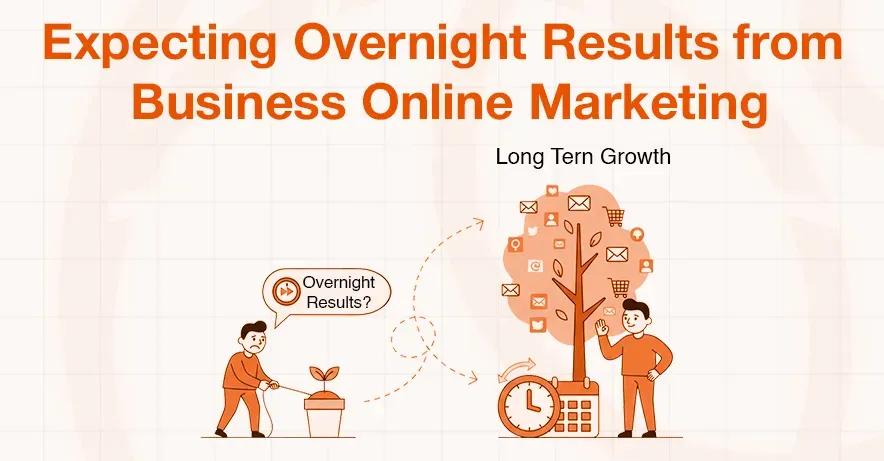
Expecting Overnight Results from Business Online Marketing
Business online marketing does not yield results in a day. SEO is a long process that requires months to gain momentum; social followings are slow to develop. Take a long-term perspective and put patience ahead of short-term satisfaction.
Conclusion
The transition to the digital world is now unavoidable. We have discussed the necessity of the digital shift and the three main pillars known as SEO, Social, and Email. By applying these basics, you will ensure that your firm remains visible and relevant in the evolving digital world.
Business online marketing follows the principles of traditional business, i.e., solve problems and build relationships. The difference is only the medium. Step into internet marketing for businesses and set up a legacy of your own.