It feels like you cannot scroll a marketing blog or LinkedIn feed without encountering the term generative AI. What's the big deal? Is it just another buzzword, or is it genuinely changing the game for creators? Let's break it down.
What is Generative AI and How Does It Transform Content Creation?
Generative AI, simply, is a branch of artificial intelligence that is capable of generating entirely new, original content. This form of AI can create things, text, images, music, and even videos, which, unlike other types of AI, can only analyze or categorize data, not create new content. It studies huge volumes of preexisting information and subsequently applies that knowledge to create new content, relying on your instructions to it. This is the core of generative AI for content creation.
The Evolution from Traditional Content Creation to AI-Powered Production
Consider the ways content was made in the past. It was an entirely manual and slow procedure that included brainstorming, outlining, writing, and designing, all by human hands. As of now, AI has intervened as a strong co-pilot. It does not substitute the human, but it turbocharges the process. The days that once took to write a lengthy blog post can be jump-started in minutes. This transition to AI content creation is likely the largest change that we have experienced in the marketing sphere in the past ten years.
Key Technologies Behind Generative AI (LLMs, NLP, Neural Networks)
No expertise in data science is required to use these tools, but it is interesting to understand what happens behind the scenes. Some of the magic is due to some technologies:
- Large Language Models (LLMs): These are the giant brains, such as GPT-4 of OpenAI, that have been trained on a vast amount of the internet. These are what enable the AI to comprehend and produce text resembling humans.
- Natural Language Processing (NLP): It is the AI subfield that contributes to the comprehension of human speech, interpretation, and the reaction of machines. It acts as the interface between your orders and what the AI produces.
- Neural Networks: These are complex systems that are inspired by the human brain and are used to make the AI identify patterns within data so that it can learn and become better as time goes on.
The Current State of Generative AI in Content Marketing
This technology is not merely a cool experiment anymore; businesses of all sizes are actively using it. Based on my personal experiences in my own projects, the companies that are not even considering using AI content-creating tools risk falling behind.
Market Statistics and Adoption Rates
The figures are quite stupefying. Research indicates that a massive percentage of marketers are already using artificial intelligence content marketing in their processes. They are even writing emails with it and writing ad copy. The rate of adoption is increasing incredibly rapidly due to the immediate benefits of saving time and increasing creativity.
Leading Platforms and Tools (ChatGPT, SAAGA SOLVE, Adobe Firefly, etc.)
An entire ecosystem of tools has emerged to make this technology available. You have all-purpose systems such as ChatGPT, enterprise-oriented systems such as SAAGA SOLVE for team collaboration and maintaining a brand voice, and specialized image generators like Adobe Firefly that make it possible to create breathtaking pictures from a mere text description.
Industry Trends and Future Projections
Integration is the largest trend currently. We are now witnessing AI capabilities being integrated directly into the software we currently use daily, both our word processors and our design programs. The future will not be about standalone AI tools; it is probably more about AI as a ubiquitous, invisible helper in all our creative and marketing software.
Major Benefits of Using Generative AI for Content Creation
So, why are so many marketers jumping on this bandwagon? Because the advantages are enormous, and they solve some of the biggest pain points in the industry. These are just some of the core generative AI benefits for marketers, making it a powerful tool for any team.
Accelerated Content Production and Efficiency Gains
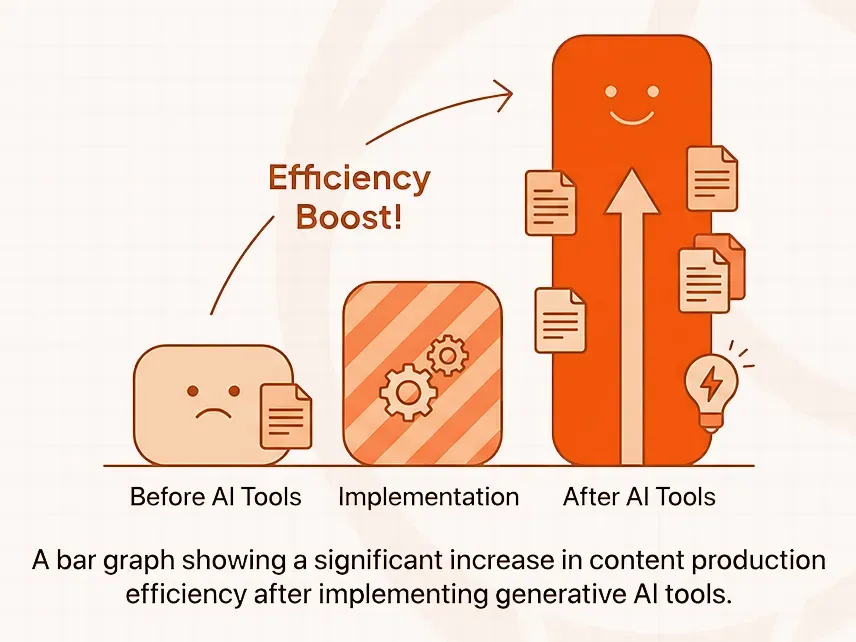
This is the most apparent advantage. Think about having to write five variations of an advertisement, a blog outline, and a social media schedule during the week. All of that can be written in under an hour with AI, and you can get good first drafts. This frees up a significant amount of time for strategy.
Enhanced Creativity and Idea Generation
Have you ever gazed at a blank page and hoped to be inspired? Writer’s block is a challenge that generative AI can help cure. You can request it to brainstorm 20 blog titles, provide you with a unique angle on a familiar topic, or even create a fictional customer persona to write for. It is an amazing, creative collaborator.
Cost-Effectiveness and Resource Optimization
Freelancing or expanding an in-house content team may be costly. Artificial intelligence does not substitute them, but it enables a small team (or even a one-person team) to generate the output of a significantly larger one. This renders quality content marketing a lot more affordable to small business enterprises.
Improved Content Personalization at Scale
Effective marketing is all about personalization, which cannot easily be done on a large scale. AI content personalization is a disruptor. You can apply it to create a few variations of an email or landing page to various audience segments to make your marketing much more personal and relevant.
SEO Optimization and Search Performance Benefits
Most AI content creation systems are designed with SEO functions. They will assist you in finding valuable keywords, help you to organize your article to search engines, and even learn what was ranked highly to determine what you must include to compete. Such a data-driven strategy will be able to give your search performance a serious boost.
Practical Generative AI Marketing Applications Across Content Types
So, how does this look in the real world? Below are some of the real-world applications of generative AI in marketing.
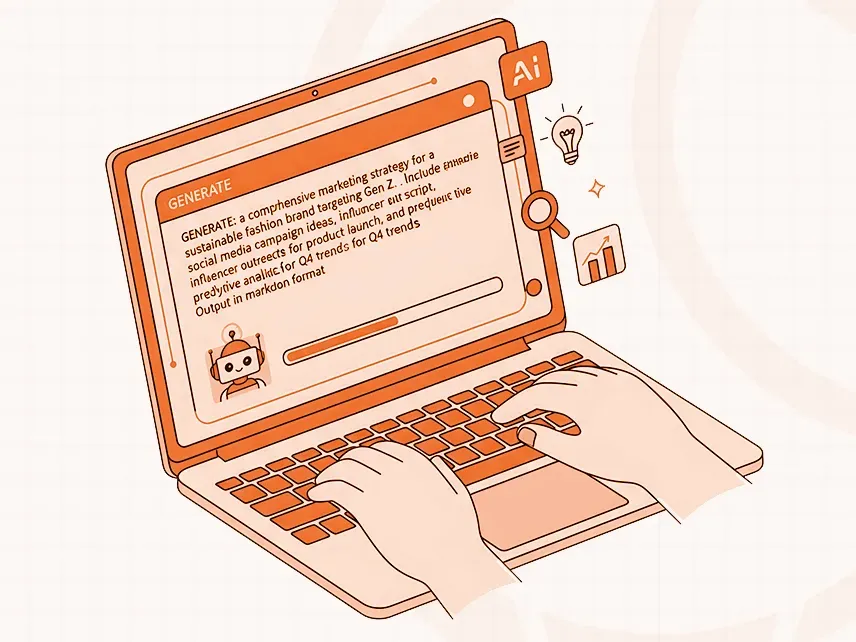
Text Content Generation (Blog Posts, Articles, Social Media)
This is the most common use case. You can work on a research topic, write a comprehensive outline, compose the first version of a blog post, and come up with a ton of social media posts to promote it with the help of AI.
Visual Content Creation (Images, Graphics, Videos)
Image-generating AI systems such as Midjourney or Adobe Firefly can generate entirely original images based on a text prompt (e.g., "a photo of a purple elephant reading a book in a library"). Other programs can even be used to convert a text script into a low-budget animated video using stock footage and a voiceover.
Email Marketing and Campaign Automation
AI will write the catchy titles of your emails, write the text of your newsletters, and even assist you in creating automated email series throughout various customer resources.
Product Descriptions and E-commerce Content
When you have hundreds of products, it is a huge task to write individual descriptions of each product. AI can produce interesting, search engine-optimized descriptions, which will save you a lot of time.
Technical Documentation and Knowledge Base Content
AI is also very good at creating clear, straightforward technical content. It can simplify the complicated information and organize it into easy-to-read help articles or frequently asked questions sections.
Implementing Generative AI in Your Content Strategy
Ready to get started? Jumping into a situation without planning may result in messy and inconsistent outcomes. Here’s a more strategic approach.
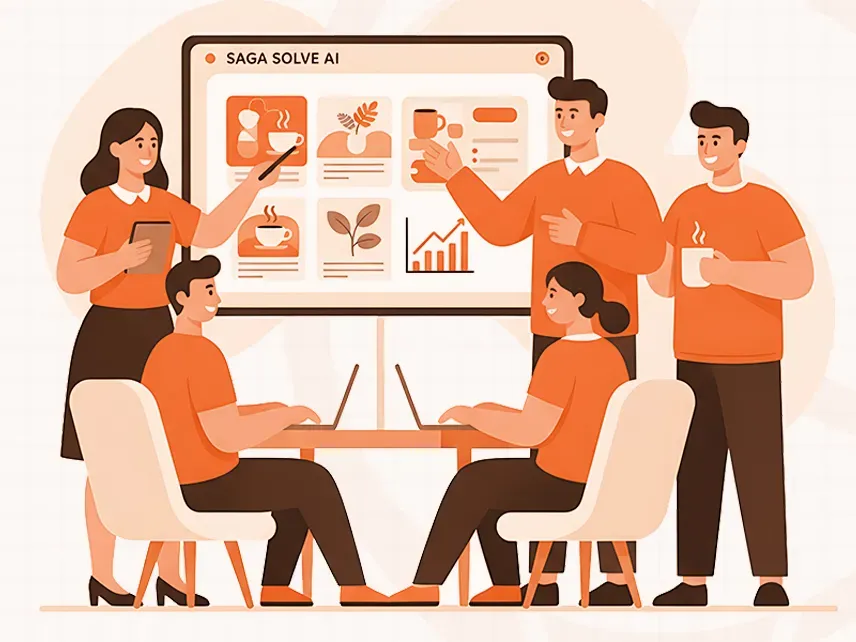
Assessing Your Content Needs and AI Readiness
The first thing you should do is identify your most critical bottlenecks. Are you slow at writing in the first draft? Are you having problems creating visuals? This will give you an idea as to what kind of tool you should be seeking first. Be honest about the skills of your team. Are they prepared and willing to learn to work with these new tools?
Choosing the Right Tools and Platforms
Do not simply choose the most popular tool; choose the marketing content generation system that solves your particular problem.
- ChatGPT is an excellent content writing tool.
- In case you want to work in a team and have brand consistency, consider SAAGA SOLVE.
- In the case of visuals, use the AI capabilities of Canva.
Creating Effective Prompts and Workflows
The quality of your AI output is nearly entirely dependent upon the quality of your input (your prompt). The most valuable skill related to the use of generative AI is learning to write detailed and clear prompts. Create a workflow in which you allow AI to draft, and then a definite plan of how human editing/fact-checking would be performed.
Integrating AI with Existing Content Management Systems
Find tools that are compatible with the software that you are already using. A lot of generative AI tools for businesses are available as WordPress, Chrome, or Google Docs plug-ins, which also makes it a lot easier to use them in your everyday routine.
Training Your Team for AI-Enhanced Content Creation
Don't simply dump a new tool on a team of workers and leave them to figure it out. Train them how to write good prompts, how to edit AI content, and on what ethical guidelines are applicable to your company regarding the use of AI.
Challenges and Limitations to Consider
As amazing as this technology is, it is not flawless. You should come in with your eyes open to the challenges.
Quality Control and the Need for Human Oversight
The content created by AI may be generic, repetitive, or simply incorrect. Human touch is needed to edit, check the facts, and add the creative touch and personal experience that no machines can bring.
Ethical Considerations and Brand Authenticity
To what extent ought you to be open about using AI? Otherwise, you may risk losing the human voice of your content and ruining the trust that you have earned with your audience.
Data Privacy and Security Concerns
Think twice before entering your personal information in general AI products. You are not supposed to be keying in highly sensitive company information or customer information because you do not even know how this information is being stored or utilized.
Technical Limitations and Accuracy Issues
AI models are capable of hallucinating, which is a fancy way of saying that they can come up with things and say them with all the confidence. In the case of any content where you need to be a factual source of information, you should, by all means, fact-check anything the AI claims.
Copyright and Intellectual Property Questions
The legal aspect of AI is still somewhat in the grey area. Who is the copyright holder of AI-generated content? Is it commercially usable? It is an area to keep an eye on as the laws are yet to keep pace with the technology.
Best Practices for Effective Generative AI Implementation
To maximize AI usage and not fall into the traps, follow these best practices.
Developing Clear Guidelines and Guardrails
Develop corporate guidelines on the use of AI technology. What should they be permitted to do? How is it edited and approved? This makes everyone on the same page.
Maintaining Brand Voice and Consistency
Adopt the tools that enable you to customize your brand voice and educate your team to regularly refine what the AI has done to suit your style. A strong brand is characterized by a consistent voice.
Fact-Checking and Quality Assurance Processes
Fact-checking should be an absolute part of your process. Assign a person to provide the last quality check before the content aided by AI is launched.
Balancing Automation with Human Creativity
Allow the AI to do the work- the research, the first draft, and the data analysis. This frees up your human creators to do what they do best: strategize, tell good stories, and bring authentic emotion and experiences to the content.
Measuring ROI and Performance Metrics
Monitor the effect of these tools on your bottom line. Do you create more content? Is your SEO improving? Is your engagement going up? The calculation of ROI will allow you to justify the investment and make wise decisions regarding your toolkit.
Real-World Case Studies and Success Stories
Big brands and small businesses alike are getting impressive results with automated content creation.
Enterprise-Level Implementations (Adobe, Heinz, Mattel)
Generative AI has been used to brainstorm new products by companies such as Mattel. Firefly is an AI that Adobe has developed and implemented throughout its creative offerings. These examples on a large scale demonstrate how AI can be a central component in the creative process of a large corporation.
Small Business and Freelancer Success Stories
I have encountered dozens of freelancers on websites such as Upwork who now provide AI-assisted content services, which have enabled them to acquire additional clients. Small e-commerce companies are relying on AI to create thousands of product descriptions, something that they could not have been able to do before.
Lessons Learned from Early Adopters
The biggest lesson? Don't just "set it and forget it." The most successful companies are those that consider AI as a strong ally of their human team, not their substitute.
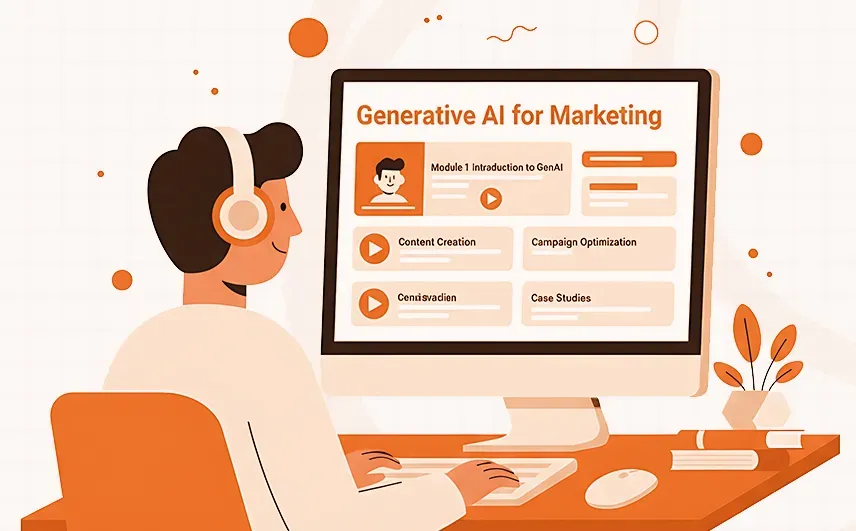
The Future of Generative AI in Content Creation
If you think things are moving fast now, just wait. The pace of innovation in this space is incredible.
Emerging Technologies and Capabilities
We will witness AI becoming far more capable of producing high-quality video and understanding context over very long projects. Consider an AI capable of assisting you in sustaining flawless continuity throughout a novel or screenplay.
Predictions for Market Evolution
The market will likely consolidate around a few major platforms, with smaller and more specialized tools appearing to meet niche demand (such as AI to draft legal documents or medical studies).
Preparing Your Business for Next-Generation AI Tools
The most effective way is to create a learning culture. Get your team to be creative with what you can use and be curious. Today, the abilities you are building, such as prompt engineering and content editing with AI, will become even more useful tomorrow.
Getting Started: Your First Steps with Generative AI
Need some motivation but do not know where to begin? Here’s a simple plan.
Quick Wins for Immediate Implementation
- Don’t attempt to change your entire strategy immediately. Start small.
- Brainstorm your upcoming 10 blog post titles using ChatGPT.
- Use Canva's Magic Write to create a week's worth of social media captions.
- Take an existing blog post and ask an AI to summarize it into a short email.
Building a Long-Term AI Content Strategy
When you get comfortable, think big. Map out your overall workflow in content and see where AI can make it more efficient. Then begin testing and investing in the tools that will make the greatest impact.
Resources for Continued Learning and Development
Great newsletters, YouTube channels, and online courses focusing on AI in marketing exist in high numbers. Learning should become habitual so that one remains abreast of the most recent trends and technologies.
Conclusion
Generative AI for content creation is clearly no longer a future concept but an essential, practical tool for marketers today. We have seen how it can break creative blocks, accelerate production timelines, and deliver personalization at a scale that was previously unthinkable. While challenges like human oversight and ethical considerations are real, they do not diminish the opportunity at hand.
Ultimately, the most successful strategy is not about replacing human talent, but about augmenting it. It is about creating a partnership where AI handles the heavy lifting of drafting and data analysis, freeing human creators to focus on strategy and storytelling. By implementing the right tools, marketers who master this field will not only remain competitive but will also lead this new era of digital marketing.