The article lists the 10 most important market research tools, such as Google Analytics, SEMrush, and Statista, that are an absolute must for your business. These market research tools offer data to make informed decisions, to analyze the competition, and to gain a profound understanding of the customers. The tools are classified as web analytics, survey platform, and competitive intelligence, and they provide key tools for analyzing the market.
In today’s hyper-competitive world, informed business decisions are not a luxury; they are an absolute must. It is at this point that well-developed market research tools come in. These are the keys that drive effective strategy; these resources, which range from simple internet-based market research tools to advanced digital market research products, are indispensable. They deliver the information necessary for profound market knowledge, competitive edge, and sustainable development.
With AI-powered marketing becoming increasingly popular, market research is important in determining consumer needs, the trends in the industry, and competition. Companies that use the most appropriate marketing research tools do not respond to the changes in the market; they foresee them.
This article explores the 10 best market research tools that no company should overlook for the ultimate market research and analysis, including essential company research and profound customer research tools.
Google Analytics (GA)
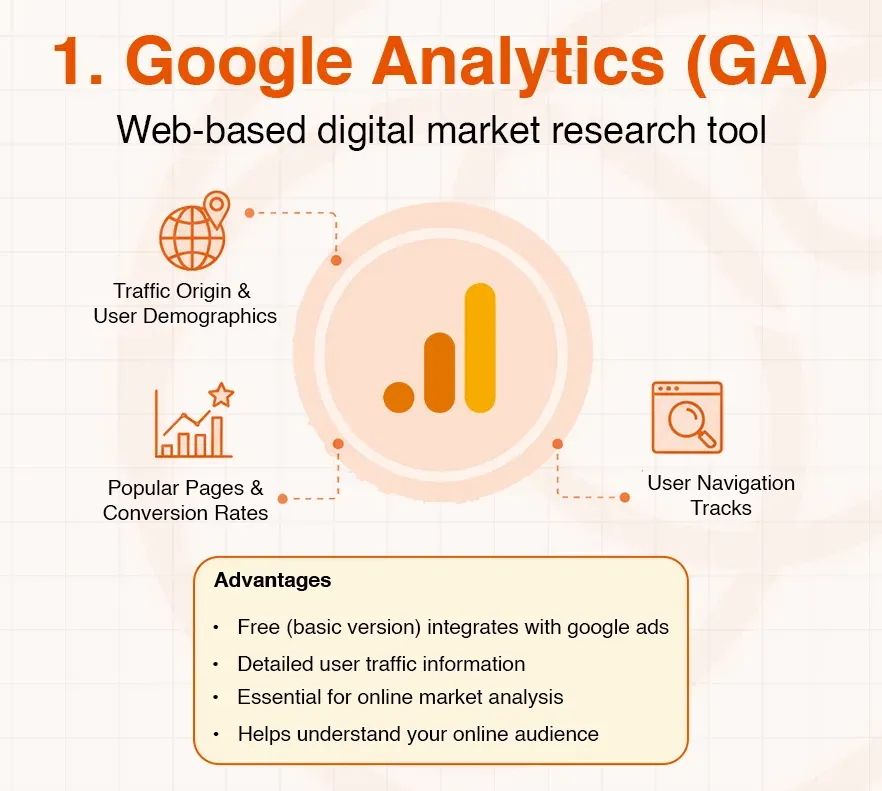
Type: Web-based digital market research tool.
Google Analytics is the foundation of any digital market research tool suite, which offers profound historical data on the website visitor behavior.
How to Use: Place the tracking code on your site. Track the traffic origin, user demographics, popular pages, conversion rates, and user navigation tracks through your website with reports.
Advantages: Free, can be interconnected with other Google products (such as Google Ads), provides detailed information on user traffic, and can be an essential instrument of online market analysis that helps to understand your online audience.
SurveyMonkey
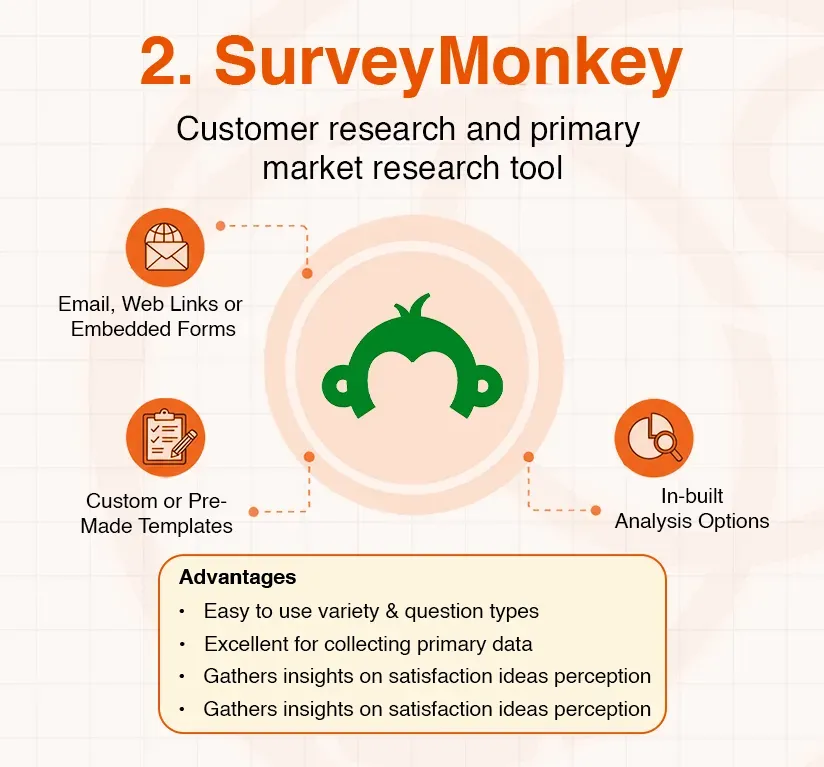
Type: Customer research and primary market research tool.
SurveyMonkey is considered to be one of the most used online market research tools to create and share surveys to enable the business to obtain the first-hand feedback of its target audience.
How to Use: The questionnaires can be developed either as custom or pre-made templates. Administer questionnaires through email, web links, or embedded forms. Examine answers with in-built analysis options such as filtering, cross-tabulation, and sentiment analysis.
Advantages: Easy to use, has a great variety of question types, excellent in collecting primary data about customer satisfaction, product ideas, and brand perception, thus it is a crucial customer research tool.
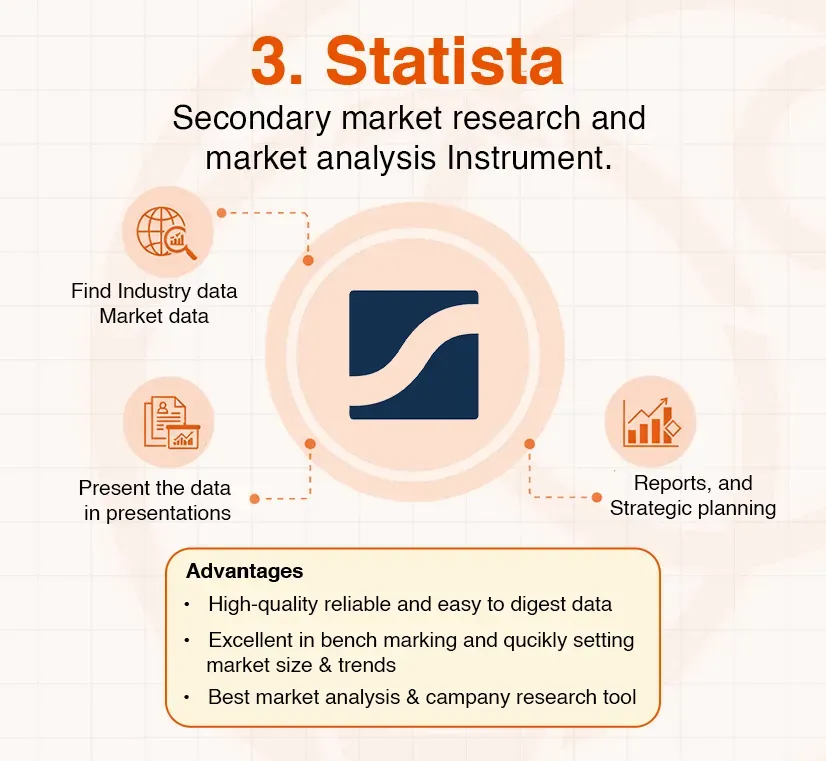
Statista
Type: Secondary market research and market analysis instrument.
Statista is one of the most popular statistics websites, which offers enormous, confirmed data, reports, and infographics in 80,000 subjects representing 170 businesses.
How to Use: Find Industry data, market data, consumer data, or demographic data. Present the data in presentations, reports, and strategic planning documents to give consistency to the findings of the market research analysis tools.
Advantages: Visuals of data of high quality, reliability, and easy digestibility. It is one of the best market analysis tools and company research tools because it is excellent in benchmarking and fast setting the market size and trends.
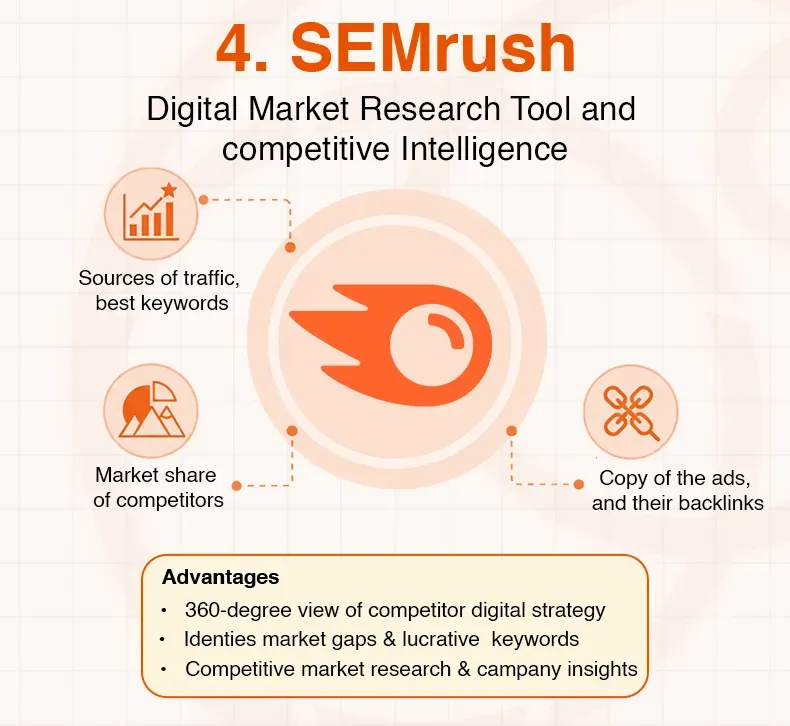
SEMrush
Type: Digital Market Research Tool
SEMrush is a one-stop solution that cannot be overlooked in the list of digital market research tools and offers strong competitive intelligence in the fields of SEO and content marketing.
How to Use: Enter the domain of a competitor to examine their sources of traffic, best-performing keywords, copy of the ads, and their backlinks. Utilize its Market Explorer tool, which is contained in the Market Explorer features, to identify trends in the industry and market share of competitors.
Advantages: The 360-degree perspective of a competitor's digital strategy. Determines gaps within the market and lucrative keywords, and provides a resource tool perspective on company research on a competitive market research basis.
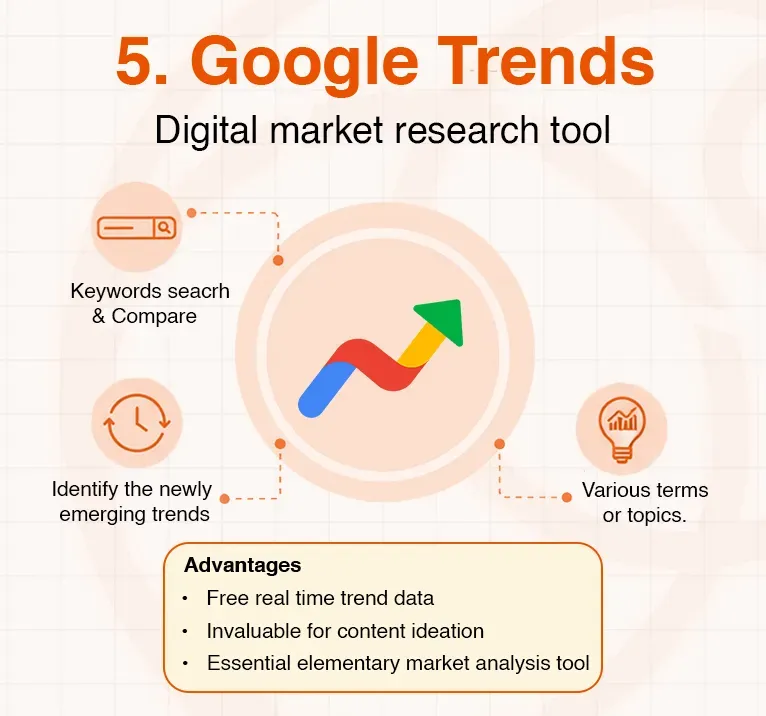
Google Trends
Type: Digital market research tool.
Google Trends is a useful and free market research tool that is used to analyze the popularity of search queries in Google Search by region and language.
How to Use: Type into the search box some keywords that are related to your product or industry. Compare the search interest over time to identify the newly emerging trends, seasonal changes, and relative popularity of the various terms or topics.
Advantages: The tool is free of charge, offers real-time trend information, is invaluable when it comes to content ideation, and serves as the essential element of any elementary market analysis tool set.
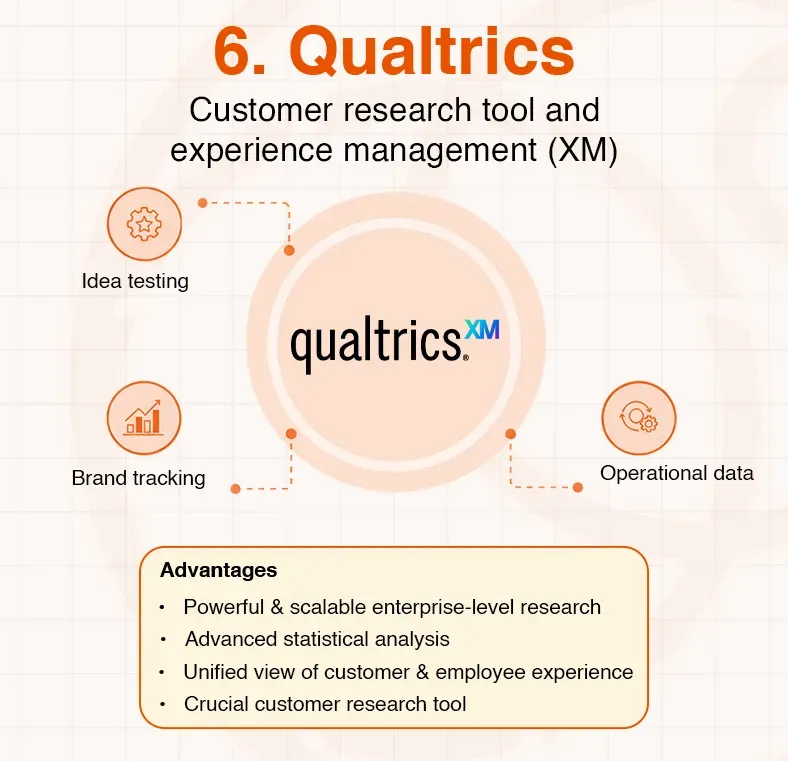
Qualtrics
Type: Customer research tool and experience management (XM).
Qualtrics is a sophisticated platform that provides a complete set of market research applications in order to collect and analyze data complexly, especially related to experience management.
How to Use: Implement multifaceted, logical survey instruments in any kind of research (e.g., brand tracking, idea testing). Use its strong analytics engine to conduct statistical tests, see major factors behind satisfaction, and connect customer feedback (customer research tools) to operational data.
Advantages: Very powerful and scalable, can be used in enterprise-level research, has advanced statistical market research analysis tools, and can give one unified view of customer and employee experience.
BuzzSumo
Type: Digital Market Research Tool and Content Research.
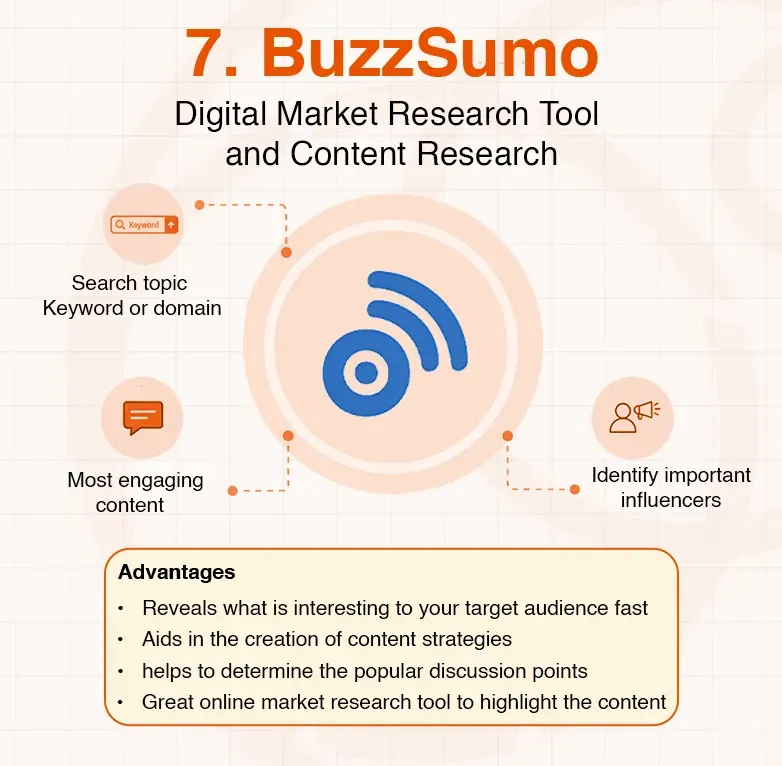
BuzzSumo is the best digital market research application that content marketers can use to determine the most shared and trending content based on keywords or competitors.
How to Use: Search a topic, keyword, or domain. Know which of your articles, videos, and content are the most engaging on social media and the internet in general. It can be used to identify important influencers in your niche.
Advantages: Reveals what is interesting to your target audience fast, aids in the creation of content strategies, and helps to determine the popular discussion points in the industry, a great online market research tool to highlight the content required.
Tableau
Type: Market Research Analysis Tool and Data Visualization.
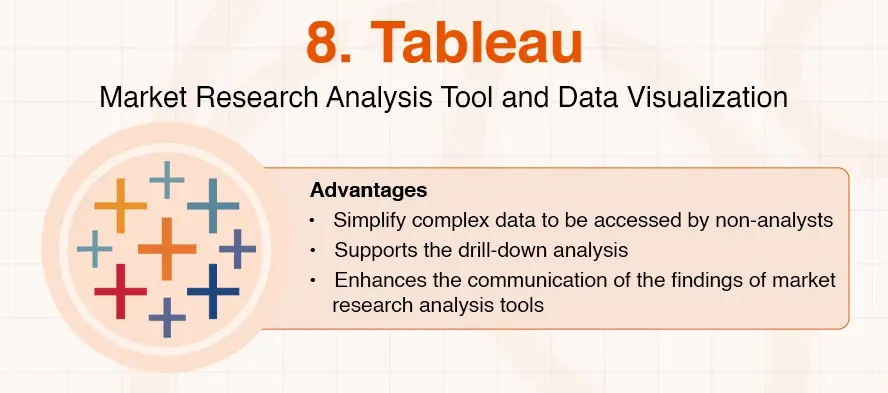
Tableau is a popular business intelligence market research solution that assists in converting raw information from all different origins into interactive and visual dashboards and worksheets.
How to Use: Link Tableau with data on your market research (e.g., survey results, sales data, web analytics). Drag and drop visualization to form visual and visual representations such as charts, maps, and graphs, which enables exploring the data and identifying patterns.
Advantages: Can simplify complex data to be accessed by non-analysts, supports the drill-down analysis, and enhances the communication of the findings of market research analysis tools throughout the organization.
AnswerThePublic (ATP)
Type: Customer research tool and search listening tool
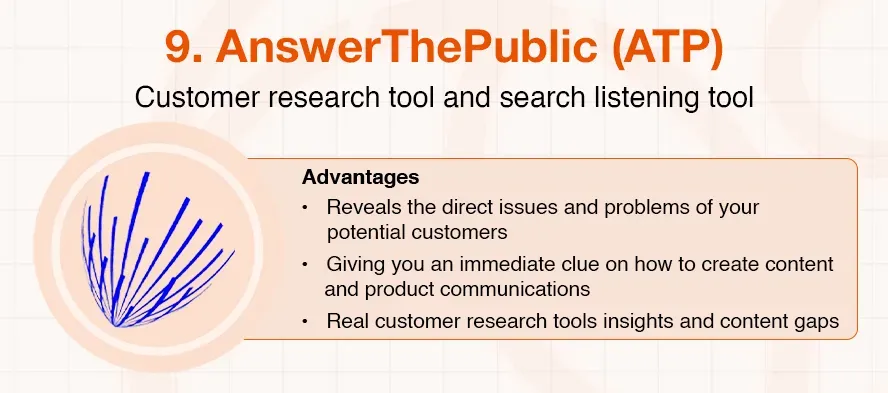
AnswerThePublic is a visual, online market research tool that is unique as it gathers the most frequently used search results and puts them into the form of a visualized question that people are asking regarding a certain keyword.
How to Use: Type in a keyword. The tool creates both visual webs of questions (who, what, why, when, how) and prepositions (for, like, near) on which the organic human curiosity regarding your topic is built.
Advantages: Reveals the direct issues and problems of your potential customers, giving you an immediate clue on how to create content and product communications. It is a treasure trove of real customer research tools, insights, and content gaps.
Similarweb
Type: Competitive Analysis and Company Research Tool.
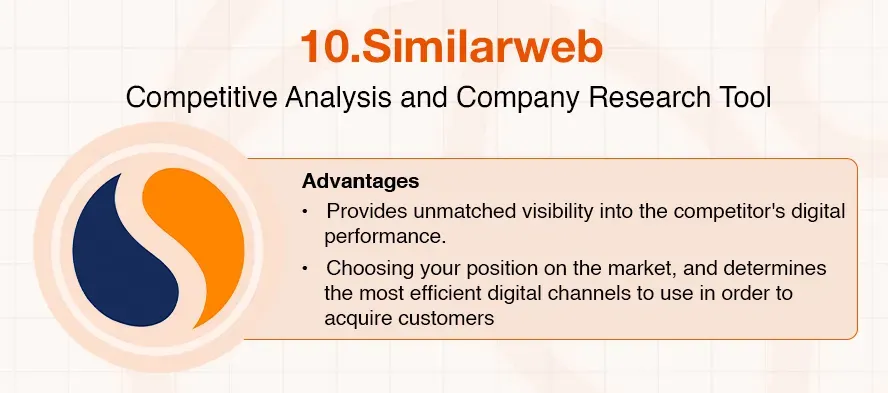
Similarweb is a serviceable company research tool and competitor analysis tool that delivers in-depth data on the traffic, engagement, and channels used by any given site.
How to Use: Type in any domain to have the total traffic, source of traffic (search, social, and direct), geographic distribution, and major competitors. Compare the performance of your websites with those of the industry leaders through its online market analysis tools.
Advantages: It provides unmatched visibility into the competitor's digital performance, aids in choosing your position on the market, and determines the most efficient digital channels to use in order to acquire customers, which makes it one of the best market research tools to use in terms of competitive intelligence.
Conclusion
The market research tools landscape is diverse and ever-changing, but the fundamentals of market research are not: to collect, analyse, and put data into practice. With a combination of some of these best market research tools, both free and accessible, such as Google Trends, and the more rigorous market research analysis tools, such as Qualtrics and SEMrush, the businesses are able to perform proper competitor analysis.
The appropriate set of market research tools will work the raw data into a road to success, and informed decisions will become the norm, rather than the exception.