The industry is being overcome by AI marketing, and its commercial worth is estimated to reach up to $107 billion in 2028. Most of the marketers (88%) are currently using AI every day, and 63% of the marketing departments are already actively applying Generative AI to create content more rapidly. The benefits of such heavy adoption are evident, and 71% of the businesses claim to have increased revenue by using AI in marketing and sales. These statistics in AI marketing are important to understand in order to gain a competitive advantage.
Artificial Intelligence is no longer just a visionary concept of the future, but has now become the present and the future of marketing. For a marketer, it is especially important to keep up with contemporary AI marketing statistics in order to remain competitive. AI marketing is evolving at a fast pace, transforming the way we make our content, our advertisements, and our interactions with customers.
This article summarizes the key AI marketing statistics, which present the huge influence that AI has on the industry at present. These statistics show the number of companies that are embracing the use of this technology and the massive benefits that they are receiving in return.
Market Growth
AI marketing is not only expanding, but it is also adding value at a very high rate. It is a definite sign of the importance of AI marketing for both large and small businesses.
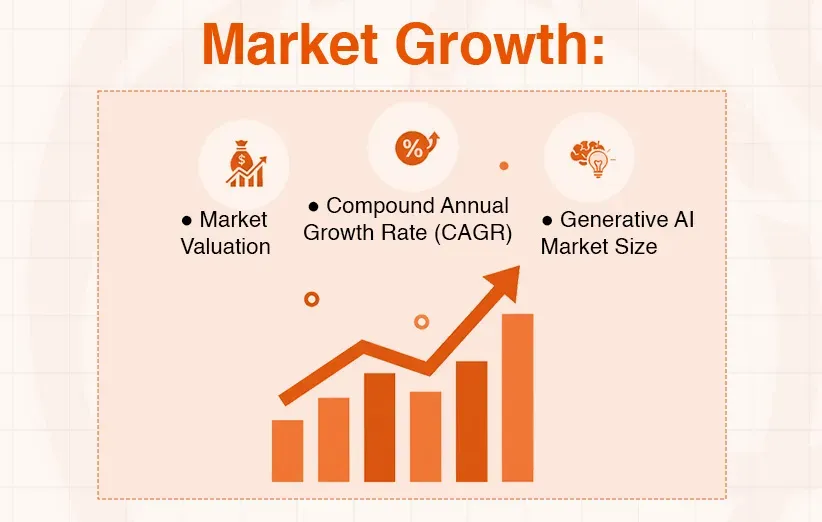
- Market Valuation: AI marketing is a huge market in the world. Its worth will reach more than about $107 billion in the year 2028. Such phenomenal growth indicates the immense level of investment and trust placed by businesses in AI marketing tools.
- Compound Annual Growth Rate (CAGR): AI marketing will increase at a Compound Annual Growth Rate (CAGR) of more than 36.6% in the year 2024 to 2030. This is a huge rate that proves that the adoption of the process of AI marketing is gaining momentum every year.
- Generative AI Market Size: The Generative AI market is an important component of the larger AI marketing market and is estimated to be about $62.75 billion by 2025. Tools that generate content, images, and code are a significant concern for AI marketing departments.
These statistics of AI marketing demonstrate that AI is not a short-lived enthusiasm, as it is a trillion-dollar trend.
Adoption by companies
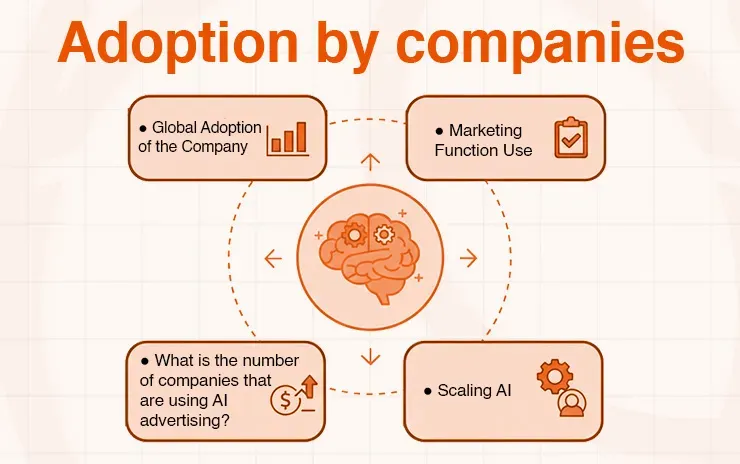
One of the main questions that most marketers ask is: how many companies are actually adopting AI marketing? The reply reveals that it has been extensively applied in the business world, with marketers taking the lead.
- Global Adoption of the Company: Today, at least 78% of global companies are reporting the usage of AI in at least one business activity. This indicates that AI is no longer a niche experiment, but a business tool.
- Marketing Function Use: AI is already being used by a large number of marketers in their day-to-day jobs. Approximately 88% of digital marketers apply AI in their daily activities. This shows the fact that AI marketing is among the most popular technologies of today.
- What is the number of companies that are using AI advertising? It is difficult to determine the specific number of companies using AI advertising, but the overall requirement of AI in sales and marketing is high. According to one report, 71% of companies that have applied AI in marketing and sales have reported revenue growth. It indicates that there are huge numbers of advertisers who are using AI to optimize and target.
- Scaling AI: Almost two-thirds of organizations have yet to scale AI across their whole business, meaning most organizations are only at the beginning of establishing AI in all departments. This means that there are enormous increases in the future of AI in marketing applications.
The Link between Generative AI and Content
Generative AI is revolutionary, particularly in content generation. This type of AI marketing statistics is particularly informative for content creators and copywriters.
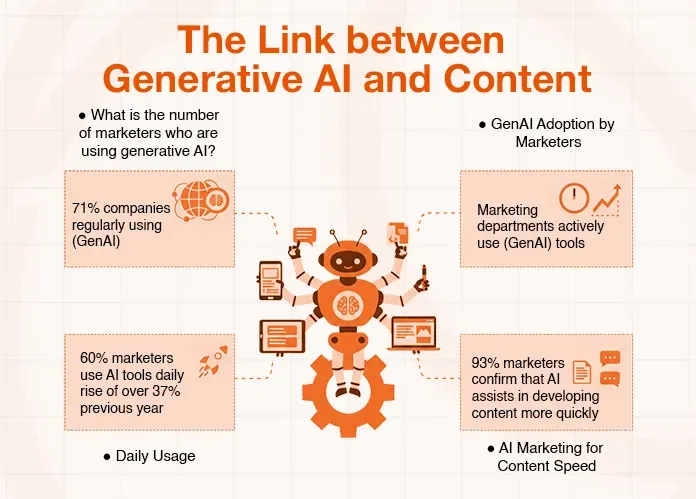
- What is the number of marketers who are using generative AI? GenAI is highly used by many companies. Approximately 71% of companies state that they are regularly using generative AI (GenAI) at least in one of their business activities.
- GenAI Adoption by Marketers: Two-thirds of marketing departments actively use generative AI tools. This figure is expanding at an alarming rate because of the increasing availability of more tools that can be used easily.
- Daily Usage: 60% of marketers use AI tools on a daily basis, a rise of over 37% from the previous year. The fact that AI is an inseparable part of the workflow and content process, not a one-time resource, can be verified from these AI marketing statistics.
- AI Marketing for Content Speed: 93% of the marketers confirm that AI assists in developing content more quickly. This is the biggest known advantage of using AI marketing tools for content creation.
Generative AI is most commonly used in marketing, from creating basic content (76%) to writing marketing copy and creating text.
These statistics demonstrate clearly that the majority of current marketers generate content with AI, and this shift is the key factor in the rise of AI marketing.
Advantages
Why are companies investing so heavily on ai marketing? The outcomes are evident. The advantages of AI marketing go well beyond aspects such as faster content creation.
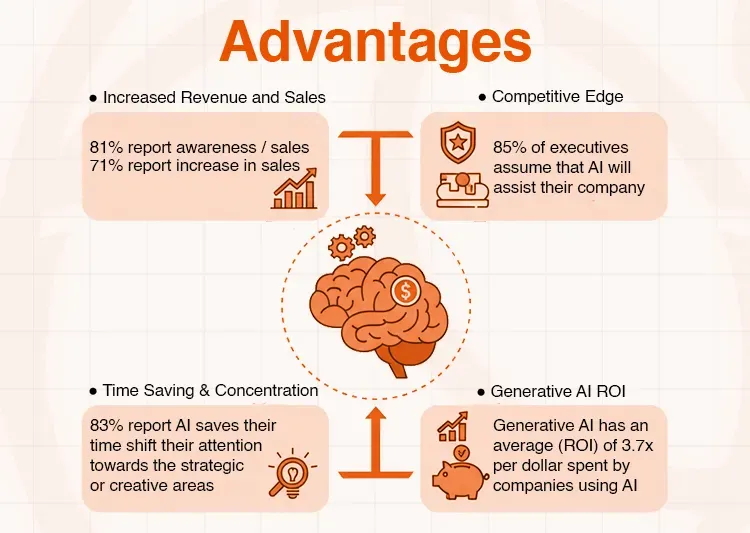
- Increased Revenue and Sales: 81% of digital marketers believe that AI brings additional brand awareness and sales to their organization. Among companies using AI in marketing and sales, 71% state that they are experiencing an increase in sales.
- Competitive Edge: 85% of executives, that is, the vast majority. Assume that AI will assist their company in acquiring and maintaining a competitive advantage in the market. It is therefore a strategic necessity.
- Time Saving and Concentration: Approximately 83% of marketers report that AI saves their time. This would enable them to shift their attention towards the strategic or creative areas of their tasks and move focus from production to high-level strategy.
- Generative AI ROI: Generative AI has an average Return on Investment (ROI) of 3.7x per dollar spent by companies using AI. This is a great financial payoff that can be considered one of the principal factors contributing to the ongoing skyrocketing of AI marketing investment.
Future Trends and Training
The future of AI marketing will rely on the continued investment and training of employees.
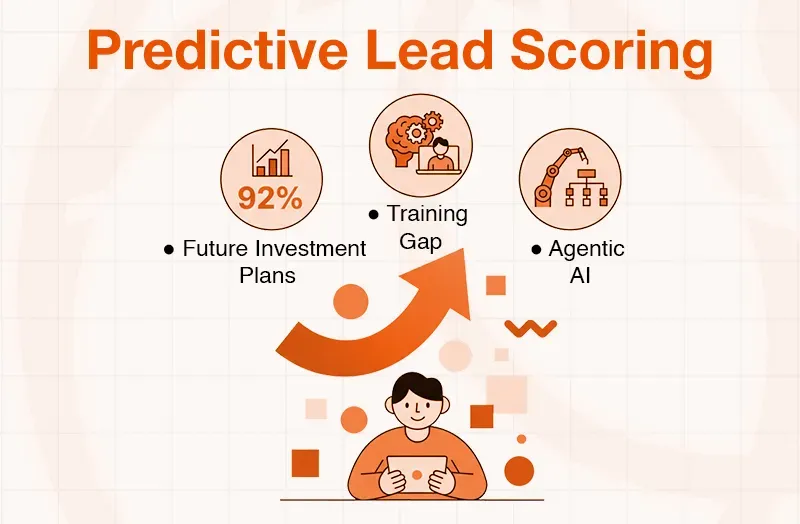
- Future Investment Plans: 92% of businesses say they intend to invest more in generative AI tools in the next three years. This will ensure that the role of AI marketing will have an even deeper impact.
- Training Gap: Although a lot of marketers have adopted AI, 70% of them still claim that their employer does not specifically train them regarding generative AI. This is an indicator of the necessity to invest more in the upskilling of the employees working in the area of AI marketing to be able to implement it effectively.
- Agentic AI: nearly two-thirds of organizations are already experimenting with or scaling AI agents, which are AI systems capable of operating semi-autonomously to accomplish tasks. The second wave of AI marketing is going to bring new scopes to automation.
Conclusion
These statistics of AI marketing send a very strong message: AI marketing is mainstream, it is highly effective, and it is rapidly paving the way to success. If you are not using AI in your business, it is possible that your competitors are doing so and they are enjoying a tangible benefit.