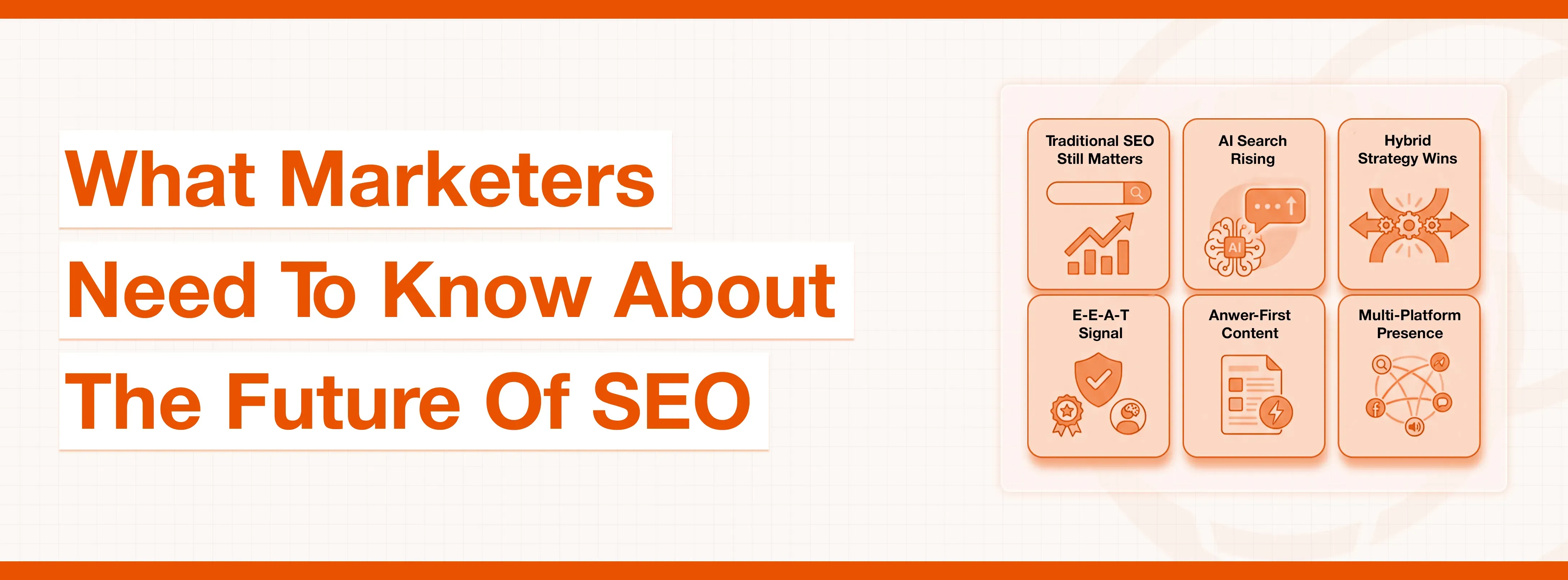
AI is changing the future of SEO, yet traditional optimization generates 34 times more traffic than AI chatbots. In 2026, a hybrid strategy will be necessary. You should maximize performance on both Google and AI platforms, focus on E-E-A-T indicators, design answer-first content frameworks, and establish multi-platform presence. Technical SEO, quality content, and local optimization will also remain essential; however, the presence of AI Overviews is becoming a 25% part of a search, so businesses should not forsake the basics too fast. The victors will not be the ones who leave traditional SEO behind and adopt AI-based strategies, but the ones who can combine both in a tactical, but still authentic, position and flexibility.
The future of SEO is unfolding in front of our eyes, and the change is more drastic than anything we have ever seen in the industry in 10 years. The integration of artificial intelligence in the context of how individuals find information profoundly alters the role of search engine optimization professionals. Traditional search engine optimization ranking factors, such as keywords and backlinks, are no longer the only thing that determines the future of search engines. Rather, it requires an in-depth knowledge of AI references, entity recognition, and multi-platform visibility tactics that go way beyond the search results pages of Google.
The AI-led generative search experiences, spearheaded by the AI Overviews at Google, have progressed beyond basic search engines to smart answer engines, transforming user behavior and disrupting every single traditional SEO principle. The effect of AI on SEO is not a far-off threat or an abstract notion, but a real-life situation that companies have to deal with now.
How is AI Influencing The Future of SEO?
The effect of AI on SEO has introduced quantifiable transformations in the industry. Research has revealed that websites receive 34 times as much search traffic through Google and other conventional search engines as they do through chatbots, indicating that although AI search engines are becoming more popular, traditional SEO continues to drive more traffic.
Nevertheless, ChatGPT increased to 800 million users per week in October 2025, whereas it had 200 million users per week in August 2024, indicating an exponential growth that cannot be overlooked.
This two-sided reality must be considered when talking about the future of SEO. The number of AI Overviews has risen to one in every four searches, and the percentage has increased to 54.7% in long-tail searches of seven words or more. It’s time to use optimization techniques that operate both in conventional search results and AI-based answer formats.
Is AI Changing Search Behaviour?
The impact of AI on SEO is not just about traffic figures. It is estimated that 30 to 40 percent of active web text is now AI-generated, and 74.2 percent of new web pages in April 2025 included some AI-generated text. The surge in AI content will make the future of SEO increasingly favor brands that demonstrate verifiable expertise and reliability rather than those that rely on AI-written content.
Marketers will have to contend with the fact that users today make longer, more conversational queries when using AI tools. Instead of a list of blue links to follow, they require an answer straight away and properly. This change implies that the future of SEO will involve content designed to directly and specifically answer queries with the degree of authoritativeness that can be reliably referenced by AI systems.
Vital Search Engine Optimization Strategies
E-E-A-T Signal Optimization
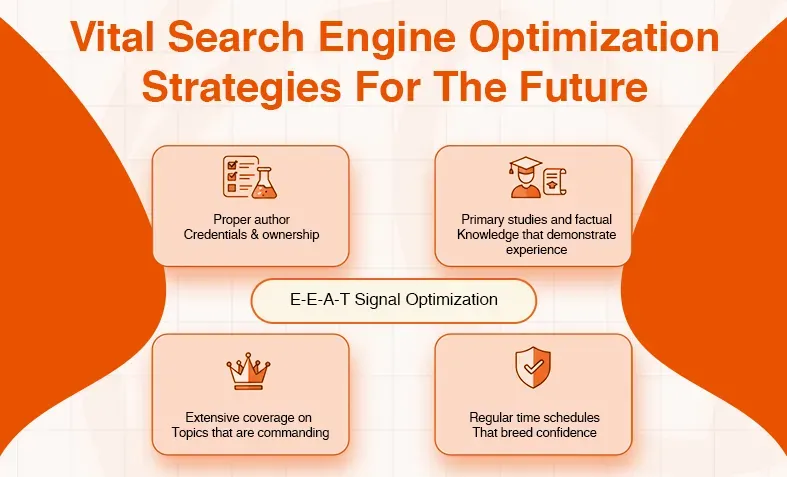
One of the optimal trends in SEO in 2026 will be Experience, Expertise, Authority, and Trust (E-E-A-T) optimization since Google and AI answer engines such as ChatGPT and Gemini are programmed to present searchers with content that is both helpful and reliable. To have a bright future in SEO, businesses must display these attributes by:
- Proper author credentials and ownership
- Primary studies and factual knowledge that demonstrate experience
- Extensive coverage on topics that are commanding
- Regular time schedules that breed confidence
Develop Answer-First Content Architecture
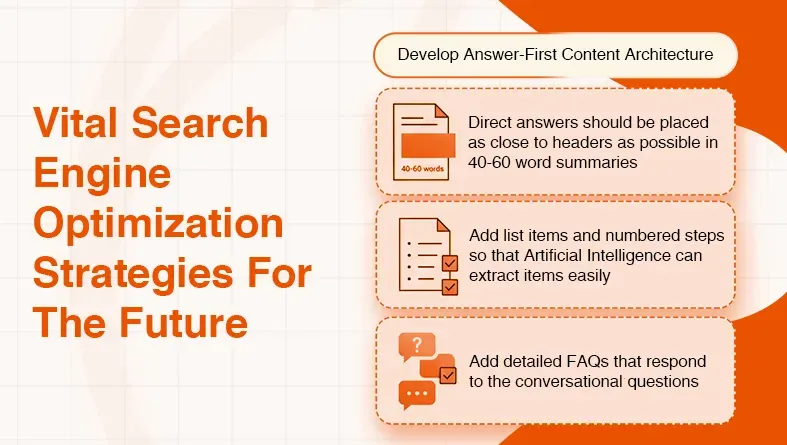
The future of SEO is based on the content, which is organized to offer value instantly. The following structural elements are essential for optimizing content for AI search engines and the evolving future of SEO:
- Direct answers should be placed as close to headers as possible in 40-60 word summaries.
- Add list items and numbered steps so that Artificial Intelligence can extract items easily.
- Add detailed FAQs that respond to the conversational questions.
Establish Multi-Platform Visibility
Video content platforms such as YouTube receive over a billion hours of views in a single day and provide avenues in which brands can narrate their stories and interact in real-time with their audiences. The future of SEO is not just limited to Google but also to TikTok, Reddit, YouTube, and specialized AI platforms. The AI influence on SEO has made visibility a requirement that entails:
- Transcripts and YouTube content descriptions are optimized with keywords
- Active engagement in topical Reddit communities and forums
- The material is repackaged in different formats and media, with schema markup, which enables AI to have a clue of the content in all channels.
Use AI Tools in a Strategic Way
Although over 17% of the first-place search results contain AI-written pages, the most effective marketers retain human control, and 93% of AI-written pages are reviewed by human beings before publication. The future of SEO does not involve making decisions between human experience and AI strengths; it involves strategic integration of both.
AI can be used for first research, outline generation, data analysis, and first drafts. Human specialists can be utilized to bring in special knowledge, personal anecdotes, interesting illustrations, and tactical delicacy.
This is a hybrid solution where efficiency is compromised for the quality that users and algorithms are rewarded with.
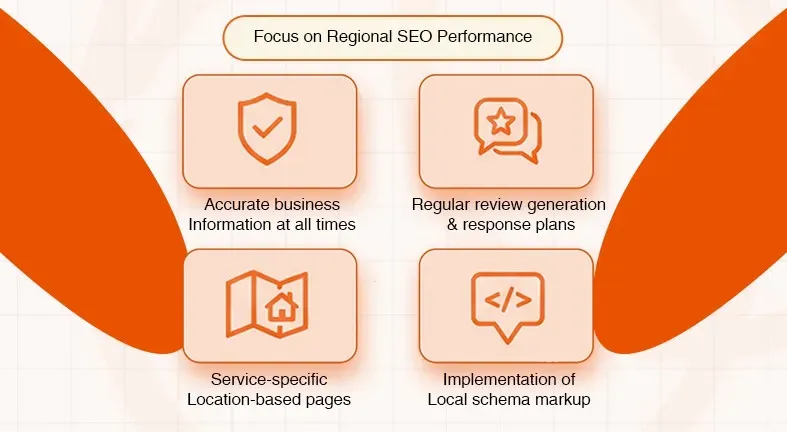
Focus on Regional SEO Performance
Ninety-eight percent of customers use the internet to find out about local businesses, and seventy-six percent of near me mobile searches result in a visit to a store within 24 hours. The future of local business SEO requires an outstanding Google Business Profile optimization, including:
- Accurate business information at all times
- Regular review of generation and response plans
- Service-specific location-based pages
- Implementation of local schema markup.
Common Mistakes to Avoid
Overinvesting in Unproven AI Tactics
As decision-makers become more skeptical of AI promises, many enterprises that spent heavily on AI SEO tools in 2024-2025 are finding they didn’t achieve adequate ROI. It is not necessary to abandon the strategies that are producing quantifiable outcomes today in favor of experimenting with AI strategies that are not guaranteed to perform.
Publishing Low Quality AI-Generated Content
The success in ranking is now determined by the quality of AI content as opposed to the amount of content. Search engine optimization now punishes the generic, AI-created, but not unique insights. The algorithms have evolved to be very advanced in detecting and demoting low-effort content, irrespective of quantity.
Overlooking the Basics of Technical SEO
SEO is not going to be just about good technical foundations. The essentials of Web Vitals, mobile, clean site structure, and adequate indexing cannot be compromised. These are the basics that AI and the future of SEO do not negate, but advance.
Conclusion
The future of SEO is not only a challenge that has never been witnessed before, but also an opportunity that can be leveraged by those businesses that are ready to change. AI has increased the pace of change in SEO, yet has not disrupted the fundamental tenet that has made search successful, namely, delivering true value to users. Search engine optimization is going to favor companies that will ensure technical perfection and genuine expertise, multi-platform visibility, and strategic AI integration.
As we get further into 2026, the companies that do well will not be those that have accurately anticipated every algorithm update and technology move, but rather those organizations that are nimble, constantly experiment with new ideas, and never lose sight of the need to provide authentic value to their audiences. The future of SEO is already upon us; the question is whether you will be able to keep up with it or will be left behind by those who will take the chance in adopting it with confidence and strategic acumen.