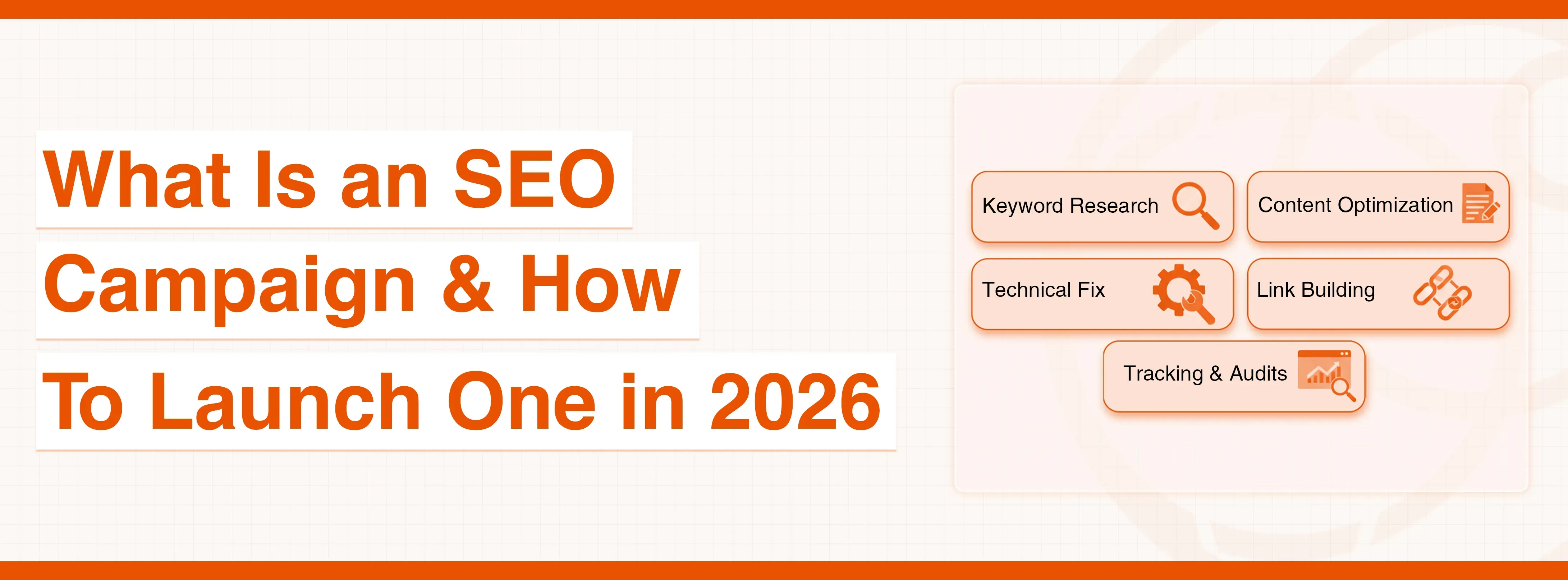
An SEO campaign is a strategic approach to optimizing your position in search engines by doing keyword research, content optimization, technical correction, and link building. A successful SEO campaign takes between three and six months and is based on practical objectives such as growth in organic traffic, rankings, and leads. To be successful, adequate management of SEO campaigns with frequent audits, quality content generation, and monitoring of performance with the help of tools such as Google Analytics and Search Consoleise essential. In contrast to paid advertising, which ceases to be effective when you cease payment, a properly implemented SEO campaign offers long-term effects with exponential growth.
The question of what constitutes an effective SEO campaign is critical for every business aiming to establish an online presence without incurring significant advertising costs. With Google performing more than 90 percent of all searches and answering approximately 210 times as many queries as AI chatbots, such as ChatGPT, in 2026, a clear understanding of managing online search campaigns is essential for success.
In straightforward terms, an SEO campaign is a structured process of enhancing the ranking of your website on search engine result pages. In contrast to updating a website at random, an SEO campaign is a systematic process with defined objectives, schedules, and quantifiable results. Think of it as a map that drives all of your optimization plans, which involve several activities across several months to reach particular business goals such as improving website traffic, creating more leads, or selling more online.
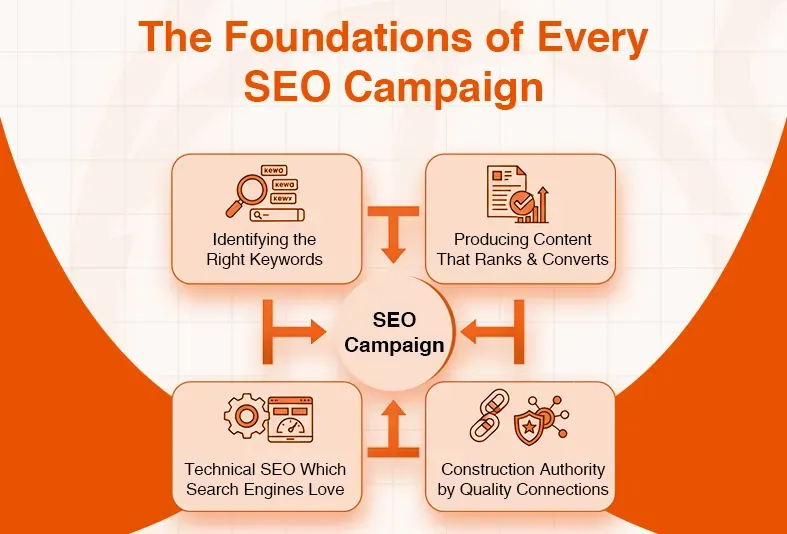
The Foundations of Every SEO Campaign
Both search engine optimization and campaign management involve balancing several crucial aspects at the same time. Here's what matters most in 2026:
Identifying the Right Keywords Your Audience Uses
Before the development of any content, find keywords that are being actively searched by your target market. Find the terms with the high search volume and the reasonable level of competition using such tools as SAAGA Solve, Google Keyword Planner, Ahrefs, or Semrush. Target transactional keywords in which users are willing to buy because they usually yield better results than informational searches.
Producing Content That Ranks and Converts
High-quality content is still the key to the success of an SEO campaign. Design pages that actually assist your visitors in resolving issues or locating something. The information you provide must respond directly to search queries using easy language to comprehend. Naturally, use your target keywords in titles, headers, and body text, but prioritise writing for humans over search engines.
Use of Technical SEO Which Search Engines Love
Even the best content can be ruined by technical problems. Periodically audit the site to verify the speed of loading, mobile responsiveness, correct indexing, and crawlability. Fix the broken navigation links, clean up redundant information, and make sense of your site structure. These technical aspects are the foundation of what makes an SEO campaign work.
Construction Authority by Quality Connections
Backlinks to reputable sites are taken by search engines as votes. Relevant and authoritative links to other sites would indicate that your content is good and worth trusting. Create content that is worth linking to in the first place, and think about outreach to other related websites in your industry.
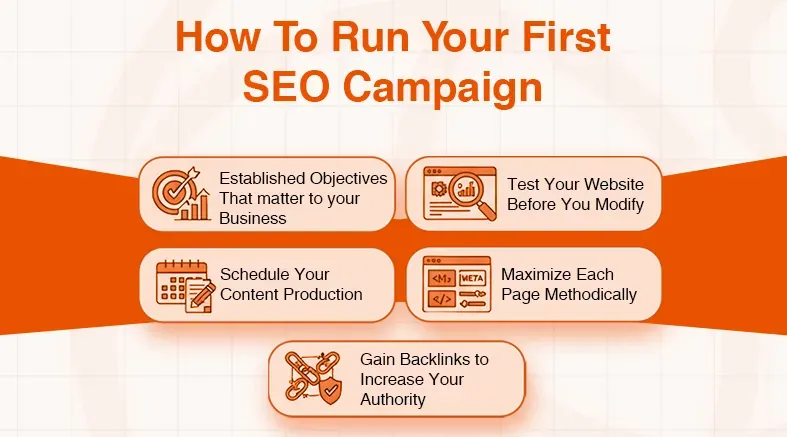
How To Run Your First SEO Campaign
The first campaign has to be approached systematically. The following are best practices used by professional agencies:
Establish Objectives that Matter to Your Business
Know the exact meaning of success. Rather than abstract goals such as increasing traffic, establish precise goals such as doubling organic traffic within six months or appearing in the top three Google search results on five keywords with high value. Set your goals SMART: specific, measurable, achievable, relevant, and time-bound.
Test Your Website Before You Modify It
You should know where you will start before you optimize anything. Conduct a full audit or study on technical health, the current rankings, current content quality, and competitor analysis. This benchmark will give you the largest openings and the areas to concentrate on first in the management of your SEO campaign.
Schedule Your Content Production
Create a content plan to be followed throughout the campaign. The majority of successful campaigns release two to four quality pieces per month. Your topics in the calendar must also match your target keywords and business objectives. Regularity is better than a binge of action.
Maximize Each Page Methodically
Apply on-page optimization strategies. Create interesting title tags with fewer than 60 characters, and with your target keyword as close to the top as possible. Write meta descriptions of less than 155 characters that will be enticing to the clicks. Include descriptive URLs, include internal links to related information, and make sure that your headings are arranged in logical order.
Gain Backlinks to Increase Your Authority
Follow the links by engaging in a variety of techniques, such as developing content to share, guest blogging with other sites that show up in your industry, and connecting with journalists and bloggers within your niche. Do not use spammy link programs, which may lead to penalties.
Monitoring Results and Evaluating Success
To determine what an SEO campaign's performance is, you must follow the right metrics all the time during your campaign.
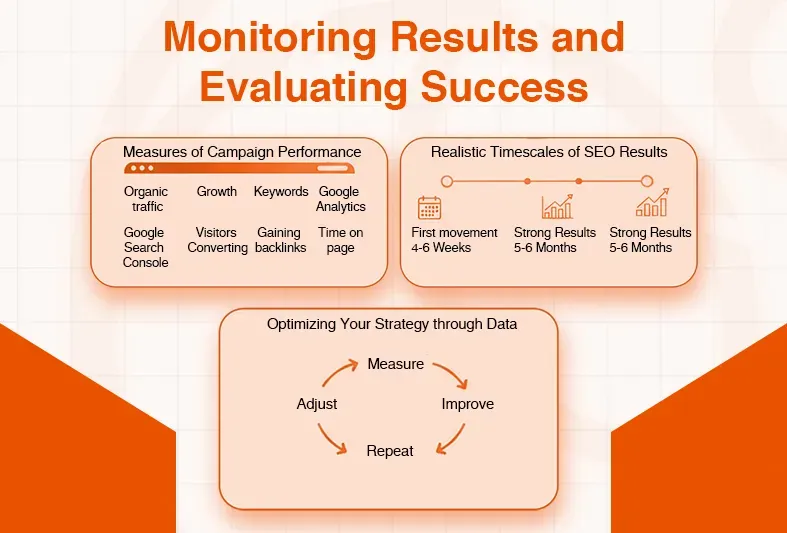
Measures of Campaign Performance
Measure organic traffic, growth, and keywords within Google Analytics, Google Search Console, visitors converting to customers, gaining backlinks, and time on page and bounce rate with Google Search. These statistics will tell you whether the management of your SEO campaign is bearing fruit.
Realistic Timescales of SEO Results
SEO does not happen overnight. Depending on your competition in the industry and where you start, you will observe the first movement in four to six weeks. Significant outcomes most often require three to six months. Most professional campaigns strive to achieve a four times payoff in a matter of twelve to eighteen months.
Optimizing Your Strategy through Data
Evaluate your performance every month and be ready to change your strategy depending on the information obtained. Even in case there is no movement in some keywords, switch to the alternatives. When certain types of content perform exceptionally well, produce additional content of that format. It demands flexibility and constant optimization to run a successful SEO campaign.
Strategic Pitfalls That Undermine SEO Campaign Performance
It is equally important to know what not to do when learning about an SEO campaign.
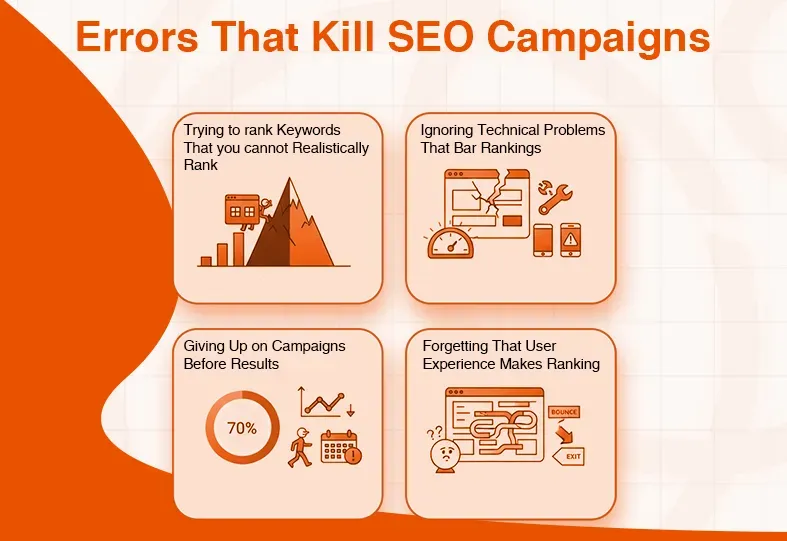
Trying to achieve top-ranking on keywords with high keyword difficulty
Most of the campaigns fail as they are based on the keywords that are either unrealistically competitive or not business-focused. Always ensure that the keywords are commercial in nature, and you can rank them within your time span.
Ignoring Technical Problems that Bar Rankings
Even brilliant content will not perform well on a slow, broken site. Even the most detailed content effort can be entirely sabotaged by technical problems, such as a bad mobile experience, long-loading websites, and indexing. Meet the technical groundwork before developing new material.
Giving Up on Campaigns Before Results
SEO requires patience. Companies that anticipate immediate success usually give up on campaigns too soon, just before they would have begun to show returns. Devote a minimum of 6 months until campaign effectiveness is judged.
Forgetting That User Experience Makes Ranking
The search engines are becoming very keen on the sites that offer good user interfaces. When the visitors leave your site as soon as it is hard to navigate or fails to provide answers to their problems, rankings will not be positive, no matter how technically ready your pages are.
Optimizing SEO Campaigns in 2026 and Beyond
Knowing what an SEO campaign is in 2026 requires being able to change with emerging search behaviors without abandoning the best practices. AI-assisted search engines such as Google AI Overviews are already used on an average of 25 percent of searches, but the traditional search produces 34 times more traffic than AI chatbots. It implies that an efficient operation of the SEO campaigns will involve the optimization of both conventional and AI-driven search engines.
Pay attention to proving the true skills and experience, authority, and reliability of your content. Google and AI systems are becoming more willing to reward content from verified professionals with real-life experience. Include author bios, highlight credentials, and provide original information based on firsthand knowledge, not regurgitation of information found on other sites.
Conclusion
What is an SEO campaign? Your long-term plan for sustainable online publicity. As opposed to paid advertising, where once you cease allocating money, the program ceases to work, an effective SEO campaign builds compounding value over time. With a systematic process, specific objectives, repetitive action, and data analysis to make changes, your company will draw in qualified traffic that consists of individuals actively seeking what you provide.
The most effective way of managing the SEO campaign in 2026 would be a mixture of the time-tested basics and an intelligent response to new trends. Keep in mind that you need to make truly useful content, keep the technical bases well-founded, develop your own back-link authority with the help of good web content, and be patient because the results of your work accumulate in significant outcomes. The SEO campaign can be one of the best investments in the marketing of your business with the right strategy and consistent work.